
What Turnkey FSW Solutions Require from a Full-Service Supplier
Table of Contents
- Turnkey FSW Scope and Supplier Responsibilities
- Machine Selection and the Cost of Underspecifying Architecture
- Sample Welding and Process Validation Before Final Acceptance
- Turnkey FSW Automation, Tooling, and In-Line Quality Control
- Post-Installation Support and Long-Term Service Commitments
- Common Questions About Turnkey FSW Suppliers
- How long should a turnkey FSW machine project take from order to production handover?
- What is the most important item to review in a turnkey FSW quotation?
- Can one supplier really handle both the FSW machine and the pin tooling?
- What should buyers confirm about process data before shipment?
Turnkey FSW solutions collapse equipment, tooling, fixture design, process development, installation, and operator training into one supplier commitment. In my work on friction stir welding machine programs from first feasibility weld to production handover, the difference between a working cell and a costly rework loop rarely shows up on the quotation. It appears later, in missing process data, underspecified clamping, or a supplier that stops at installation. A credible full-service supplier should deliver more than hardware: it should carry the weld process to a measurable production condition and document how the process stays there.
Turnkey FSW Scope and Supplier Responsibilities
A full-service supplier treats process ownership as part of the machine order, not as an optional add-on. The scope begins with part geometry and production volume and ends with a qualified welding procedure, trained operators, and a documented maintenance plan. Too many quotations stop at axis strokes and spindle power. Those numbers matter, but they do not tell a buyer whether the same supplier can design the pin tool, machine the fixture, validate a weld schedule, and ship a cell that repeats the result on the second shift.
In a turnkey FSW project, the supplier should carry at least seven elements: machine integration, tooling set from the material and thickness matrix, fixture and clamping concept, welding procedure specification, sample weld reports, installation and commissioning, and post-installation service. If any of these is treated as a separate quotation, the buyer is assembling the project, not the supplier.
At AEE, standard tooling covers conventional, retractable, bobbin, stationary shoulder, and FSSW designs across aluminum thicknesses from 1 mm to 100 mm. That means the weld coupling arrives with the machine rather than being sourced separately.
Machine Selection and the Cost of Underspecifying Architecture
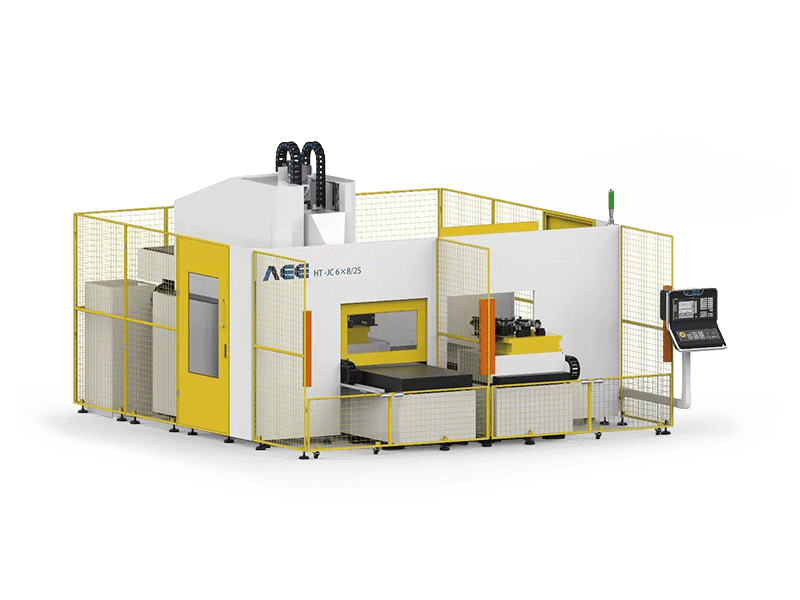
Machine architecture should follow the weld seam, not the other way around. A C-type machine fits compact parts such as radiators and water-cooling plates. A gantry machine handles large flat panels for battery trays or rail profiles. A 3D machine matters when the weld path curves in space. An extra-length machine becomes necessary for 10-metre-class aluminum extrusions, and a heavy-load machine is required for single-sided aluminum welds near 100 mm or copper welds near 35 mm.
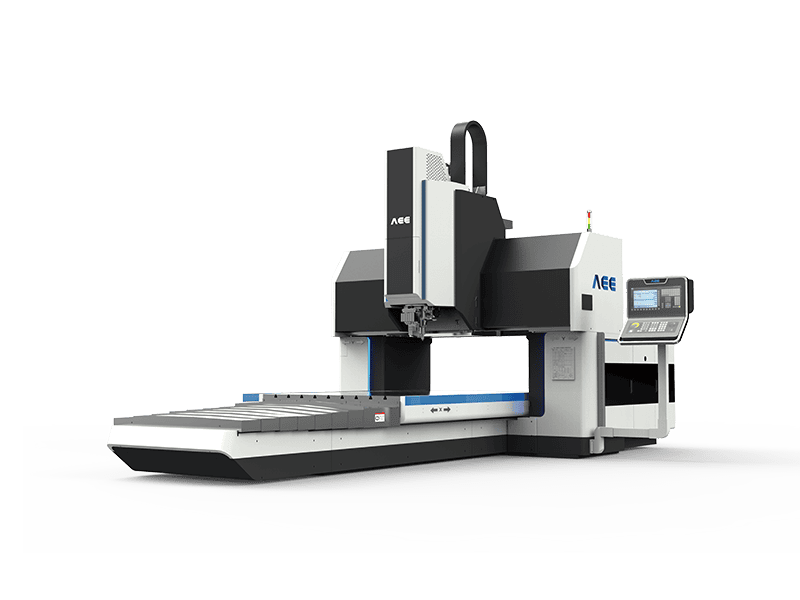
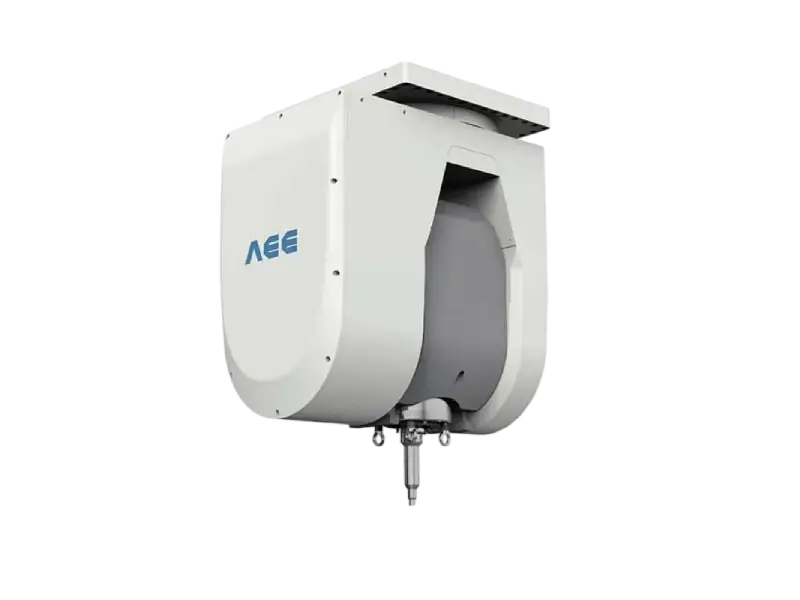
The numbers reveal whether the supplier understands the process. Welding 8 mm 6xxx aluminum at 5,000 mm per minute on a gantry machine places different demands on the spindle than a 12 kW C-type cell. At AEE, spindle series ranges from 112 Nm for thin sections to 874 Nm and 200 kN Z-axis force for 100 mm aluminum, and machines carry CE and ISO9001 certification. A quotation that lists travel strokes without force, torque, and spindle cooling data does not give the reader enough to judge whether the architecture will survive the weld.
| Machine category | Typical work | Representative model | Key specification to check |
|---|---|---|---|
| C-type and dual-worktable | Compact radiators, water-cooling plates, 3C parts | FSW 8×10/2, FSW 8×10/2S | 112 Nm torque, 30 kN Z-axis force, dual-station option, automatic tool change |
| Gantry | Battery trays, large panels, 1D/2D seams | FSW 8×30/2 | X-stroke 3000 mm, Y-stroke 2000 mm, 12 kW spindle |
| Extra-length | Rail profiles and long extrusions | FSW 8×160/1 | X-stroke 16000 mm, constant pressure control, laser tracking |
| Heavy-load | Thick aluminum and copper | FSW 100×100/2 | 872 Nm torque, 200 kN Z-axis force, 105 kW spindle |
| 3D | Curved and complex surfaces | FSW 20×80/3 | 300 Nm torque, 60 kN Z-axis force, 20 mm welding thickness |
Sample Welding and Process Validation Before Final Acceptance
A full-service supplier validates the weld schedule on the part geometry before asking for final payment. Sample welding should cover the actual joint type, material batch, and fixture load path, not just a flat coupon. In lap joints, hooking and cold lap defects often appear only when the sample reproduces the real clamping condition. In closed-contour welds, the exit hole left by a conventional pin becomes a quality problem that downstream grinding cannot fully fix. Retractable pin tools withdraw the pin inside the shoulder before the weld end, which is why they are the practical choice for sealed enclosures and circumferential seams.
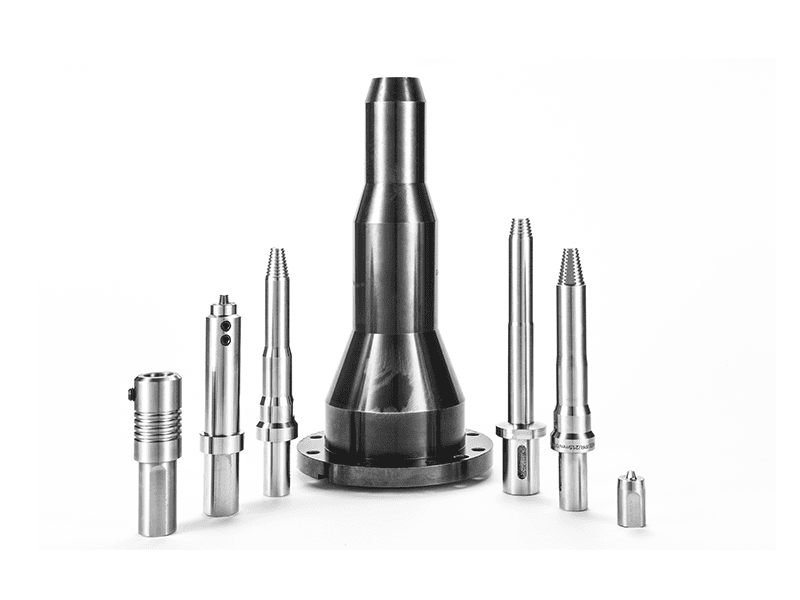
For closed-loop or sealed applications, the tool choice can decide whether the weld cycle can be automated without rework. <Refill Friction Stir Spot Welding (RFSSW)> covers the spot-weld variant that also removes the exit hole concern and produces a flat surface without filler material.
Validation documents should state the measured tensile and bend results, the macro sections, the process parameters, and the NDT method. If the supplier cannot show a welding procedure specification tied to the sample, the machine is not ready for handover. At AEE, turnkey projects include process development on the buyer’s material and joint configuration, not a standard parameter library copied from another part.
Before you finalize a BOM for a sealed enclosure or a lap joint with leak-test requirements, confirm the tool type with the supplier. Send your part number, material grade, and joint configuration to [email protected] and ask for the recommended pin profile and WPS approach.
Turnkey FSW Automation, Tooling, and In-Line Quality Control
Automation makes turnkey FSW economically viable only when quality data is captured automatically. A production line should record welding force, torque, temperature, and travel position as part of every weld. The control system should compare those values against the qualified envelope and flag out-of-tolerance conditions before nonconforming parts move downstream. In a wheel line, QR code scanning, automatic loading, seam tracking, and weld quality judgment can run without manual intervention. The line runs at 45 JPH, but the more important number is whether every wheel carries a data trace that matches its parameters.
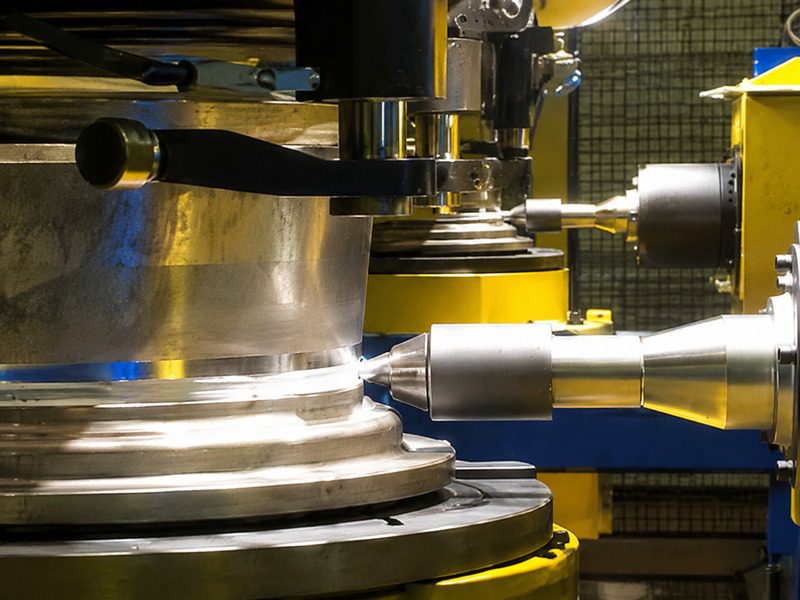
For dissimilar combinations such as aluminum to copper, process development has to begin with material-specific tooling and joint design. <Customized Dissimilar Material Welding Manufacturers in China> covers how suppliers adapt pin profiles, interlayer control, and parameter windows for mixed-material turnkey work.
Tooling is the consumable that determines process repeatability. A full-service supplier should manage tool life, spindle interface, and tool changing. AEE offers optional features that include force, position, torque, and temperature control, laser tracking, and an automated tool-changing system. The tool holder and spindle series have to match the axial force and torque envelope of the weld. A machine may have sufficient travel, but if the spindle cannot hold force under a long weld, thermal drift will move the weld notch.
Post-Installation Support and Long-Term Service Commitments
After installation, the supplier should respond with the same engineering ownership it showed during the project. A turnkey line that loses a week to a tooling or spindle fault is not fixed by a part number alone. It requires remote diagnosis data, local service, and a process engineer who knows the original weld schedule. Before ordering, ask what commissioning includes: operator training on the actual parts, spare pin tools, spindle inspection intervals, and software access for parameter history. The supplier should also be able to show CE and ISO9001 documentation, plus EN15085 for rail components. The answer separates a manufacturer from a machine trader.
If your FSW project involves sealed enclosures, dissimilar joints, thick plate, or production volumes above prototype level, send your part number, material grade, weld length, and target cycle time to [email protected] or call +86 18325808715. We will confirm the machine architecture, pin tool, and validation plan against the production condition rather than quoting from a general specification list.
Common Questions About Turnkey FSW Suppliers
How long should a turnkey FSW machine project take from order to production handover?
The honest answer is 16 to 26 weeks for a standard machine and 30 to 50 weeks for a fully automated line with custom fixtures and process validation. The variation comes from tooling development: a conventional butt weld can move quickly, while a retractable pin or bobbin tool on a new joint may need several iteration rounds. Buyers should push for a schedule that lists sample welding, WPS qualification, and training as dated milestones, not as a single “turnkey” line item.
What is the most important item to review in a turnkey FSW quotation?
Many buyers focus on travel strokes and machine weight first, but those rarely cause startup failure. The quotation should instead show the process scope in detail: which alloy and thickness range the supplier has validated, what pin tool type is proposed, which fixture concept holds the part, and how clamping force reacts to the weld. If the quotation does not tie the spindle torque, Z-axis force, and tooling to your specific joint, treat it as an incomplete machine offer.
Can one supplier really handle both the FSW machine and the pin tooling?
It depends on the supplier’s tooling capability. A manufacturer that also designs conventional, retractable, bobbin, stationary shoulder, and FSSW tools can align the spindle interface and force control with the tool from the start. A supplier that only builds the machine often leaves tooling to a third party, which creates finger-pointing when weld quality drifts. For turnkey work, single-source tooling is a practical requirement, not a convenience.
What should buyers confirm about process data before shipment?
In the programs I have reviewed, the most valuable pre-shipment check is whether weld force, torque, and temperature logs are recorded per part and stored in a format the buyer can access later. A machine can produce good sample welds on the supplier’s fixture and fail on the buyer’s floor because the part datum or clamping rigidity changed. Ask for data from a run on your actual part geometry and confirm that the acceptance limit is traceable to the WPS. Share your weld length, alloy, and data retention requirement and AEE will confirm the traceability package before shipment.
If you’re interested, check out these related articles:
AEE provides customer with optional features FSW tool
Refill Friction Stir Spot Welding (RFSSW)
AEE attend 13th International Symposium on FSW in Kyoto, Japan on 21 – 23 May 2024
Customized Dissimilar Material Welding Manufacturers in China