
Double-Head FSW Machines: When Two Heads Beat One
Table of Contents
- What a double-head machine changes inside the weld cycle
- Single-pass two-sided welding compared with two single-head machines
- Where the second head stops paying
- How to read a double-head specification before you trust it
- Tooling and spindle duty when both heads run
- Layout, loading and the throughput you will actually get
- What to put in the RFQ for a double-head machine
- Start with the seam, not the machine
- FAQ
- Does a double-head FSW machine double output?
- Can both heads weld the same seam at the same time?
- What thickness can a double-head machine weld?
- Do both heads need their own tool change schedule?
- Is a double-head machine harder to install and maintain?
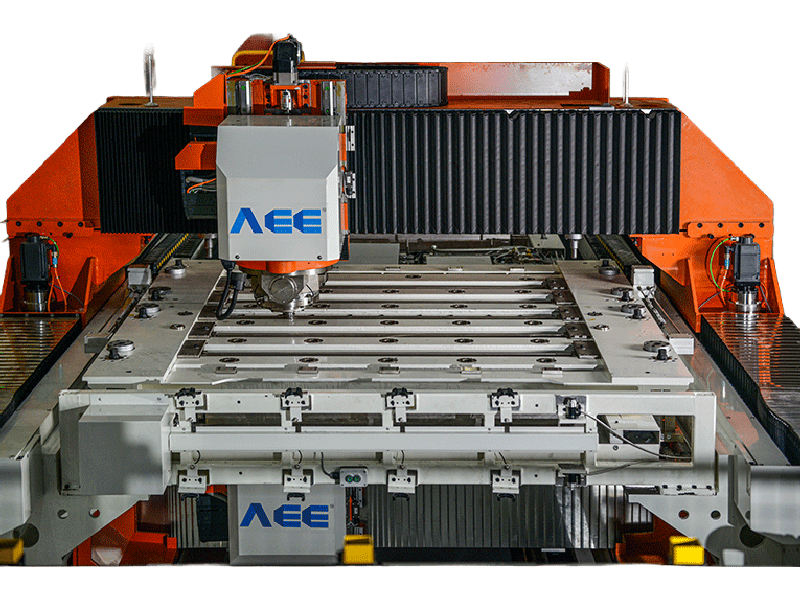
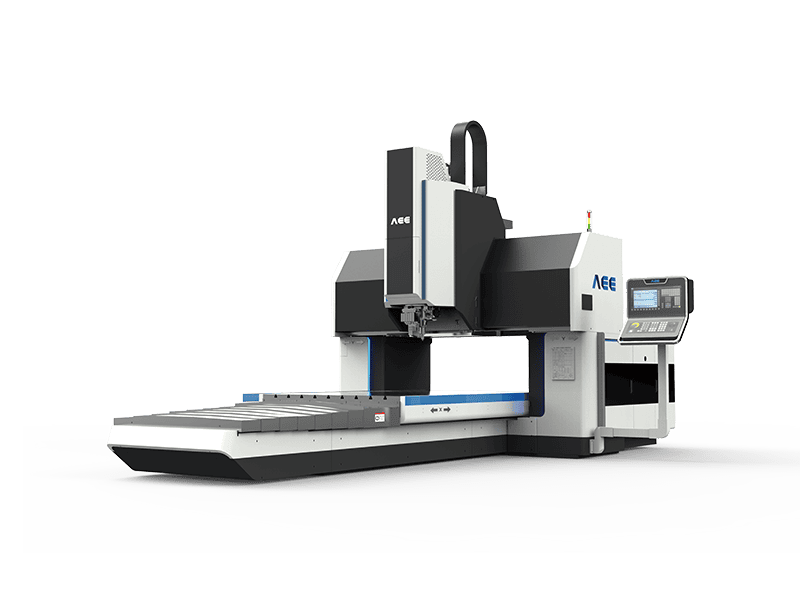
A double-head friction stir welding machine carries two independently controlled heads on one gantry, so one pass can weld both sides of a joint or two seams at the same time. The capacity gain is real, but it is not a doubling. A second head shortens only the welding portion of the cycle, and how much that returns depends on how large that portion already is. On a long straight seam where welding dominates, two heads can lift output well past half again. On a part dominated by clamping, loading and inspection, the same machine earns much less.
What a double-head machine changes inside the weld cycle
Write down the current cycle before you look at any machine. Split it into welding time, clamping and setup, loading and unloading, and inspection or tool change. A second head can compress the first term and, in the two-sided arrangement, remove the repositioning that a flip would otherwise require. It does nothing for the other three terms, and in some layouts it makes them worse.
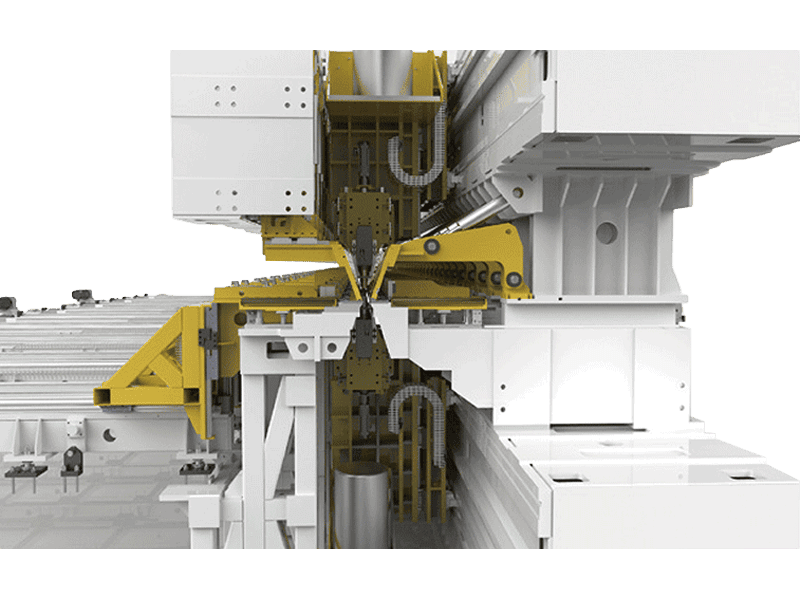
Two heads facing each other across one seam change more than the arithmetic. Each head plasticizes its own face of the joint, and the axial force one head applies is partly balanced by the other. The part sits flatter in the fixture and the backing anvil is replaced by the opposing head, which matters on long panels where a conventional backing bar wears and needs re-machining. The cost is synchronization: both heads must hold position and force within a narrow band, or the nugget becomes asymmetric through the thickness.
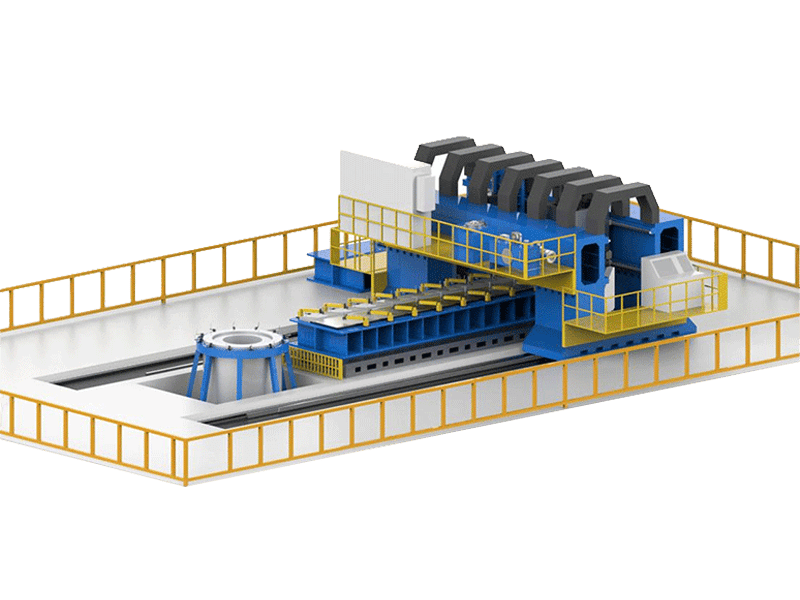
Two heads running parallel seams behave differently. Cycle time falls roughly in proportion to the number of seams welded per pass, but the worktable and the fixture must span both seams at once, so floor space and clamping cost rise with the same step.
The gain has a simple expression. Let welding take fraction f of the current cycle time. With both heads on the same seam, welding time becomes f/2 while everything else stays fixed, so output multiplies by 1 / (1 – f/2). At f = 0.4 the gain is 25 percent. At f = 0.8 it is about 67 percent. Even as f approaches 1, the ceiling is 2.0, and no real part reaches it. The distance between “two heads” and “twice the parts” is the entire commercial case, and it is decided by your part, not by the machine.
| Cycle element | Effect of a second head | What to check |
|---|---|---|
| Welding time on one seam | Halved when both heads work the same seam | Whether the section can be welded from both faces at once |
| Flip and repositioning | Removed on two-sided joints | Head clearance around the fixture |
| Clamping and setup | Unchanged, often higher | Fixture stiffness with two heads in the work zone |
| Tool change | Twice the tools per productive hour | Whether the tool change system covers both heads |
| Inspection | Same or more work | Two weld faces to verify instead of one |
Single-pass two-sided welding compared with two single-head machines
The obvious alternative to one gantry with two heads is two complete machines. They are not equivalent purchases. A second machine brings its own table, its own control, its own floor space and its own operator, but it also brings independence: if one is down, the other keeps producing, and each can run a different part. A shared gantry gives you the second spindle at a fraction of the cost of a second machine and loses that independence completely.
Between those extremes sit the two configurations that most buyers actually choose between: two heads on opposite faces of one seam, and two heads on two parallel seams in one pass. The first is a quality and distortion decision as much as a throughput decision. The second is a pure capacity decision and depends on whether your part family has the width to justify the table.
| Configuration | Choose it when | Do not choose it when |
|---|---|---|
| Two heads, opposite faces of one seam | The joint is accessible from both sides and distortion control matters | The part is closed or the back face cannot be reached |
| Two heads, two parallel seams per pass | Several long seams repeat on the same panel | Parts are narrow, or seam spacing changes between orders |
| Two separate single-head machines | Uptime and scheduling flexibility outrank unit cost per part | Floor space and operator cost dominate the business case |
| One single-head machine plus a second shift | Volume is still uncertain and the weld share is low | Labour availability is the binding constraint |
Where the second head stops paying
Four conditions turn a two-head layout into a liability rather than a gain.
The first is access. A closed hollow extrusion, a box section, or a part with a flange on the far side cannot take an opposing head. Bobbin tools and stationary shoulder tools exist for exactly these joints because they change the reaction path instead of adding a second spindle, and specifying a double-head gantry for a part it cannot reach is an expensive mistake.
The second is symmetry. Simultaneous two-sided welding assumes the heat has somewhere balanced to go. When one face is 3 mm and the other is 10 mm, the two plasticized zones do not develop at the same rate, and the parameter set that suits one head starves or overheats the other. Published data for this machine family puts simultaneous two-sided welding at up to 8 mm; the automatic double-head production line for long profiles covers 1.2 mm to 16 mm across both faces. Treat those as envelopes, not as approval for your joint.
The third is the thickness ceiling. The heavy configuration in this family welds up to 100 mm of aluminium from a single side and up to 190 mm with both faces welded, with copper up to 35 mm from one side. At those sections the limiting factor stops being cycle time and becomes force, spindle torque and fixture rigidity, and a second head helps only if it is sized for that duty rather than added as a copy of the first.
The fourth is volume. A two-head gantry carries a higher capital cost, a longer installation and a more demanding maintenance routine. If annual volume is below the point where the cycle-time saving repays that difference, a dual-worktable machine that eliminates loading downtime usually returns more per unit invested, because it attacks the setup term rather than the welding term.
Third-party records and builder data answer different questions. A published speed figure describes what the machine can do; it says nothing about what your fixture, your operators and your inspection routine will allow.
How to read a double-head specification before you trust it
Suppliers publish envelopes. Buyers need part-level expectations. The gap between the two is where most procurement errors happen, so it is worth separating what each published number can legitimately support from what it cannot.
| Record | Context in which it applies | What it can support | Do not infer |
|---|---|---|---|
| Maximum welding speed of 2.5 m/min | Straight seam, builder’s test parameters, matched tool | The travel-rate ceiling of the machine | That a tacked, clamped production part runs at that rate |
| Single-side weld thickness up to 100 mm aluminium | Heavy-load configuration, appropriate tool and alloy | The capability envelope of that configuration | That a 7xxx alloy or a high-speed pass reaches the same depth |
| Maximum spindle speed of 6000 rpm | Spindle rating, not a production set point | The speed range available | That production runs at maximum speed |
| Simultaneous two-sided welding up to 8 mm | Symmetric joint, both heads in contact | A practical band for symmetric sections | That any 8 mm joint is symmetric enough to qualify |
| Automatic tool change plus force, position, torque and temperature control | Features listed for this machine family | Functions available in that build | That closed-loop control removes the need for procedure qualification |
The specifications published for the AEE double-head machine family belong to the builder. They are machine data, not independent test results on your part, and they describe what the hardware can be asked to do before anyone has welded your alloy.
Tooling and spindle duty when both heads run
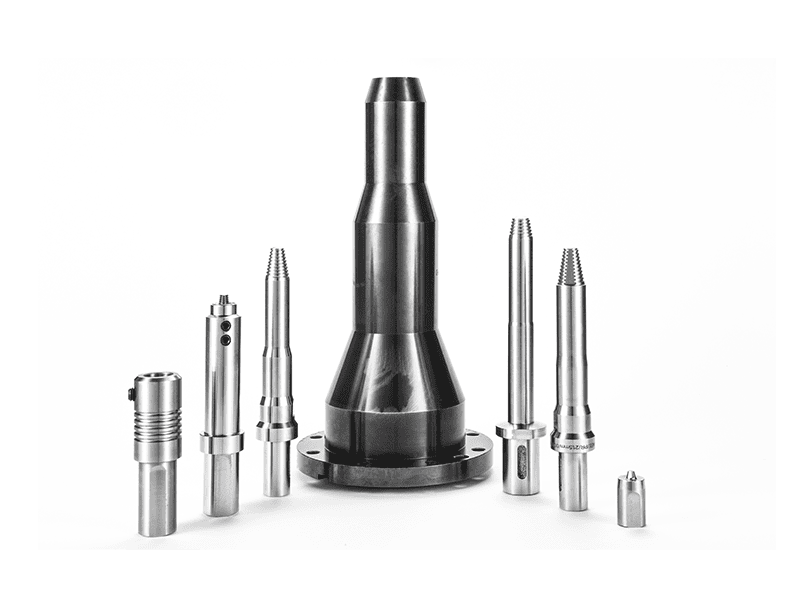
Two heads mean two tools wearing at once. Consumption per productive hour roughly doubles, and the tool change interval is set by the shorter-lived of the pair, not by the average. Budget tooling as a per-metre cost at the doubled rate rather than carrying over the figure from a single-head cell.
Matching the tools matters more than buying two of the same part number. If one head runs a threaded pin and the other a smooth tapered pin, the two plasticized zones behave differently and the nugget through the thickness becomes uneven. Specify a matched pair, then verify on a sectioned trial weld that both faces show comparable nugget geometry.
On closed contours the tool choice decides whether the part needs post-processing at all. A retractable tool draws the pin into the shoulder at the end of the weld so plasticized material fills the exit hole, which removes the keyhole that would otherwise be drilled out or capped. A stationary shoulder tool keeps the shoulder from rotating with the pin, cutting heat input and leaving no flash on thin walls and visible surfaces.
Water cooling belongs in the specification, not in the options list. Two tools running continuously in the same work zone put more heat into the tool holders and the spindle nose than a single-head cycle does, and a water-cooled pin tool with a cooled spindle keeps the wear rate predictable across a long seam.
Two heads also double the number of tool decisions a buyer has to make before the machine is ordered. <AEE provides customer with optional features FSW tool> covers optional tool features that can be specified on an FSW tool order.
Layout, loading and the throughput you will actually get
The cycle-time split you wrote at the start is the only honest throughput forecast you have. Measure loading and unloading on the actual part with the actual handling equipment, because on a two-head gantry those terms often grow: a wider table means longer travel for the crane or the robot, and a fixture that clamps both seams at once takes longer to load than one that clamps a single seam.
Check the building before the machine. Published data for this machine family calls for compressed air at 0.6 MPa and roughly 1 cubic metre per minute through a phi 8 connection, and the gantry span and table width determine the foundation and the crane access. A machine sized for the panel family you intend to quote in three years will not fit a bay cleared for today’s part.
Automation changes the arithmetic in a way that is easy to miss. Laser tracking, start-point finding and force control reduce the manual correction that eats into the welding term, and data acquisition with parameter traceability reduces re-inspection. Neither shortens the weld itself, but both attack the overhead terms that cap the benefit of a second head. On a line where welding is only 40 percent of the cycle, that overhead work is where the remaining 60 percent sits.
Panels that combine different alloys or a steel insert with an aluminium body usually move out of the standard catalogue and into a custom build, and the head arrangement follows the joint rather than the other way round. <Customized Dissimilar Material Welding Manufacturers in China> covers custom welding programmes for joints between different materials.
What to put in the RFQ for a double-head machine
An RFQ that lists only thickness and table size will come back with a machine sized to the table. Send the cycle instead, and every supplier is forced to answer the question that decides the purchase.
| RFQ field | What to state | Why it matters |
|---|---|---|
| Alloy and temper per face | Exact designation and heat treatment condition | A parameter set proven on one temper can crack or soften another |
| Joint configuration | Butt, lap, T-joint, plus thickness on each face | Asymmetric sections defeat simultaneous two-sided welding |
| Seam length and geometry | Straight length, curvature, closed contours | Closed contours remove the second head and change the tool |
| Annual volume and takt | Parts per shift and required cycle time | Below a threshold the second head never repays its capital |
| Measured cycle split | Welding, clamping, loading, inspection as fractions | Without it the weld share is unknown and the gain cannot be checked |
| Fixture, floor space and utilities | Clamping concept, bay dimensions, power and air | Gantry span and foundation decide what physically fits |
Add the inspection requirement and the traceability expectation. A double-head machine produces two weld faces per part, and the acceptance criteria for both belong in the same document as the machine specification, not in a separate conversation after the purchase order.
Start with the seam, not the machine
Tell us the alloy and temper on each face, the joint type and thickness, the seam length and how many parts per shift, together with your measured cycle split and the bay dimensions, power and air you have available. With those numbers we can size the head arrangement, the gantry span and the spindle from published data, and say plainly whether a second head changes your takt at all. Reach the team at Aerospace Engineering Equipment (Suzhou) Co., Ltd. through [email protected] or +86 18325808715.
FAQ
Does a double-head FSW machine double output?
No. It halves the welding portion of the cycle only. If welding takes 40 percent of your current cycle, the gain is about 25 percent; at 80 percent it is about 67 percent. The rest of the cycle, which covers clamping, loading and inspection, is unchanged. Output only approaches a doubling when welding dominates the cycle almost completely and the overhead terms are near zero, which is rare on real parts.
Can both heads weld the same seam at the same time?
Yes, when the joint is open on both faces and the section is reasonably symmetric. The two heads replace the backing anvil and balance each other’s axial force, which helps on long panels. Closed hollow profiles, flanged parts and strongly asymmetric thickness rule this out, and those cases call for a bobbin or stationary shoulder tool instead of a second spindle.
What thickness can a double-head machine weld?
Published figures for this machine family give simultaneous two-sided welding up to 8 mm, single-side welding up to 100 mm of aluminium in the heavy configuration, and 1.2 mm to 16 mm across both faces on the automatic double-head production line for long profiles. These are capability envelopes under specific tools and alloys. A trial weld on your actual joint is what establishes whether your thickness can be welded at the rate you need.
Do both heads need their own tool change schedule?
They do. Two tools wear for every productive hour, so consumption per metre roughly doubles and the change interval is set by the faster-wearing tool. Match the two tools in geometry so both faces produce comparable nugget structure, and use a tool change system that covers both heads. On high-volume work, a tool inspection routine tied to seam length rather than to the clock keeps the schedule predictable.
Is a double-head machine harder to install and maintain?
It needs a larger foundation, a wider gantry and a bay with crane access on both faces, and the two heads must be aligned and calibrated against each other. Maintenance is more demanding because one gantry failure stops both heads, whereas two separate machines keep producing. The trade is real: the double-head layout wins on floor space and unit cost per part, and loses on redundancy.
If you’re interested, check out these related articles:
Customized Dissimilar Material Welding Manufacturers in China
Refill Friction Stir Spot Welding (RFSSW)
AEE attend 13th International Symposium on FSW in Kyoto, Japan on 21 – 23 May 2024
AEE provides customer with optional features FSW tool