
Dual-Worktable FSW Machines: Cutting Loading Downtime
Table of Contents
- How a Dual Worktable Cuts Loading Downtime
- Where the Saved Time Goes and When It Disappears
- Dual Worktable, Double Head, and Robot Cell Compared
- The Specifications That Decide Whether the Second Station Pays
- When a Second Station Stops Paying
- What to Send With Your Inquiry
- Send the Part and the Cycle
- FAQ
- Does a dual worktable double FSW output?
- What part sizes suit a 600 x 1000 mm dual station?
- Can a second station be added to an existing machine later?
- How much floor space and foundation capacity does a dual-worktable machine need?
A dual-worktable FSW machine does not weld any faster than a single-table machine built around the same head. It keeps the spindle welding while an operator unloads the finished part and clamps the next one, so the time that used to sit empty between welds becomes production time. That same mechanism sets the limit. The second station returns capacity only while loading and unloading take about as much time as the weld, or less. When the operator needs longer to load than the tool needs to weld, a second table adds footprint, mass, and a duplicate fixture without adding output. The checks below separate those two cases.
How a Dual Worktable Cuts Loading Downtime
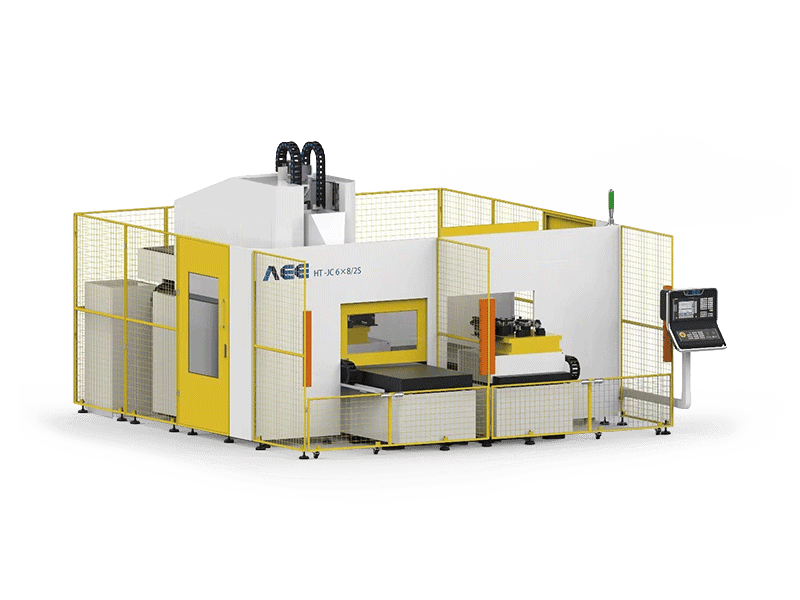
On a single-table cell the sequence runs clamp, weld, unclamp, remove, load, and the spindle waits through everything except the weld. Spindle utilization is the weld time divided by the whole cycle, and on short seams that fraction stays modest no matter how fast the head travels. A dual-worktable machine splits one bed into two independent stations. Each station carries its own clamps and its own program origin, and a shuttle axis moves the loaded station under the spindle while the finished part comes out of the other. Welding continues through handling. The idle time that remains is the swap itself, meaning the time the tables take to exchange position plus the confirmation that the incoming station is clamped and ready.
This is a utilization change rather than a process change. Rotation speed, travel speed, axial force, and tool geometry stay where they would be on a single-table machine of the same head class, because the tool still stirs the same material under the same conditions. Tool changes still stop the spindle as well, since the tool sits in the spindle and not in the table. A dual worktable hides handling, not tool maintenance, and a quotation that implies otherwise is worth questioning.
Where the Saved Time Goes and When It Disappears
Compare the two cycles with one ratio. Divide the load and unload time by the weld time and treat the result as the load-to-weld ratio. Below 1.0, the second station always has a part waiting and the spindle becomes the constraint. Above 1.0, the operator becomes the constraint, and the machine will stand idle at the swap regardless of how many tables it carries. That ratio is measurable on an existing cell in an afternoon, and it is the first number worth putting in front of a machine builder.
Four conditions decide whether the ratio you measured survives into production:
- Swap time stays short. A shuttle that takes long to index, or that needs manual re-clamping before welding, gives back part of what pendulum loading gained.
- Both stations position alike. Axis repeatability applies per axis, while agreement between two separate fixtures is a different property and has to be demonstrated rather than assumed.
- The fixture can be duplicated. Two stations need two clamp sets, two backing plates, and two sets of wear parts, and on a high-mix line that cost repeats for every part family.
- Handling stays with one person. If the second station needs a crane, a second operator, or a walk to the far end of the machine, the labor saving that justified the table shrinks.
The recovered time is genuine capacity, but it lands inside the same shift. If deburring, leak testing, or inspection downstream cannot absorb the extra parts, the queue moves and the output does not. Check the process after the machine before crediting the second station with a throughput gain.
Dual Worktable, Double Head, and Robot Cell Compared
These options get discussed as though they were alternatives, and they are not. Table count, head count, and loading method are three separate decisions, and one machine can carry any combination of them. A dual-worktable gantry with two heads exists; so does a robot-loaded cell with a single table. The useful question is which specific delay in your cycle each configuration removes.
| Configuration | What it removes from the cycle | What it does not remove | Do not choose it when |
|---|---|---|---|
| Single table, single head | Nothing; it is the baseline | Handling idle and the number of passes | Load and unload time is a large share of the cycle and volume is rising |
| Dual worktable, single head | Load and unload idle while the spindle welds | Pass count, tool changes, or crane time at the station | Load time exceeds weld time, or the fixture cannot be duplicated |
| Single table, double head | The second pass on twin-seam or two-sided parts | Handling idle between parts | Parts are small and single-seam, so the second head has nothing to weld |
| Robot-loaded single table | Manual handling and part of the idle | Fixture variation, and crane-bound heavy parts | Part mix is wide and fixture changeover dominates the shift |
| Gantry with long travel | Traverse limits on long straight profiles | Handling idle on small parts | Parts are short enough to fit a 1000 mm table |
A rotary C-axis is often mistaken for a second station. It is not one. The C-axis indexes the workpiece to follow a circumferential weld, so the head completes a loop without the fixture being repositioned. It shortens handling inside a single part and changes nothing about the wait between parts.
The Specifications That Decide Whether the Second Station Pays
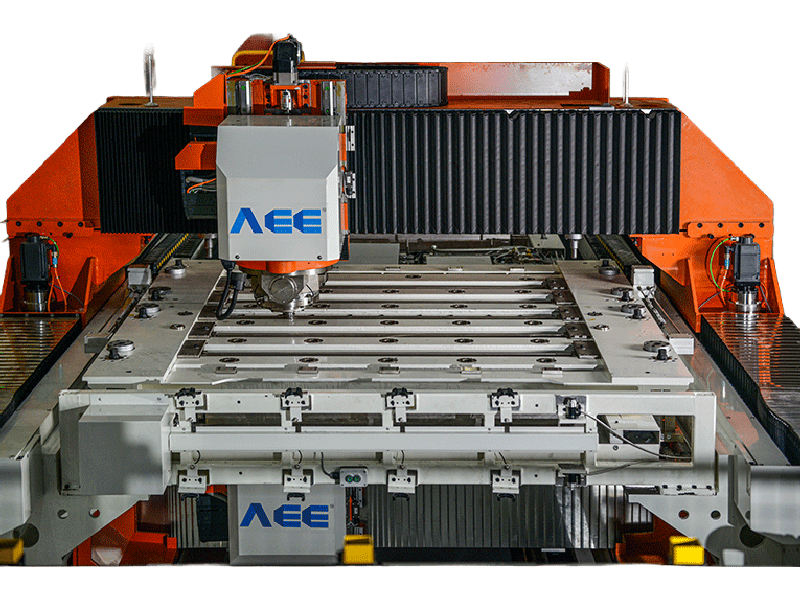
A dual-station machine is not a single-table machine with an extra table bolted on. Across the C-type family, the two-station model carries a faster, lower-torque spindle at the same 8 mm thickness rating, so choosing between the two models is also a choice of process window.
| Parameter | Single-table C-type, AEE FSW 8×10/2 | Dual-worktable C-type, AEE FSW 8×10/2S | What the figure does not tell you |
|---|---|---|---|
| Worktable and stations | 600 x 1200 mm, one station | 600 x 1000 mm, two stations | Whether your fixture fits twice and whether the second part can be staged without a crane |
| Maximum weld thickness | 8 mm | 8 mm | Nothing about alloy; 8 mm in a 6xxx extrusion is not 8 mm in copper or a 7xxx plate |
| Spindle speed, torque, power | 4000 rpm, 112 Nm, 12 kW | 6000 rpm, 65 Nm, 15 kW | Which window suits your section; top speed alone does not predict capability in thick material |
| Axis force | Z 30 kN, X 15 kN | Z 30 kN, X 15 kN | Whether the fixture and backing plate hold that force without movement |
| Positioning and repeatability | 0.03 mm and 0.03 mm | 0.05 mm and 0.03 mm | Agreement between the two fixtures, which is a separate check |
| Machine footprint | 3050 x 2900 x 2700 mm | 4600 x 4200 x 2700 mm | Aisle width, crane coverage, and door clearance for rigging |
| Machine weight | 6000 kg | 10000 kg | Floor loading and foundation cost at your site |
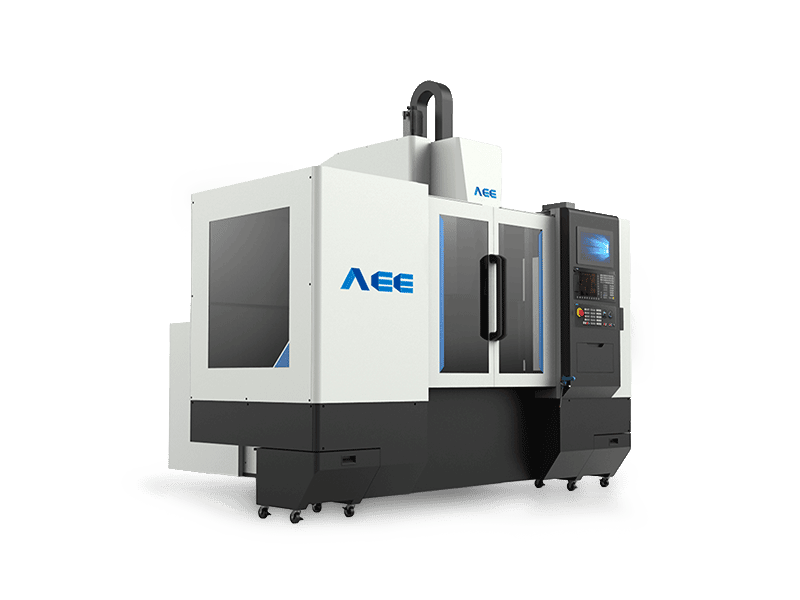
The torque difference matters more than the speed difference. A 6000 rpm spindle rated at 65 Nm suits thin sections and high travel speeds, while the 4000 rpm, 112 Nm spindle does more work per revolution and is the safer match where the tool needs torque to stir rather than speed to move. Neither figure ranks above the other. Section thickness, alloy, and tool geometry decide which window you need, and a supplier who quotes only the maximum thickness has not answered that question.
On the two-station model the control is a Siemens SINUMERIK 828D handling four-axis linkage across six numerical axes, with force, position, torque, and temperature control, an automatic tool changer, laser tracking, and weld monitoring. Those functions do more than add convenience on a machine with two stations. Torque and temperature records per weld are how you show that station A and station B produced the same joint rather than two similar ones.
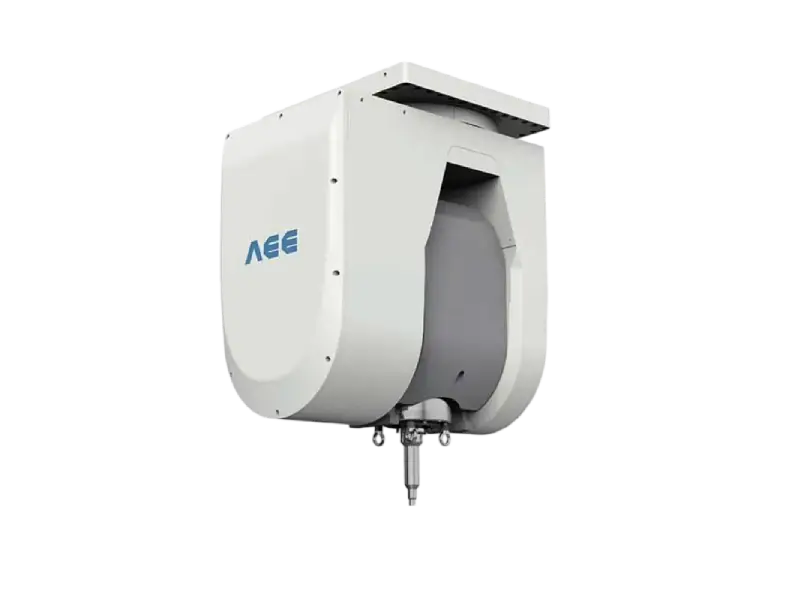
Tooling choices determine whether a two-station machine can finish a closed contour without an exit hole. <AEE provides customer with optional features FSW tool> covers optional features available on FSW tooling.
When a Second Station Stops Paying
The clearest case against the second table is a short seam with long handling. When a part takes longer to clamp and unload than to weld, the spindle waits at the swap in exactly the way it waits on a single-table machine, and the buyer has paid for footprint and fixtures instead of capacity.
Long seams on large panels raise a different constraint. A three-metre seam on a six-metre panel spends its time under the tool, and the second station has nothing to offer because the panel occupies the bed it would need. That work belongs to a gantry or an extra-length machine with a long X stroke than to a two-station C-type.
Heavy parts shift the pace to the crane. Two stations help only if the crane can serve both without the lifting time exceeding the weld, and a single overhead crane shared across the aisle can quietly cap output below the machine’s capability. Check crane coverage over both stations before the layout is frozen.
Wide part mix with low volume per family turns fixture duplication into the deciding cost. Every family needs two clamp sets, and every changeover has to be proven on both stations before the first production part.
The quiet risk is station matching. Two fixtures built to the same drawing can still clamp differently, and a backing plate that wears faster on one station shows up as a slow drift in penetration rather than as an obvious defect. Ask for clamp repeatability data and for a first-article comparison welded on both stations before acceptance, and treat a single-station sample as evidence for that station only.
What to Send With Your Inquiry
A quotation built on part drawings alone tends to answer the wrong question. The supplier can size the head from the section and the alloy, but only your measured handling time tells them whether the second station earns its footprint. The load-to-weld ratio, measured on the parts you actually run, is the single most useful number in the request.
Reject this request: “We need a dual-table FSW machine for aluminum battery trays.”
Replace it with measured and planned values: alloy and temper [6061-T6], thickness range [2.5 to 4 mm], seam length and geometry [two closed loops, 1.8 m total], measured weld time [X s], measured load and unload time [Y s], target output [Z parts per hour], fixture concept [pneumatic clamps with a water-cooled backing plate], available floor area and floor loading [L x W m, kg/m²], crane capacity and coverage, compressed air supply, and the quality records required per part.
Ask for three deliverables alongside the price: a cycle calculation that uses your measured handling time rather than an assumed one, a layout drawing showing both stations plus the operator and crane paths, and the fixture count with changeover time for each part family. Those three documents show whether the second station is a capacity decision or a station-count decision.
Send the Part and the Cycle
The choice between one table and two is settled by a drawing and two numbers: weld time, load and unload time, and the part that has to fit the 600 x 1000 mm station. Send them to Aerospace Engineering Equipment (Suzhou) Co., Ltd. at [email protected] or +86 18325808715, and we will return a cycle calculation, a two-station layout, and the fixture count for your part family, so the comparison against a single-table machine rests on your production data instead of a specification sheet.
FAQ
Does a dual worktable double FSW output?
No. The ceiling is set by how much of its available time a single-table machine currently spends welding, and a second station can only lift output toward the spindle-limited maximum. The gain is real while load and unload time fits inside the weld time. Past that point the operator, the crane, or the next process in the line sets the pace, and the extra station sits waiting.
What part sizes suit a 600 x 1000 mm dual station?
Parts that fit one station with clamps and backing in place, typically battery cooling plates, motor housings, control boxes, radiators, and similar small to medium fabrications with a seam that starts and ends. Panels and profiles longer than the table belong on a gantry or an extra-length machine, where the constraint is traverse distance rather than handling time.
Can a second station be added to an existing machine later?
Usually not. The bed, guarding, shuttle axes, and control architecture are designed together, and the safety interlock has to prevent welding at one station while the other is open. A retrofit that adds a table without that interlock changes the risk profile of the whole cell. Ask the builder to assess the specific machine rather than assuming a conversion kit exists.
How much floor space and foundation capacity does a dual-worktable machine need?
For the 8×10/2S model, a 4600 x 4200 mm footprint at 10,000 kg, against 3050 x 2900 mm at 6,000 kg for the single-table 8×10/2. That difference affects floor loading, rigging access, and aisle width, and it is cheaper to check before the order than to correct after installation.
If you’re interested, check out these related articles:
AEE attend 13th International Symposium on FSW in Kyoto, Japan on 21 – 23 May 2024
Refill Friction Stir Spot Welding (RFSSW)