
Thin-Sheet FSW Under 1mm: Avoiding Burn-Through in Aluminum
Table of Contents
- Conventional FSW Burn-Through Mechanisms Below 1mm
- Stationary Shoulder Tooling for Thin-Sheet FSW
- Process Control and Machine Requirements for Sub-1mm FSW
- Rotation Speed and Travel Speed Start Points
- Axial Force Control and Spindle Compliance
- Backing and Clamping for Thin Sheet
- Inspection Priorities for Thin-Sheet FSW Defects
- Sourcing Thin-Sheet FSW Equipment and Process Support
- Common Questions About Thin-Sheet FSW Below 1mm
- Can friction stir welding reliably join 0.8mm aluminum without burn-through?
- Does thin-sheet FSW require a backing plate?
- What is the difference between thin-sheet FSW and laser welding?
- Is below 1mm FSW production-ready for EV cooling plates?
Thin-sheet FSW below 1mm fails for a predictable reason: the rotating shoulder adds more heat than the thin aluminum envelope can carry, and the forged material underneath becomes too soft to hold the tool. Burn-through is not primarily a speed problem; it is a shoulder contact and force control problem. The reliable route is stationary shoulder FSW paired with a force-controlled spindle and a rigid, thermally managed fixture. Without that combination, lowering rotation speed is only a partial fix. This article explains the burn-through mechanism and the tooling, process, and machine choices that make sub-1mm aluminum friction stir welding production-ready.
Conventional FSW Burn-Through Mechanisms Below 1mm
In conventional FSW, the shoulder does most of the heating. A rotating shoulder pressed against the sheet surface generates frictional heat across a projected area much larger than the pin. In a 4mm plate, that heat is absorbed by material below the shoulder and spread into the workpiece. In a 0.8mm sheet, the heat-affected volume is small, and the sheet has a limited conduction path. The same shoulder energy that produces a normal weld in thicker plate can over-soften the entire cross-section.
Burn-through appears when the softened layer directly under the pin loses mechanical resistance. The axial force designed to maintain forge pressure pushes the pin through the root face. Once the pin breaks through, the process cannot recover because the backing support is lost and flash can pull additional material from the weld line.
A second mechanism is local buckling. Thin sheet expands during welding and lifts away from the backing plate when clamping is not close enough. The gap changes the effective plunge depth and shoulder contact, which increases heat input and produces thinning before visible burn-through.
Under 1mm, conventional shoulder FSW is not impossible, but its process window becomes so small that I do not start there except for very narrow, fully supported weld lines. Most burn-through failures I see in thin-sheet process development trace back to shoulder engagement or sheet lifting, not to the choice of travel speed.
Stationary Shoulder Tooling for Thin-Sheet FSW
Stationary shoulder FSW separates the functions that conventional FSW combines. The pin rotates while the shoulder slides on the material surface without rotation. That removes the large frictional heat source at the surface and lets the weld heat come mainly from the pin. For thin sheet, this is the tooling concept we qualify first.
The stationary shoulder also acts as a mechanical constraint. It contacts the top of the joint and holds the plasticized material in place while the pin stirs the weld. This reduces flash, surface grooves, and thickness loss. In our tooling work, the stationary shoulder produces a much flatter surface on thin gauge aluminum and a more uniform thermal gradient through the sheet thickness.
Our standard stationary shoulder FSW tool range starts at 1.0mm for aluminum. Below 1mm, a custom pin length and shoulder profile are needed because the cavity between the shoulder and the backing plate becomes very small. The tool must be matched to the exact sheet thickness, not selected from a general-purpose chart. A 0.1mm mismatch at this thickness is proportionally large and can change the heat balance.
| Tool approach | Shoulder heat | Flash tendency | Sheet thinning | Suitability below 1mm |
|---|---|---|---|---|
| Conventional FSW | High | High without tight parameters | Moderate to severe | Only with very narrow process window |
| Stationary shoulder FSW | Low | Minimal | Low | Preferred, with custom pin length |
| Bobbin tool | Moderate | Low | Moderate | Not recommended below 3mm |
| FSSW tool | Low | Very low | Low | Use for spot welds, not continuous seams |
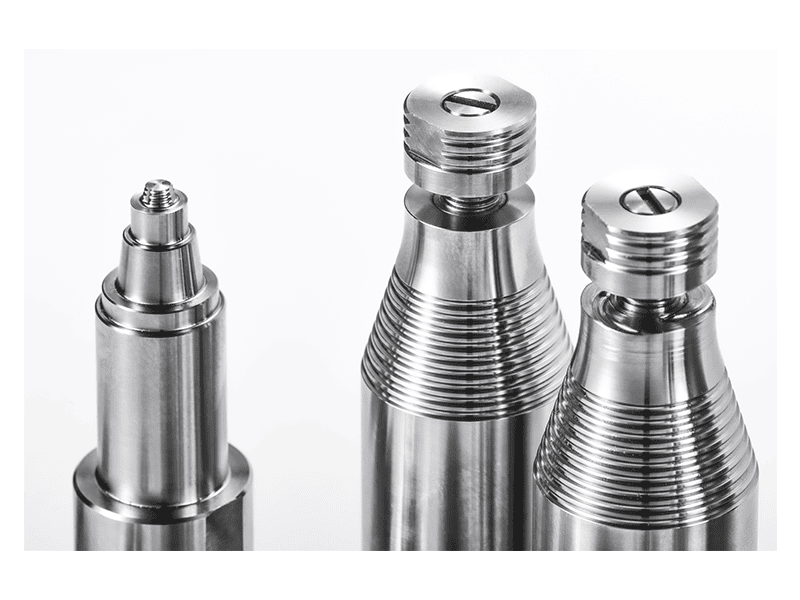
Thin-sheet work often pushes standard tool designs beyond their stable operating range. <AEE provides customer with optional features FSW tool> covers how coated surfaces, modified shoulder profiles, and other optional tool features are evaluated before a pin tool is released for production.
Process Control and Machine Requirements for Sub-1mm FSW
Once the tool is chosen, the process problem becomes force and position control. A below-1mm sheet cannot tolerate the same plunge error as a 6mm plate.
Rotation Speed and Travel Speed Start Points
Starting points depend on alloy temper, backing material, and pin diameter. For 0.8mm to 1.0mm 6xxx aluminum, I begin at 1800 to 2500 rpm and 600 to 1200 mm/min travel speed, then adjust down if the backside shows excessive heat signature or up if the weld lacks consolidation. These are process development points, not fixed recipes. A higher travel speed usually reduces heat input per unit length and is the more useful first move when sheet thinning appears. Rotation speed reduction comes second because it can reduce material flow and leave lack of fill.
Axial Force Control and Spindle Compliance
Position control can work in thick plate, but sub-1mm FSW needs force control or a well-tuned force-limited position mode. The spindle must maintain constant axial force while the machine and sheet expand. If the machine fights thermal expansion with position, plunge depth changes and the pin can break through. A spindle with low runout and accurate force sensing is more useful here than maximum torque.
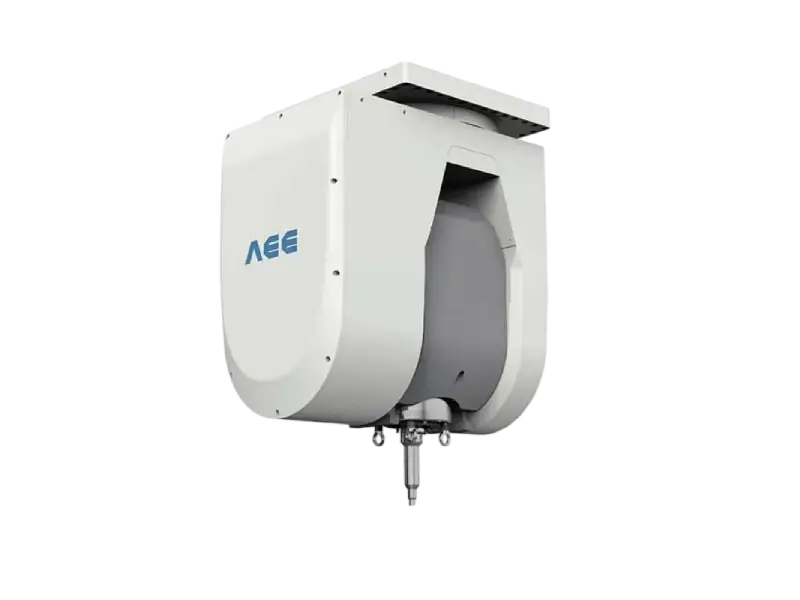
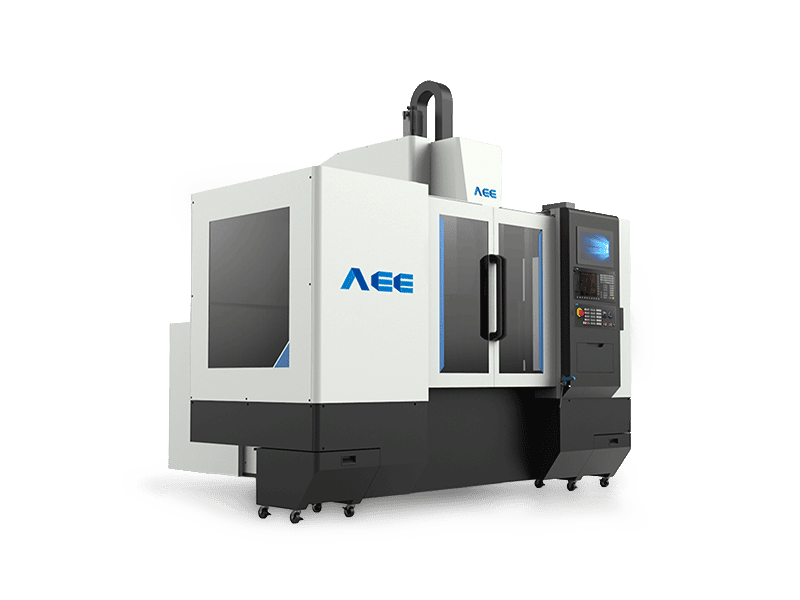
For reference, a standard C-type FSW machine with 4000 rpm spindle, 112 Nm torque, and 12 kW power has more than enough capacity for thin sheet. The difficult specification is not top speed but low-force stability and repeatability. Our C-type platform uses 0.03mm axis positioning and repeating accuracy; that matters because below 1mm, even a small Z-axis error consumes a large share of the available thickness.
Backing and Clamping for Thin Sheet
The backing plate is part of the weld tool. Thin sheet needs continuous contact along the weld line. If backing contact is interrupted, the sheet can deflect under forge force, and local thinning appears before burn-through. Clamps should be placed as close to the seam as the tool path permits, and thermal expansion should be managed so the sheet cannot buckle upward.
For heat removal, a steel backing plate gives flatness and wear life. A copper backing plate removes heat faster but may reduce weld temperature too much if the sheet is very thin. The right choice depends on alloy and travel speed. I prefer to keep the backing simple first, verify contact, and only change material when the thermal signature shows an unbalanced condition.
At this point, the largest remaining risk is machine selection based on a catalog maximum thickness. If your program involves aluminum below 1mm with a high volume target, it is worth confirming the spindle force control resolution, tool runout, and backing plan with your supplier before you commit to a machine. Send your sheet gauge, weld length, and annual quantity to [email protected]. A feasibility weld on your exact stack-up answers these questions faster than a specification review.
Inspection Priorities for Thin-Sheet FSW Defects
Thin-sheet welds fail differently from thick plate. In a 6mm weld, the main concerns are tunnel defects, porosity, and root defects. Below 1mm, the same defects exist but show sooner as dimensional loss and localized overheating.
Inspection starts with surface condition: flash, shoulder marks, edge thinning, and backside color. A dull gray or layered backside indicates excessive heat; a polished or bright line often indicates the pin is too shallow. Cross sections are essential. At 0.8mm, a 0.05mm reduction in remaining thickness is measurable and matters for pressure-containing parts. I check root consolidation first, then minimum remaining sheet thickness, then surface flash and weld toe condition. For sealed enclosures, leak tightness is the final functional check, because thin-sheet FSW is often used for cooling plates and battery-related enclosures.
A zigzag or intermittent surface appearance usually means the sheet lifted from the backing plate. A clean top surface with a small backside groove usually means the pin is close to the right depth but the backing may be too cold.
Sourcing Thin-Sheet FSW Equipment and Process Support
Sourcing thin-sheet FSW is more difficult than buying a standard machine. Most machine specifications emphasize maximum weld thickness and spindle power, but sub-1mm work depends on force resolution, tool shoulder design, backing contact, and process development. Buying on maximum thickness alone leaves the highest-risk variables unresolved.
AEE handles thin-sheet aluminum welding development with force-controlled FSW machines, stationary shoulder tooling, and process development from the same engineering team. That combination matters because the machine, tool, and fixture must be developed as one system, not purchased separately and aligned later.
Send your sheet thickness, alloy, weld length, and annual volume target to [email protected] or call +86 18325808715. We will confirm the appropriate tooling approach and, where needed, run a thin-sheet feasibility weld before you commit to equipment.
Common Questions About Thin-Sheet FSW Below 1mm
Can friction stir welding reliably join 0.8mm aluminum without burn-through?
Yes, but the process is not forgiving. Stationary shoulder FSW with a custom pin length can join 0.8mm 6xxx aluminum without burn-through when axial force and backing are controlled. The process window is narrower than for 3mm sheet, so tooling and clamping must be matched to the exact stack-up. We typically qualify the process with a series of short bead-on-plate welds, then cross-section before committing to a full part.
Does thin-sheet FSW require a backing plate?
It depends on seam length and part stiffness, but for most continuous seams below 1mm a backing plate is necessary. Without support, the sheet can deflect under forge force and the weld will thin or break through. The backing must be flat and continuous along the weld line. A steel backing plate works well for most 6xxx sheet, while a copper backing can remove heat too aggressively if the sheet is very thin. The key is contact, not just material.
What is the difference between thin-sheet FSW and laser welding?
Laser welding looks simpler because fixture requirements are lower, but the process is fusion-based and thin aluminum can still collapse or become porous if gap and focus are not tightly controlled. FSW uses a solid-state process and avoids porosity, hot cracking, and filler metal. The trade-off is clamping and backing. For sealed thin-wall enclosures where leak tightness and weld quality matter, FSW often performs better, but the fixture cost is higher.
Is below 1mm FSW production-ready for EV cooling plates?
In cooling plate programs we evaluate, below 1mm FSW is production-ready only after a stationary shoulder tool and force-controlled machine are locked into the process. Thin cooling plates demand leak-tight, flat, repeatable welds at high volume, so a feasibility weld and short pilot run matter more than a machine’s listed maximum thickness. Share your plate thickness, weld path, and annual volume to [email protected], and we will confirm the tooling and production line configuration for your part.
If you’re interested, check out these related articles:
Customized Dissimilar Material Welding Manufacturers in China
Refill Friction Stir Spot Welding (RFSSW)
AEE provides customer with optional features FSW tool