
Industry 4.0 FSW: Smart Welding Lines with Data Traceability
Table of Contents
- What Data Traceability Means in an FSW Production Line
- The Control Architecture Behind Smart FSW Welding
- Which Weld and Machine Signals Should Be Recorded
- Closing the Traceability Loop from QR Code to Weld Record
- What to Verify in an Automated FSW Line
- When Full Traceability Is Worth the Investment
- Move From Weld Data to a Traceable Production Record
- Frequently Asked Questions About Smart FSW Traceability
- Does an FSW machine already include traceability, or is it an add-on?
- What is the difference between process monitoring and quality traceability?
- How much data should a smart FSW line store?
- Can an existing FSW machine be upgraded for traceability?
Industry 4.0 FSW changes what a welding record must prove. A smart friction stir welding production line is not defined by a robot or a touchscreen. It is defined by the ability to connect part identification, machine parameters, measured process signals, and quality results into one retrievable record. That capability matters for battery trays, cooling plates, rail profiles, and wheels, where a missing weld history can delay acceptance even when the joint is physically sound. The most useful systems treat traceability as a control function, not as a report assembled after production. Otherwise the line creates data without creating proof.
What Data Traceability Means in an FSW Production Line
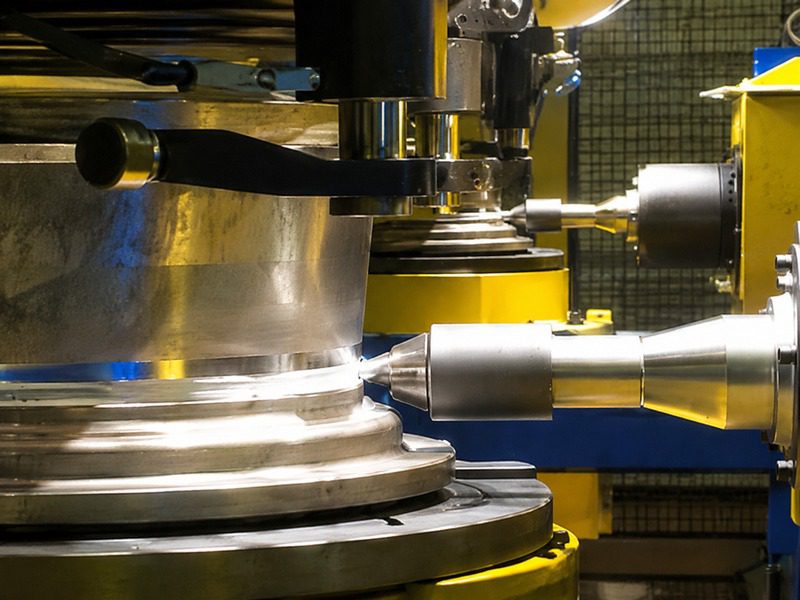
Traceability in FSW is more than a file containing spindle speed and feed rate. It is the chain that connects a specific welded component to the intended recipe, the actual process values, and the final quality decision. Four layers need to stay linked throughout the production order.
| Traceability layer | Recorded information | What it supports |
|---|---|---|
| Part identity | QR code, serial number, fixture position | Match each weld record to the correct component and batch |
| Process recipe | Tool ID, spindle speed, travel speed, force target, axis path | Show which approved parameters were selected |
| Real-time signals | Z-axis force, torque, temperature, axis position, laser tracking | Detect deviation while the weld is being made |
| Quality result | Pass/fail judgment, alarm, post-weld inspection | Release the part or route it for review |
The distinction is important. A line may record thousands of parameter values while still not proving which part received them. In a high-mix weld cell, the opposite is equally risky: the part identity is known, but the process record is too weak to explain why a weld failed. A useful smart FSW line keeps these four layers synchronized by production order, time stamp, and tool identity.
The Control Architecture Behind Smart FSW Welding
A practical smart FSW cell starts with the control functions that govern the spindle, axes, and weld head. Force control and position control are complementary. Force control keeps the forging condition stable when the component has normal thickness variation, while position control supports speed and path accuracy. Traceability requires both the set value and the measured value, because a stable command does not prove a stable weld.
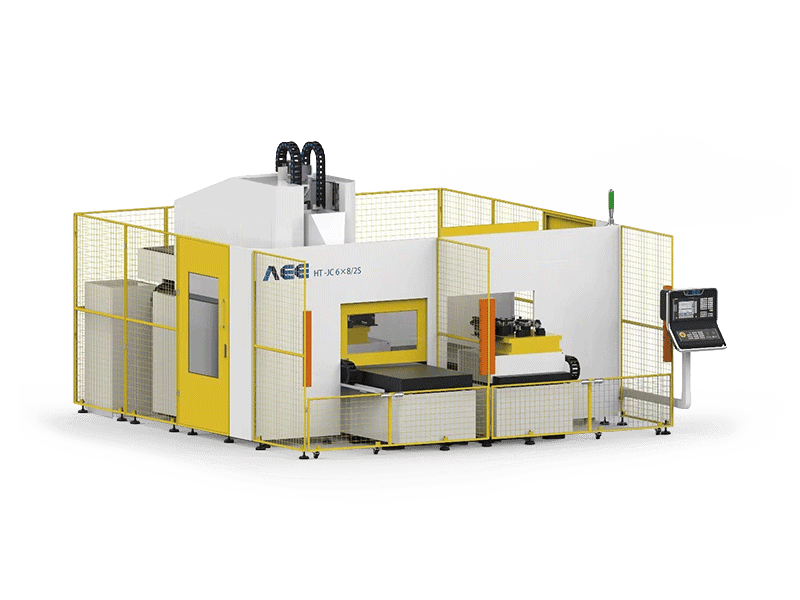
The dual-worktable C-type FSW machine is a useful reference for this architecture. Its control system adopts Siemens SINUMERIK 828D and can control force, position, torque, and temperature. The machine also provides automatic tool changing, data acquisition, visual recognition, laser tracking, and welding monitoring. That combination matters because a single recorded channel rarely explains a weld problem. For example, a torque rise may be caused by tool wear, a material change, or a deviation in plunge depth. The record becomes usable only when the machine captures the related signals together.
Which Weld and Machine Signals Should Be Recorded
Not every signal needs the same storage depth. The core signals should cover the weld condition, the tool condition, and the position of the weld path. These are the measurements that let an engineer separate a process upset from a bad part.
| Signal | Fault it helps identify |
|---|---|
| Z-axis force | Inadequate plunge depth, loss of forging pressure, tool or fixture movement |
| Spindle torque | Material variation, tool wear, improper feed, cold start behavior |
| Tool and workpiece temperature | Overheating, loss of cooling, heat input drift during a long weld |
| Axis position and speed | Path deviation, speed drift, seam misalignment |
| Seam tracking feedback | Edge offset, clamping error, start point error |
| Quality judgment output | Immediate pass/fail routing and rework decisions |
The value is not raw data volume. It is the ability to compare a current weld with an approved reference curve. When force, torque, and temperature are time-stamped against the same weld path, an engineer can identify the moment a condition moved outside the normal window. Without that time alignment, the data becomes an archive instead of a diagnostic tool.
Closing the Traceability Loop from QR Code to Weld Record
The automatic FSW production line for aluminum alloy wheels shows how part identity enters the process from the beginning. The sequence starts with QR code scanning and part identification, followed by robot loading, clamping, weld start point positioning, laser tracking, constant pressure welding, and weld quality judgment. Operators select a product recipe through the HMI and process database rather than entering parameters from memory.
That design choice is central to traceability. The wheel diameter range, weld thickness range, welding speed, and quality result are linked to the same scanned component. The line is specified for wheel diameters from 17 to 22 inches and weld thickness from 1.2 to 10 mm, with a maximum welding speed of 2.5 m/min and a rated cycle time of 45 JPH. The retractable FSW tool removes the keyhole, so the closed weld record matches a closed weld joint. When a quality issue appears, the record points back to the scanned part, the selected recipe, and the measured process values instead of forcing operators to reconstruct the event from memory.
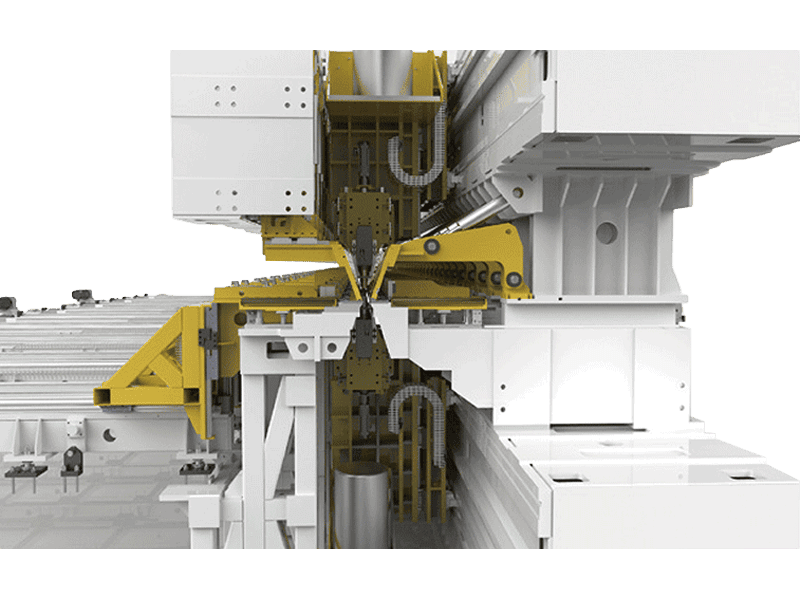
Long-profile lines follow the same principle at a larger scale. A fully automatic double-head FSW production line can weld long aluminum profiles up to 18.5 m in length and 3.5 m in width, with weld thickness from 1.2 to 16 mm. Laser tracking, pre-weld inspection, automatic water cooling, and the HMI process database support a continuous record from feed-in to cut-off and discharge. The traceability loop remains useful because the welded profile may later become part of a rail vehicle body or a structural panel where serial-level history is required.
What to Verify in an Automated FSW Line
For an overseas buyer, the most useful review is not limited to the control screen. The review should confirm that the traceability architecture covers the full order flow, including recipe selection, tool change, alarm handling, and part disposition. Before accepting a line, verify these points with the supplier.
Choose a supplier that can show the exact field list recorded for each weld, not just the phrase “traceability function”. Confirm how the part identifier enters the process, whether by QR code, fixture code, or operator input. Review what happens when an alarm occurs: does the machine stop the order, quarantine the part, and keep the event in the record? Check whether recipe changes require approval and whether the system stores the previous version. Confirm which records can be exported, in what format, and for how long. Ask whether the tool ID and tool inspection history are connected to the weld record.
Tooling adds another dimension. A production line should record the pin tool serial number, holder, spindle, and tool change event used for each weld, not only the machine settings. Optional tool functions such as retraction, water cooling, or automatic tool changing also need to appear in the weld history so the record reflects the actual configuration.
A traceable weld record also depends on matching the tool configuration to the part and process. <AEE provides customer with optional features FSW tool> covers the optional FSW tool features available for different welding requirements.
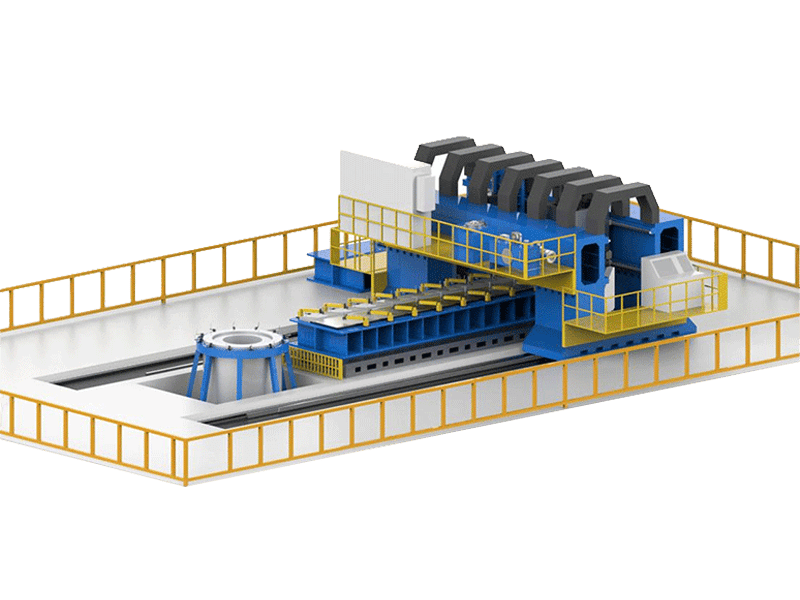
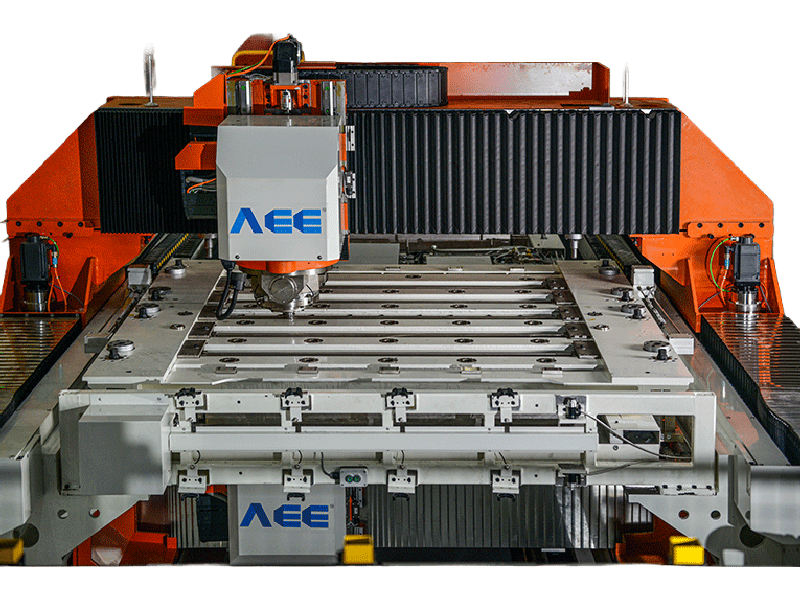
For high-load applications, the same review applies with more demanding forces. A heavy load FSW machine with integrated data acquisition, laser tracking, and weld monitoring can capture the signals needed for thick aluminum or copper welds, but the traceability value depends on how those signals are assigned to each part and process order. A well-designed record makes it possible to recall why a weld was accepted, not only that it was accepted.
When Full Traceability Is Worth the Investment
Full traceability is not necessary for every FSW application. A laboratory machine used for feasibility studies may need only a solid parameter log and a saved weld program. The case for full part-level traceability strengthens when the weld record is itself a deliverable, such as in EV battery trays, sealed enclosures, rail structures, aerospace components, or parts exported to customers with strict quality audits.
The decision should follow the consequence of a missing record. If a lost weld history can stop shipment, trigger a recall review, or prevent a customer audit from closing, the traceability system should be specified as part of the production line, not added after installation. If the parts are low-volume development samples, investment may be better directed toward process development and tooling. The practical distinction is whether the organization needs to prove the history of each scheduled part or whether it only needs to understand the process for future use. Most smart FSW lines fall between those extremes, so the traceability specification should be matched to the product risk and customer evidence requirements rather than to a fixed software feature list.
Move From Weld Data to a Traceable Production Record
If you are planning a smart FSW line, define the weld record before defining the machine. Send the part family, material and thickness range, weld length or diameter, required cycle time, annual volume, traceability fields, and inspection criteria. Aerospace Engineering Equipment (Suzhou) Co., Ltd. can help match the machine, tooling, automation, and data structure to the quality record your customer expects. Contact [email protected] or +86 18325808715.
Frequently Asked Questions About Smart FSW Traceability
Does an FSW machine already include traceability, or is it an add-on?
It depends on the control system and production line configuration. Some machines include data acquisition, process database, laser tracking, and weld monitoring as standard elements, while others require integration with an upper-level traceability system. Ask the supplier for the exact data fields, not just the presence of a PLC or HMI.
What is the difference between process monitoring and quality traceability?
Process monitoring shows what is happening during the weld and can trigger alarms. Quality traceability connects that process information to the part identity, recipe, tool, operator, and final pass/fail decision. A machine can monitor a weld without making the full history retrievable by part serial number.
How much data should a smart FSW line store?
The right amount depends on the product risk, customer audit requirements, and retention policy. For high-value serialized parts, a full time-stamped record of force, torque, temperature, axis position, seam tracking, and quality judgment is normally justified. For development work, a complete parameter log and saved weld programs may be sufficient.
Can an existing FSW machine be upgraded for traceability?
Often yes, if the CNC and servo system expose the required process signals through an open interface. Common upgrades include adding force and temperature sensors, linking a QR scanner, installing a process database, and connecting the machine to a plant network. If the existing controller cannot provide stable time-stamped process data, a more substantial retrofit may be required.
If you’re interested, check out these related articles:
Customized Dissimilar Material Welding Manufacturers in China
Refill Friction Stir Spot Welding (RFSSW)
AEE provides customer with optional features FSW tool
AEE attend 13th International Symposium on FSW in Kyoto, Japan on 21 – 23 May 2024