
How to Write an FSW Equipment RFQ That Gets Accurate Bids
Table of Contents
- What Belongs in an FSW Equipment RFQ?
- Application Data Suppliers Cannot Assume
- Machine Requirements That Must Be Measured
- How Much Process Detail Should Be Included Before You Write the RFQ?
- How Do You Structure Technical Requirements for Comparable Bids?
- When to Use a Comparison Table Instead of Prose
- How Do You Evaluate FSW Equipment Proposals Against the RFQ?
- Ready to Send Your FSW Equipment RFQ?
- What Do Buyers Often Miss in FSW Equipment RFQs?
- Should the RFQ name a machine model or just the application?
- How much part tolerance should the RFQ include?
- What if the material is still under development?
- Do I need a free RFQ template or a specification review first?
Most FSW equipment RFQs fail before they reach a machine builder. They state a desired machine footprint and spindle speed, but leave out the three constraints that determine whether a proposal is manufacturable: part geometry, material family, and production rhythm. This article explains how to write an FSW equipment RFQ that returns technically comparable bids instead of a folder of mismatched quotes. It includes the specification blocks used when reviewing RFQs at Aerospace Engineering Equipment, plus a structure you can adapt for battery trays, water-cooling plates, structural aluminum profiles, and similar programs. The goal is a proposal set where every supplier is quoting the same machine problem.
What Belongs in an FSW Equipment RFQ?
A technical RFQ for FSW equipment is not a purchase request for a machine model. It is a specification package that lets three or four suppliers quote the same problem. Without that package, one bid includes a C-type machine sized for a small water-cooling plate, another includes a gantry machine for a large battery tray, and the commercial comparison becomes meaningless.
Five blocks do most of the work:
- Application data: part name, drawing number or 3D model, material, thickness range, weld path length, joint type, and production volume.
- Material and process scope: alloy series, temper, cast or wrought condition, dissimilar material pairs, and any existing weld procedure.
- Machine performance requirements: axis strokes, maximum weld depth, axial force, spindle torque and speed range, positioning accuracy, and repeatability.
- Tooling and acceptance: pin tool type, shoulder design, expected tool life, weld quality targets, NDT method, and mechanical test requirements.
- Project scope: delivery location, site power, compressed air, training, installation, spare parts, and after-sales response.
The table below is a shorthand version used when a buyer sends an incomplete draft. It shows which question each block forces a supplier to answer.
| RFQ block | What to state | What it forces suppliers to confirm |
|---|---|---|
| Part geometry | Thickness range, weld path length, joint type, access restrictions | Machine envelope, fixture clearance, and weld angle control |
| Production rhythm | Parts per shift, cycle time, batch size, loading method | Single or dual worktable, robot loading, or full production line |
| Material family | Alloy series, temper, cast or wrought condition, dissimilar joints | Spindle torque, force capacity, and parameter development scope |
| Quality evidence | NDT method, acceptance standard, weld class, qualification records | Weld monitoring, data logging, and procedure qualification support |
This is where most RFQs lose their first week. The buyer writes “aluminum parts” instead of naming the alloy, temper, and thickness range. That omission produces three different spindle and force calculations from suppliers who must assume the worst case.
Application Data Suppliers Cannot Assume
Supplier assumptions are expensive in FSW. A machine sized for 6xxx aluminum sheet will not automatically handle 2xxx aerospace plate or copper busbar. State the full material family, the maximum and minimum weld thickness, and whether the part is a flat plate, a formed battery tray, a cylinder, or a closed seam.
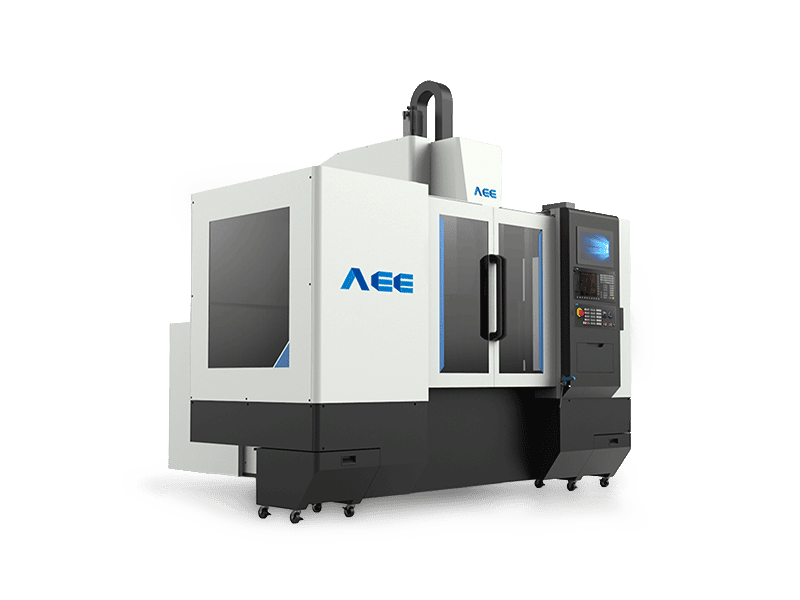
For example, an 8 mm 6061-T6 flat plate with a straight weld path points toward a C-type machine with moderate force capacity, such as an AEE FSW 8×10/2 with 30 kN Z-axis force and 112 Nm spindle torque. A 2500 mm by 4000 mm structural panel points toward a gantry machine with a larger working table and higher force capacity. The application data decides the machine class before any commercial discussion begins.
Machine Requirements That Must Be Measured
Do not ask for “high precision” in an FSW equipment RFQ. Ask for positioning accuracy and repeatability values, axis strokes that exceed the part envelope with fixture clearance, and a maximum Z-axis force that covers the weld depth and heat-treatable alloy temper. If the buyer leaves these values open, suppliers will quote the lightest configuration that looks acceptable.
How Much Process Detail Should Be Included Before You Write the RFQ?
Process detail is where a good RFQ separates a real production requirement from a loose machine inquiry. Three process decisions must be fixed before the RFQ goes to suppliers: whether the weld is 2D or 3D, whether the production is manual loading or automated, and whether the tool needs to eliminate the exit hole. Each decision changes the machine architecture.
If the weld path is a straight seam or a simple contour, a standard C-type or gantry machine fits. If the path is a curved 3D surface, the RFQ must specify A-axis and C-axis movement and the required rotation range. If the part is a long rail profile or a large panel, the RFQ must state the longest weld seam and the widest plate dimension separately.
Production rhythm matters as much as geometry. A dual-worktable C-type machine with two stations lets loading and unloading continue while the spindle is welding. A standalone machine has lower capital cost but creates more idle time in high-volume work. The RFQ should state the target parts per shift and the acceptable cycle time, then ask the supplier to explain how the proposed machine meets that rhythm.
Tooling requests create hidden proposal differences if they are not written into the RFQ. <AEE provides customer with optional features FSW tool> covers how optional tool features and machine-side capabilities should be specified before quotation so the tooling quote reflects the actual weld path, material, and access constraints.
If the part is a sealed battery enclosure or a cooling circuit, the RFQ should require leak-testing evidence and a tooling strategy that avoids exit holes. Retractable pin tools and bobbin tools solve different problems. A retractable FSW tool gradually withdraws the pin into the shoulder to fill the exit hole on a closed weld. A bobbin FSW tool works from both sides without a rigid backing plate. The RFQ should name the tool type only if the process is already proven; otherwise it should ask the supplier to propose the tooling and own the weld quality.
How Do You Structure Technical Requirements for Comparable Bids?
The technical requirements section should read like a test specification, not a brochure request. The goal is to make every supplier bid the same measured envelope. The cleanest structure is a table of mandatory values and optional improvements. Mandatory items get a pass-fail check. Optional items let suppliers propose a better approach without changing the bid baseline.
For an FSW machine, the mandatory block normally includes:
- maximum weld depth by alloy family
- X, Y, and Z axis strokes
- maximum Z-axis axial force
- spindle speed range and torque at speed
- positioning accuracy and repeatability
- tool holder interface, such as BT40, BT50, or flange
- control system and force-control mode
- safety guarding and CE or equivalent certification
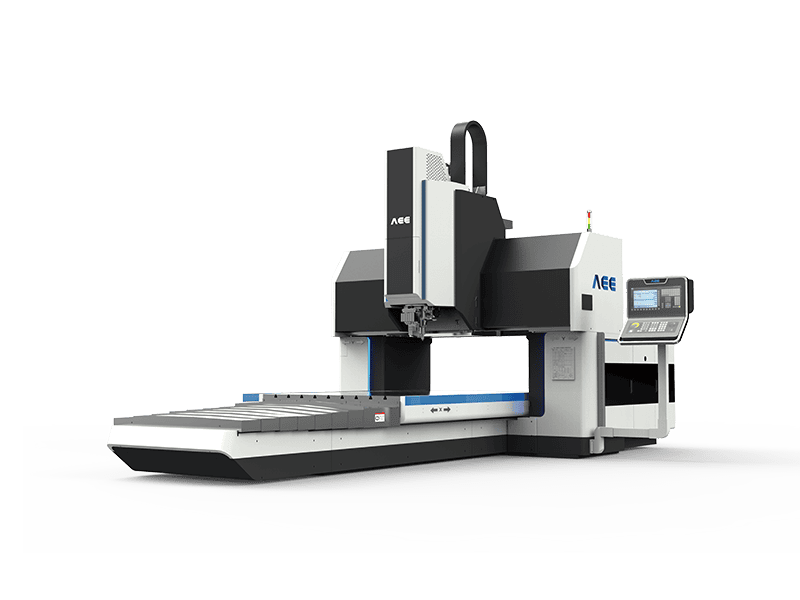
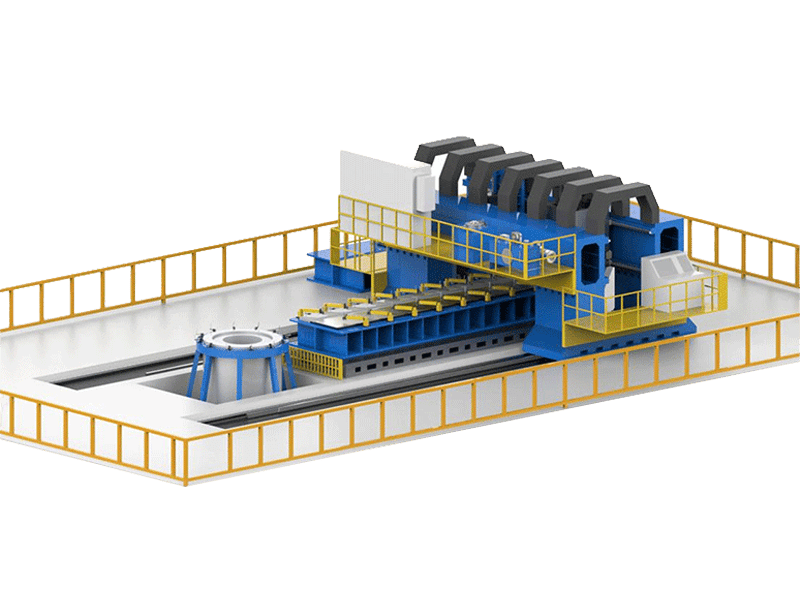
That is where a gantry FSW machine for a large panel can be separated from an extra-length machine for rail profiles. A gantry machine may offer 4000 mm X-axis stroke and 60 kN force for thick panels. An extra-length straight profile machine, such as an AEE FSW 8×160/1, carries a 16,000 mm X-axis stroke for rail and marine profiles but is not the right choice for a compact water-cooling plate.
For programs that mix linear FSW and spot welding, treating the spot welding cell as a separate line item changes machine selection. <Refill Friction Stir Spot Welding (RFSSW)> covers how keyhole-free spot welding changes the tooling and force requirements your RFQ should isolate from a conventional FSW machine.
When to Use a Comparison Table Instead of Prose
If the RFQ includes two or three machine classes, use a comparison table. List the mandatory parameters as rows and ask each supplier to enter their offered value. This forces suppliers to state a numerical commitment rather than a generic confirmation. It also reveals which supplier is quoting a smaller machine at a lower price and which is quoting the machine your part actually needs.
| Parameter | Mandatory requirement | Supplier response |
|---|---|---|
| Max weld depth in 6xxx aluminum | State your maximum thickness, typically 8 mm, 16 mm, 25 mm, or 100 mm | Enter offered capacity and derate by material |
| X-axis stroke with fixture clearance | State the longest part dimension plus clamp space | Enter offered stroke and residual clearance |
| Z-axis axial force | State required force for the hardest alloy and deepest weld | Enter force at stated welding speed |
| Spindle torque | State torque at the lowest required speed | Enter torque curve or minimum torque |
| Accuracy | State positioning accuracy and repeatability limits | Enter measured values from acceptance test |
This table may look administrative, but it is what moves an RFQ from “we can do this” to “here is the measured envelope we will sign.” If the supplier cannot fill in a row, that row becomes a qualification risk.
If your program mixes linear FSW with spot welds or dissimilar material joints, separate those from the main machine requirement in the RFQ. Spot welding cells and mixed-material trials change tooling, force, and cycle time assumptions. Confirm these before you finalize the equipment list; send the part range to [email protected] and we will identify which configurations are worth quoting.
How Do You Evaluate FSW Equipment Proposals Against the RFQ?
Bid evaluation should be an engineering comparison, not a price-only screen. Three checks catch most bad quotes. Start by confirming that each proposal answers every mandatory requirement with a numeric value. A proposal that says “compliant” without a measured spindle force or axis stroke is not a bid; it is a request for more time.
The second check compares the stated weld speed and cycle time against the production rhythm in the RFQ. A machine can meet the geometry but fail the shift target because it needs re-clamping between welds. Ask the supplier to show the load-weld-unload sequence for your actual part, not a catalog part.
The third check compares the acceptance evidence. The bid should state how the machine will be tested before shipment and how much sample welding is included. For a new material or joint, ask for a sample weld or feasibility trial before the machine order is released. This step is inexpensive compared with discovering a process mismatch after installation.
When the metal stack includes copper, cast aluminum, or mixed alloys, do not let the RFQ treat material choice as an afterthought. <Customized Dissimilar Material Welding Manufacturers in China> covers how custom dissimilar material programs require early tool development and parameter trials, which belong in the RFQ timeline and acceptance plan.
After the technical evaluation, check the project execution items: delivery lead time, packing, installation labor, CE documentation, training days, spare parts list, and remote support. These items rarely change the machine decision, but they change the all-in cost and the startup timeline.
Ready to Send Your FSW Equipment RFQ?
Most bid spreads come from assumptions hidden in the first draft. A supplier cannot recover from missing force, tooling, or acceptance data once proposals are under deadline. That is why the most useful step is a technical review before the RFQ goes to multiple machine builders.
Send the part drawings, material, cycle time, and weld path to Aerospace Engineering Equipment, and we will check whether your application data points to a standard C-type machine, a gantry machine, an automated line, or a customized cell. We will also identify which specifications can be tightened or relaxed to improve bid quality.
Send your RFQ draft, part models, and target volume to [email protected] or call +86 18325808715. We will respond with the specific fields to correct before you request final pricing.
What Do Buyers Often Miss in FSW Equipment RFQs?
Should the RFQ name a machine model or just the application?
Start with the application, not a model number. A machine model locks the supplier into one architecture before the part constraints are tested. The RFQ should define the part geometry, material, weld path, force, and production volume, and ask the supplier to justify the machine class. If a supplier recommends a C-type machine for a small part and a gantry machine for a large panel, that is a useful technical response. The model number comes after the evaluation, when the offered envelope matches the application and the acceptance plan.
How much part tolerance should the RFQ include?
Many buyers think fixture tolerance is a supplier problem, so they leave it out. The opposite is true. Clamping force, fixture rigidity, and part flatness determine weld repeatability more than many machine parameters. State the part flatness, locating datum, and allowable distortion after welding. If the part is a thin sheet below 2 mm, also state the acceptable surface condition and the support strategy. This lets the supplier propose the right backing plate, clamping plan, and weld sequence instead of quoting the cheapest standard fixture.
What if the material is still under development?
Then the RFQ must include a trial stage. If the alloy or joint design is not fixed, do not ask for final cycle time and tool life commitments. Ask for a feasibility welding service or sample-weld milestone before the production machine order. If the material is already qualified, the RFQ can require a written weld procedure specification and test reports. The difference matters: a development program needs parameter envelopes and tooling iterations, not an immediate production machine.
Do I need a free RFQ template or a specification review first?
In programs we have supported, a complete template is rarely the first need. The first need is confirming which specification blocks apply to your alloy and weld path. A long generic template creates work without improving bid quality. A shorter review against your part data is faster. Specify the part range, material, and production plan, and we will confirm which RFQ fields apply to your program and which can be cut. Share your requirements at [email protected] and we will confirm the RFQ structure before you circulate it.
If you’re interested, check out these related articles:
AEE attend 13th International Symposium on FSW in Kyoto, Japan on 21 – 23 May 2024
Customized Dissimilar Material Welding Manufacturers in China