
Gantry vs. C-type FSW Machines: Which Fits Your Production?
Table of Contents
- What Does Each Machine Architecture Change
- Where C-type FSW Machines Fit Best
- Where Gantry FSW Machines Fit Best
- How Rigidity, Force, and Weld Quality Are Linked
- Loading, Automation, and Operator Workflow
- A Practical Selection Sequence
- Define Your Part Envelope Before Finalizing a Platform
- FAQ
- Is a C-type FSW machine always less capable than a gantry FSW machine?
- What part size points toward a gantry FSW machine?
- Can a gantry FSW machine weld curved or 2D contours?
- What should I confirm before requesting a quotation?
Choosing between a gantry FSW machine and a C-type FSW machine usually comes down to four production facts: part size, weld depth, the shape of the joint path, and how the workpiece moves through the cell. A C-type machine places the spindle on a compact open frame that gives operators direct access to small and medium parts. A gantry machine carries the spindle across a larger table, which suits long panels, wide assemblies, and thicker aluminum sections. Neither architecture is automatically better. The practical question is which frame shape matches the part, fixture, and batch pattern you actually run.
What Does Each Machine Architecture Change
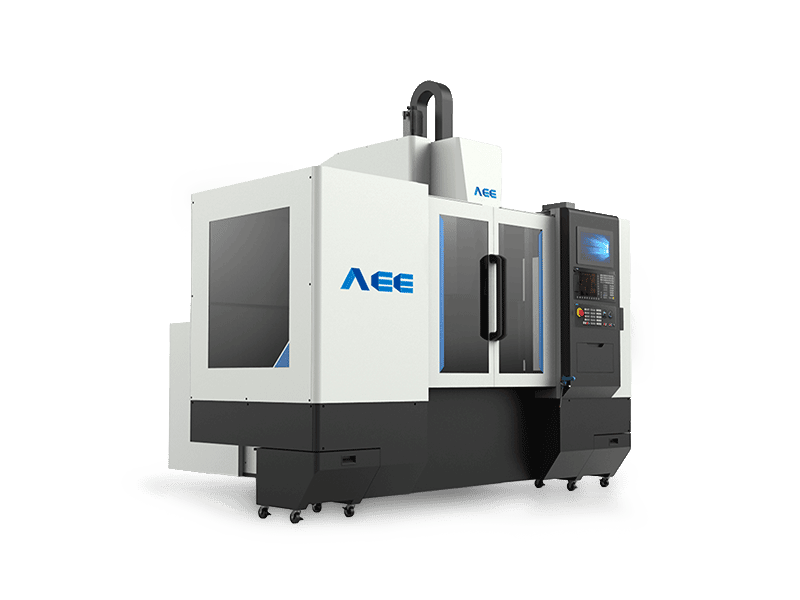
A C-type FSW machine uses a throat opening and a spindle mounted on a rigid vertical column. The workpiece sits inside the throat, so the operator can load from the front and stay close to the tool, fixture, and joint. The shorter load path helps hold position on small and medium parts, and the compact footprint leaves more room for development work or multiple cells in a limited floor area.
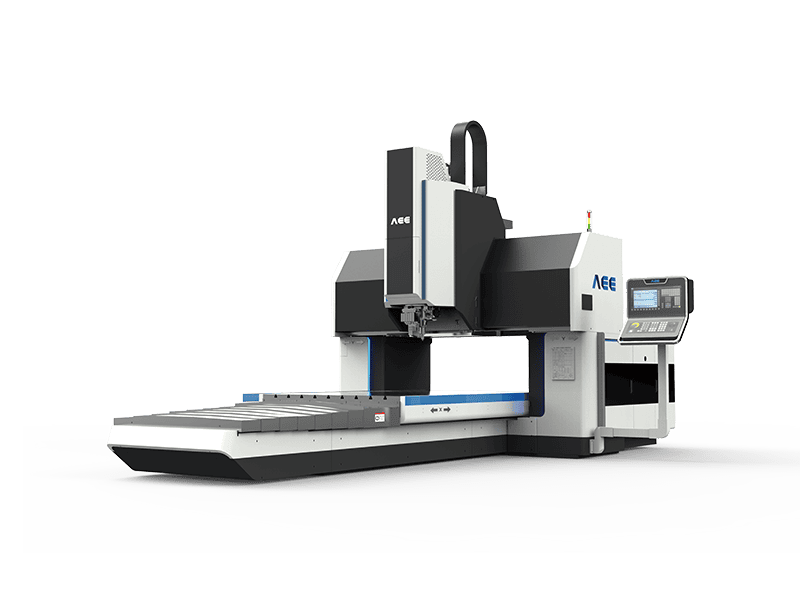
A gantry FSW machine moves the spindle along a bridge over a stationary table. The table can grow to the size of the workpiece instead of forcing the operator to reposition a long panel during welding. This layout suits linear seams, wide assemblies, and heavy plates. The trade-off is greater machine weight and floor space, along with a longer structural path that the control system must manage.
The table below summarizes the platform-level differences that most often separate the two choices.
| Selection factor | C-type FSW machine | Gantry FSW machine |
|---|---|---|
| Work envelope | 600 mm by 1200 mm table with X/Y/Z strokes of 1000 mm by 600 mm by 300 mm on the 8×10/2 platform | 1800 mm by 2500 mm table and larger, with X-axis stroke up to 4000 mm |
| Maximum weld thickness | 8 mm | 8 mm to 25 mm depending on model |
| Z-axis and X-axis force | 30 kN and 15 kN | 30 kN to 60 kN and 20 kN to 40 kN |
| Path control | 2D with C-axis rotation | 1D linear or 2D depending on model |
| Loading access | Front-loading throat with a compact footprint | Large stationary table for long or heavy workpieces |
| Typical fit | Electronics cooling plates, radiators, research, small and medium parts | Battery trays, large aluminum panels, rail profiles, heavy sections |
These characteristics screen candidates, but they do not create a capability ranking. A compact C-type machine can be the better process choice when the part fits the throat and the shop needs fast access. A gantry machine becomes necessary when the part or fixture leaves the practical working range of that throat.
Where C-type FSW Machines Fit Best
C-type machines earn their place in small and medium part production where access, quick changeover, and process development matter. The front-loading throat reduces setup time and gives the operator direct visibility of the tool, fixture, and joint. That accessibility is useful for research labs, electronic cooling plates, radiators, motor housings, and automotive or consumer electronics parts with shorter weld lengths.
In the 8×10/2 C-type configuration, the working table is 600 mm by 1200 mm, the spindle supplies 12 kW and 112 Nm, and the Z-axis capacity is 30 kN. The C axis supports continuous rotation for 2D contours and circumferential welds. A dual-worktable version keeps the same compact working principle but allows one station to be loaded while the other station welds.
Where Gantry FSW Machines Fit Best
A gantry machine becomes the practical choice when the part is long, wide, or heavy enough that moving the weld head is easier than moving the workpiece. Large battery trays, rail vehicle panels, ship deck assemblies, and oversized aluminum structures fit this pattern. The gantry bridge can carry the spindle across a stationary plate while the fixture holds the part flat against the backing bar.
The gantry range expands from an 800 mm by 1000 mm worktable on the FSW 16×8/1 to a 2500 mm by 4000 mm table on the FSW 25×40/1. Spindle torque and force rise with the application: the smaller gantry supplies 160 Nm and 50 kN of Z-axis force, while the 25×40/1 configuration supplies 257 Nm and 60 kN. That headroom matters when the tool must plunge into a thicker aluminum stack or hold a long straight weld without losing depth control.
How Rigidity, Force, and Weld Quality Are Linked
Frame architecture alone does not guarantee weld quality. The more useful comparison is whether the force loop can hold the tool at the required plunge depth under the expected welding force. A C-type machine uses a short load path, which can produce high positioning accuracy on small parts. The 8×10/2 platform lists 0.03 mm positioning accuracy and 0.03 mm repeatability. Some larger gantry platforms specify 0.05 mm positioning accuracy and 0.03 mm repeatability. That difference is not a defect. It is a trade between envelope size and the difficulty of holding equal accuracy across a longer axis.
Z-axis force also sets a practical limit on material stack and weld depth. The C-type machine’s 30 kN Z-axis capacity suits thin and medium nonferrous sections. The larger gantry model’s 60 kN capacity supports deeper single-pass welding in thick aluminum. If the product requires a 25 mm single-side aluminum weld, the decision moves toward a gantry machine rather than a C-type machine.
Loading, Automation, and Operator Workflow
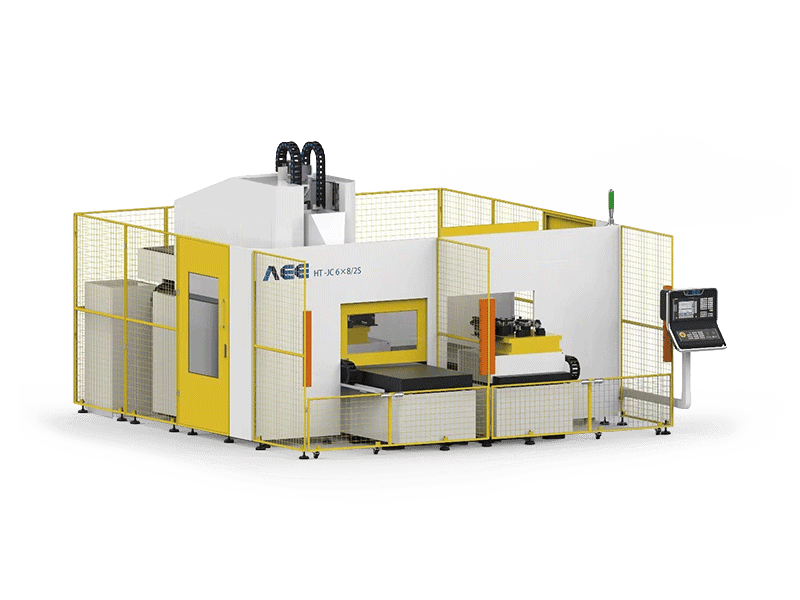
Throughput is not only spindle speed. It is the time lost while the machine waits for loading, unloading, and part changeover. A single-worktable C-type machine fits prototype and batch work because operators can reach the fixture directly. A dual-worktable C-type machine takes that logic further: one station welds while the other is loaded, reducing idle time on repeat jobs.
On a large gantry machine, loading is different. The operator sets the full sheet, panel, or assembly on the table and starts a long weld cycle, so cycle time dominates the workflow rather than part exchange. Automatic loading, laser tracking, and a process database become more valuable as the part becomes larger and harder to reposition manually.
A Practical Selection Sequence
First, verify the part envelope and joint path. If the workpiece or fixture fits inside the C-type throat and the weld path is short or circumferential, a compact machine may be the more flexible choice.
Second, check weld depth and material stack. Thin aluminum sections rarely require a large gantry. Thicker sections, long continuous welds, or large fixtures shift the requirement toward a gantry platform with higher Z-axis force.
Third, evaluate loading pattern and batch size. High-mix small parts often benefit from front access or dual worktables. Large, low-variety panels usually run more efficiently on a stationary gantry table.
Fourth, compare the process package rather than the frame alone. Spindle interface, force control, data logging, tool holder, and optional retractable tool features can affect repeatability as much as the machine base.
Machine architecture sets the work envelope, but the process package around the spindle often decides whether a part can be welded repeatably. <AEE provides customer with optional features FSW tool> covers optional tool features that buyers can evaluate before specifying an FSW process.
Define Your Part Envelope Before Finalizing a Platform
If the decision between a gantry FSW machine and a C-type FSW machine is still open, send the part drawing or a simplified envelope sketch, along with material, joint type, maximum weld depth, required weld length, and expected monthly volume. Those five pieces of information are enough to narrow the platform and frame a technical proposal. Contact Aerospace Engineering Equipment (Suzhou) Co., Ltd. at [email protected] or +86 18325808715.
FAQ
Is a C-type FSW machine always less capable than a gantry FSW machine?
No. For small and medium parts with thinner sections, a C-type machine can provide easier access, compact floor space, and high positioning accuracy. The gantry advantage appears when the work envelope, weld depth, or part weight exceeds what the C-type throat can handle.
What part size points toward a gantry FSW machine?
A gantry machine becomes the stronger candidate when the workpiece or fixture no longer fits inside a C-type throat, or when the process requires long straight welds on a stationary panel. Large battery trays, wide aluminum panels, and rail profiles are common triggers.
Can a gantry FSW machine weld curved or 2D contours?
Some gantry models include a C axis for 2D paths, while other gantry models are intended for 1D linear welding. Check whether the part requires continuous rotation or angular control. The C-type platform includes a C axis for 2D and circumferential welds.
What should I confirm before requesting a quotation?
Confirm part dimensions, material and temper, joint type, weld depth, weld length, tolerance requirements, and monthly volume. Also note whether you need dual worktables, automation, data traceability, or a closed-contour process without an exit hole.
If you’re interested, check out these related articles:
Refill Friction Stir Spot Welding (RFSSW)
AEE provides customer with optional features FSW tool
Customized Dissimilar Material Welding Manufacturers in China