
FSW Tool Cost: How to Balance Price, Life, and Weld Quality
Table of Contents
- FSW Tool Cost Goes Well Beyond the Purchase Price
- Tool Life Directly Determines Your Welding Cost Per Meter
- Poor Weld Quality Is the Biggest Hidden Cost in FSW
- Tool Design Choices Impact Your Long-Term Tool Cost
- A Strong Supplier Partnership Reduces Total Cost of Ownership
- Managing FSW Tool Cost in Manufacturing
- Common Questions About FSW Tool Costs and Performance
- How do I figure out the true per-meter cost of an FSW tool?
- Does a more expensive tool material always give better life?
- Can I extend tool life by reconditioning the pin?
- What is the most common mistake when comparing tool costs?
When procurement teams compare FSW tool prices, the lowest quote often looks attractive. But plant managers know that a tool’s real cost shows up on the production floor, not on the purchase order. A tool that wears out after 200 meters or causes tunnel defects in a batch of battery trays can wipe out any upfront savings overnight. This article examines how friction stir welding tool costs are shaped by tool life, weld quality, and application requirements, and what it takes to control those costs without gambling on cheap tooling.
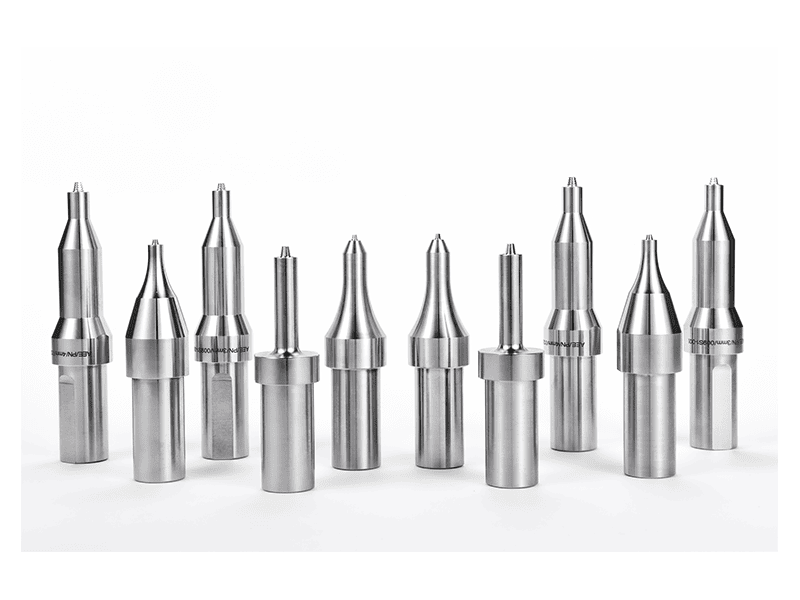
FSW Tool Cost Goes Well Beyond the Purchase Price
The price you pay for an FSW tool is only the starting point. When we quote customers for tooling, we always walk them through the total cost per meter welded, which includes tool life, rework, and machine downtime. A tool priced at $500 that runs 500 meters of aluminum weld costs $1.00 per meter. A $1,200 tool that runs 3,000 meters costs $0.40 per meter. The math seems obvious, but the less obvious cost comes from quality failures that stop production.
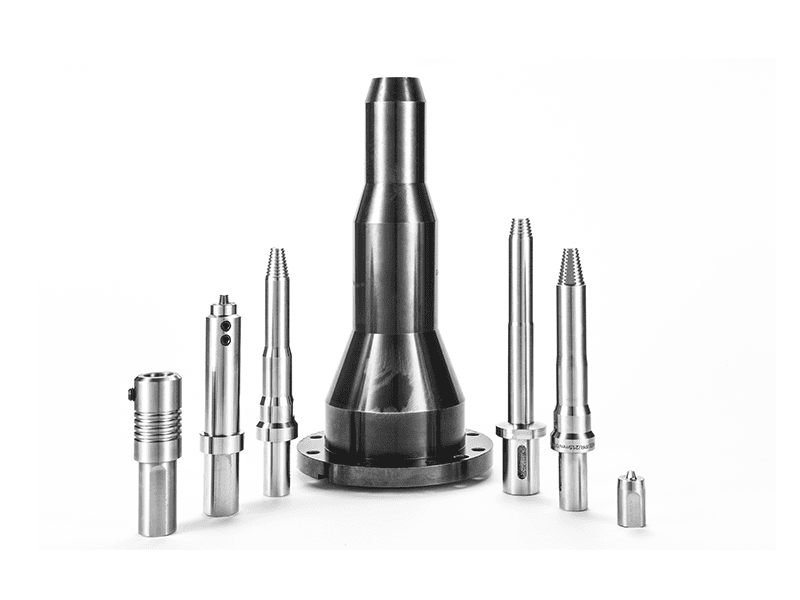
Beyond material cost, tooling expense includes inventory, changeover time, and the risk that a worn tool starts producing inconsistent welds before anyone notices. We have seen lines where operators tracked tool life with a whiteboard, and the first sign of trouble was a spike in reject parts. That spike cost more than a year of premium tools. So the real question is not what a tool costs, but what a day of bad welds costs your operation.
Tool Life Directly Determines Your Welding Cost Per Meter
Tool life is the multiplier that makes the biggest difference in budget. The substrate material, pin geometry, and welding parameters all interact to determine how many meters you get before tool replacement. In our work with aluminum battery tray production, a switch from a standard H13 tool to a tungsten carbide tool with an optimized threaded pin increased tool life from roughly 1,200 meters to over 8,000 meters per tool. The higher upfront cost reduced per-meter spending by more than 60%.
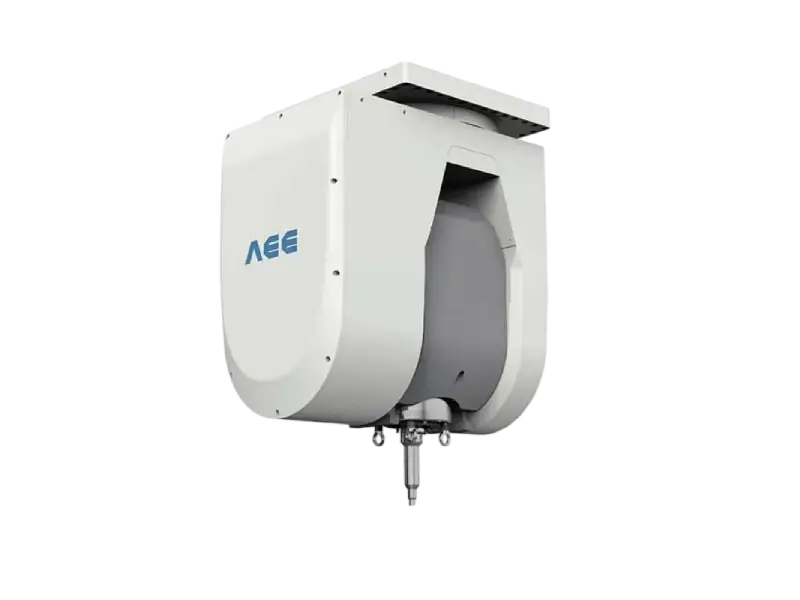
But tool life is not just about the tool material. It depends on spindle characteristics, force control precision, and heat management. A machine that maintains consistent axial force within 0.5 kN will extend tool life compared to a machine that hunts around the setpoint. That is why we train our customers to log tool life against process parameters, not just tool batches. When you start seeing life variations exceeding 20% between identical tools, the cause is almost always in the machine setup or the material batch, not the tool itself.
Tool life data only makes sense when you control the machine variables. <AEE provides customer with optional features FSW tool> covers how optional features like force control and laser tracking help standardize welding conditions so tool life becomes predictable shift to shift.
Poor Weld Quality Is the Biggest Hidden Cost in FSW
Quality failures turn a low-cost tool into the most expensive purchase you made. Tunnel defects, lack of fusion, or excessive flash are rarely caused by the tool alone, but a poorly designed or worn tool amplifies every other process variable. When a retractable pin tool does not retract smoothly because of galling on the shoulder, the exit hole may not close completely, and a battery housing that fails a leak test becomes scrap. The scrap value of aluminum is trivial compared to the lost production time and the potential delay in delivering customer orders.
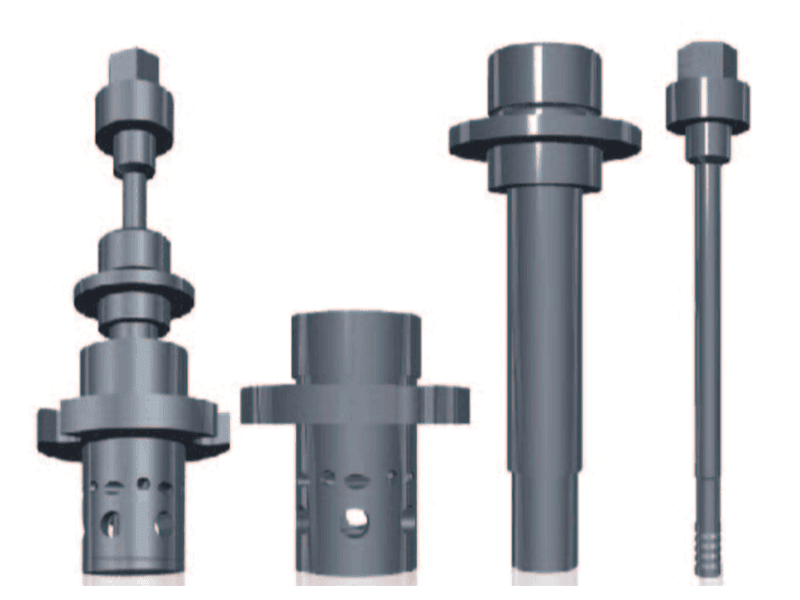
In dissimilar material welding, say aluminum to copper for busbar applications, tool choice is even more critical. The wrong tool compound can promote intermetallic growth that weakens the joint. Replacing those tools often after 200 points is far cheaper than dealing with field failures. We require that any new tool design undergo a 100-meter qualification run on the actual part material and joint configuration before we release it for production. That upfront qualification costs a few hundred dollars in material and machine time, but it avoids a five-figure quality incident downstream.
When joining dissimilar materials, tool material selection becomes highly application-specific. <Customized Dissimilar Material Welding Manufacturers in China> explains how custom tool geometries and substrate choices are developed for aluminum-copper, aluminum-magnesium, and aluminum-steel joints to control intermetallic formation and tool wear.
Tool Design Choices Impact Your Long-Term Tool Cost
Selecting between a conventional, bobbin, retractable, or stationary shoulder tool is not just a technical decision; it is a cost decision. A conventional tool costs less initially and works well for butt joints in flat plate, but if you are welding a hollow extrusion without back support, a bobbin tool may be the only option that avoids root defects. The additional tool cost is trivial compared to scrapping half of your extruded profiles.
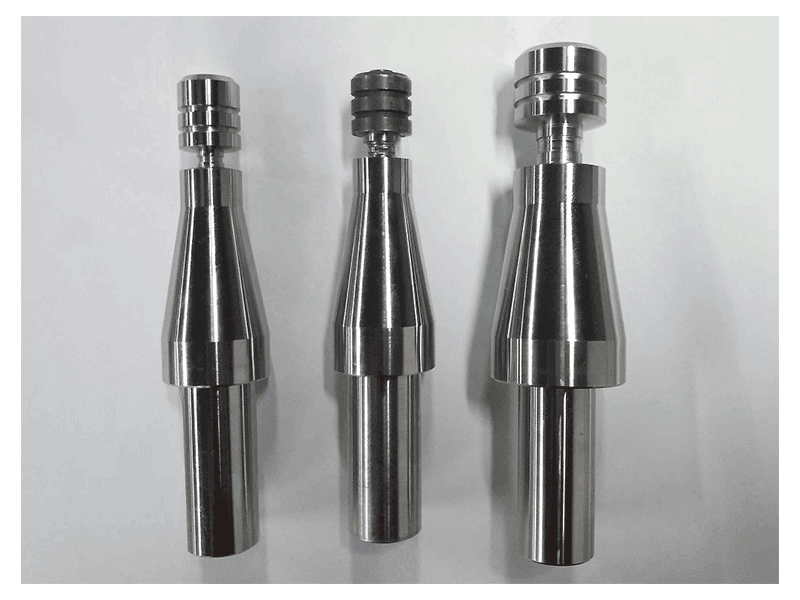
The choice also affects cycle time and machine wear. Retractable tools eliminate the exit hole and produce sealed welds in a single pass, but they require a machine with precise servo control of the pin depth. If your machine cannot hold ±0.02 mm on the pin position throughout the retraction stroke, you will get inconsistent fill. In that case, the cheaper tool path may be a conventional tool followed by a plug weld, which adds a separate operation. The total cost comparison must include these secondary operations.
| Tool Type | Typical Upfront Cost | Life (meters) | Best For | Key Cost Driver |
|---|---|---|---|---|
| Conventional | $200-$800 | 500-5,000 | Butt and lap joints in flat plate | Material grade and pin thread design |
| Retractable Pin | $600-$1,500 | 800-8,000 | Enclosure welding, keyhole-free seams | Pin servo control and shoulder clearance |
| Bobbin | $800-$2,000 | 600-10,000 | Hollow profiles, no back support needed | Dual-shoulder balance and material flow |
| Stationary Shoulder | $500-$1,200 | 1,000-6,000 | Thin sheet, cosmetic surfaces | Shoulder coating and pin protrusion setting |
If your product involves deep multi-pass welds or dissimilar material joints, the tool cost equation changes considerably. Confirming tool life on your actual joint configuration before scaling to production avoids costly overruns. Reach out at [email protected] and we will design a quick qualification run.
A Strong Supplier Partnership Reduces Total Cost of Ownership
The single biggest lever for controlling FSW tool cost over time is the depth of your supplier relationship. When a supplier understands your production environment, your alloy grades, your machine capability, and your quality thresholds, they can recommend tool modifications that add a few percent to the tool price but double the life. We routinely work with customers on tool trials where we adjust pin thread pitch or shoulder diameter based on weld cross-section analysis, and those small geometry changes often deliver 30% to 50% life improvement without any change to material cost.
This partnership also matters for lead time and inventory. If you keep six tools in rotation and your supplier takes eight weeks to ship a replacement, you carry extra inventory cost and risk. A supplier that stocks your standard geometry and ships within two weeks reduces your working capital and gives you more flexibility to react to production schedule changes. So when evaluating tool cost, include the cost of inventory and the cost of delay caused by slow supply.
Staying current with tooling innovations requires continuous exchange between tool manufacturers and research. <AEE attend 13th International Symposium on FSW in Kyoto, Japan on 21 – 23 May 2024> highlights how symposium discussions on tool wear monitoring and adaptive pin control are shaping next-generation tooling strategies that will further extend life and reduce per-meter cost.
Managing FSW Tool Cost in Manufacturing
Choosing the right FSW tool for your application starts with a clear definition of your welding requirements and ends with a supplier who treats your tooling program as a shared engineering project, not a catalog sale. The lowest unit price rarely delivers the lowest total cost, and the most expensive tool is the one that fails during a production run. The approach that works across the industry is simple: qualify your tool thoroughly, log your tool life against parameters, and build a partnership that brings both sides of the table into cost reduction.
If your team is evaluating tooling options for a new FSW program or trying to improve cost performance on an existing line, send your part drawing and current tool specification to [email protected] or call +86 18325808715. We will provide a tool cost breakdown with estimated life for your specific application and material, including optional features that can boost life without doubling the price.
Common Questions About FSW Tool Costs and Performance
How do I figure out the true per-meter cost of an FSW tool?
Divide the tool price by the average life in meters you measure on your production line under normal conditions, not the supplier’s ideal lab number. Then add the cost of one changeover (operator time plus machine idle time) per tool replacement. For a line producing 500 meters per day and a tool change taking 15 minutes, that idle cost alone can be $50 to $150 per change, so a tool that lasts twice as long saves you that downtime cost repeatedly. Track actual performance for at least 20 tools to get a reliable average before comparing suppliers.
Does a more expensive tool material always give better life?
Not always. The right choice depends on the aluminum alloy series, the welding temperature at the pin-material interface, and your machine’s ability to maintain pre-determined force and speed. For 6xxx alloys at moderate travel speeds, a properly heat-treated H13 or similar hot-work tool steel often delivers 2,000 to 5,000 meters of life, which can be more cost-effective than jumping straight to tungsten carbide. Where carbide pays off is with abrasive alloys like 2xxx or 7xxx series, or when travel speeds exceed 2 m/min and thermal softening limits steel life. In those cases, the higher material cost is recovered quickly.
Can I extend tool life by reconditioning the pin?
Yes, if the wear is limited to the pin tip and the shoulder face, many tools can be reground one to three times. However, that process must remove enough material to get past micro-cracks, and the reground geometry must match the original within a tight tolerance, typically within 0.05 mm on pin diameter and thread pitch. After reconditioning, the tool should go through the same qualification weld as a new tool. If reconditioning reduces life by more than 20% compared to a new tool, the savings may not justify the cost of the extra tool change and re-qualification.
What is the most common mistake when comparing tool costs?
Ignoring warranty and process support. Two tools with similar life and price can have vastly different cost outcomes if one supplier provides rapid failure analysis and replacement while the other offers only a basic warranty. When a tool fails prematurely and you must wait four weeks for a replacement, the production delay overshadows any unit price advantage. So cost comparison should include service level: lead time, failure response time, and whether the supplier can diagnose root cause from your weld data. A supplier that helps you adjust parameters to prevent future failures adds measurable value. Share your production scenario, and we will provide a specific tool and service comparison based on your alloy and machine setup rather than generic catalog pricing.
If you’re interested, check out these related articles:
AEE provides customer with optional features FSW tool
Customized Dissimilar Material Welding Manufacturers in China
Refill Friction Stir Spot Welding (RFSSW)
AEE attend 13th International Symposium on FSW in Kyoto, Japan on 21 – 23 May 2024