
FSW Steel: Tool Materials, Process Windows, and Industrial Uses
Table of Contents
- Why Is Steel Different From Aluminum in FSW?
- Which Tool Materials Can Weld Steel Without Failing Early?
- What Process Parameters Control Tool Life and Weld Quality?
- Why Does Steel Run Slower Than Aluminum?
- What Does Correct Tool Cooling Look Like?
- Which Industrial Applications Justify Steel FSW?
- How Should You Specify Equipment for Steel FSW?
- What Questions Do Engineers Ask About FSW Steel?
- Is FSW Steel Ready for High-Volume Production?
- Can the Same Machine Weld Aluminum and Steel?
- Does Steel FSW Need Preheat?
- How Do You Inspect Steel FSW Welds?
Friction stir welding steel is feasible, but only when tool material, spindle torque, and process conditions are specified as one system. Steel does not respond to aluminum-style parameters. The tool shoulder and pin must survive forging temperatures near or above 1,000°C while keeping the plasticized steel from hardening into brittle phases around the weld. We have run steel tooling trials where a geometry that welded 5083 aluminum failed on 3 mm steel within tens of millimeters. The practical answer is yes: with PCBN or refractory-alloy tools, lower travel speeds, and a machine frame stiff enough to carry the forge forces.
Why Is Steel Different From Aluminum in FSW?
Steel changes nearly every assumption in friction stir welding. Aluminum softens quickly as temperature rises, so the tool can stir a larger volume at lower force. Steel keeps far more of its flow stress at the same fraction of its melting range, so the tool must work harder per millimeter of weld. More mechanical work becomes heat, and that heat is concentrated in the shoulder and pin. At the same time, steel metallurgy is less forgiving: fast cooling can form martensite or brittle microstructures that a simple visual check will not catch. A steel process therefore needs lower heat input than an aluminum process of equivalent thickness, but it also needs higher forces to make the material flow.
Oxidation adds another constraint. The workpiece surface and tool surface can oxidize fast enough to reduce tool life and create surface defects, so shielding gas is standard on steel FSW setups. Without gas coverage, the shoulder sometimes survives while the pin and root deteriorate in a way that only shows up later in sectioning.
Which Tool Materials Can Weld Steel Without Failing Early?
Tool material is the gate. A tool steel such as H13 works for aluminum but loses hardness too quickly in steel. Two material families are most defensible: PCBN and tungsten-rhenium alloys. PCBN combines hardness with resistance to chemical reaction, but it is brittle and expensive. W-Re, often W-25Re, has high-temperature strength and better fracture toughness, but it wears faster and can form a reaction layer with the steel over long runs. Tungsten carbide is rarely the right production choice: its cobalt binder softens and oxidizes at the temperature steel FSW requires.
| Tool material | What it does well | Failure mode to plan for | Typical fit |
|---|---|---|---|
| PCBN | Retains hardness and resists reaction with iron at high temperature | Brittle fracture, edge chipping, high unit cost | Thin to medium steel sheet, shorter welds, controlled production |
| Tungsten-rhenium | Ductile at temperature, handles impact and thermal cycling | Progressive wear, reaction, deformation | Heavy sections, longer welds, high-force machines |
| Tungsten carbide | Low initial cost, widely available | Binder softening, rapid oxidation, short life | Limited trials, low-temperature runs, not production |
| Silicon nitride | High hardness, light weight | Fracture risk, limited commercial validation | Research programs and niche low-force work |
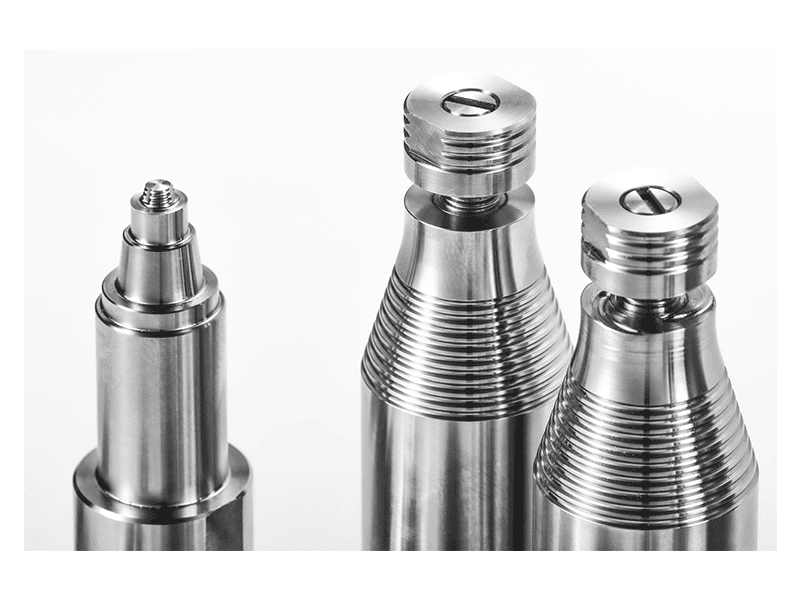
Stationary shoulder tooling changes the heat balance on steel sheet because only the pin rotates while the shoulder slides on the surface. That reduces surface overheating and flash on thin sections. In our equipment, stationary shoulder designs are the first route we evaluate for steel up to 10 mm.
Tool material is only one part of the system. <AEE provides customer with optional features FSW tool> covers the optional sensing, cooling, and tool management features that matter once a steel-capable pin material has been selected.
What Process Parameters Control Tool Life and Weld Quality?
Steel FSW windows are narrower than aluminum windows. In our trials, steel sections under 4 mm generally run below 600 rpm spindle speed and below 100 mm/min travel speed to keep the tool from overheating. Raising travel speed pushes the leading edge of the tool into a stiffer cold zone, which increases the chance of pin fracture. Raising rotation speed heats the surface too fast, and the weld shows tearing before the tool loses its profile.
Why Does Steel Run Slower Than Aluminum?
Aluminum dissipates heat quickly and softens at a lower homologous temperature. Steel retains strength at high temperature and conducts heat away less uniformly, so the tool cannot move as fast without either overheating or leaving an under-consolidated root. Slower travel keeps the plasticized region stable and gives the pin time to move material through the weld zone once per revolution rather than skipping.
What Does Correct Tool Cooling Look Like?
Cooling is not a substitute for material selection. It protects the tool holder and machine spindle more than the pin tip. We specify through-tool cooling for longer steel runs because heat builds at the shoulder and transmits into the spindle. Gas shielding covers the weld face while coolers manage the tool body. Without that separation, an operator can see a good shield and still overheat the spindle bearings.
Steel FSW decisions get expensive when tool life is guessed. If your program involves plate over 4 mm or weld lengths where tool replacement cost per meter decides the budget, send the alloy, thickness, and monthly length to [email protected] before locking the bill of materials. We can compare PCBN and W-Re life on your actual section.
Which Industrial Applications Justify Steel FSW?
Steel FSW has moved beyond the laboratory in several sectors, but it is not yet the default joining method for high-volume steel assembly. Shipyards have evaluated it for steel deck panels where lower distortion and a reduced risk of hot cracking justify slower welding. Defense programs run it on armor plate because the solid-state cycle preserves properties that a high-heat fusion weld can degrade. Pipeline and pressure equipment applications show feasibility on high-strength low-alloy grades, while automotive steel FSW remains concentrated in tailored blanks research and selected thick-section parts. The economic filter is tool life against weld speed. When a program can absorb slower travel and higher tool cost, steel FSW becomes a defensible choice.
How Should You Specify Equipment for Steel FSW?
Steel cannot simply be added to an aluminum machine. Spindle torque and Z-axis stiffness matter more, because steel process forces stay high across the weld and climb as the tool wears. The machine must also control force at low speed rather than run only in position mode. That is why a steel-capable platform starts with a heavier spindle, a rigid frame, and a tool holder that can pass gas or coolant without leaking under high forge loads.
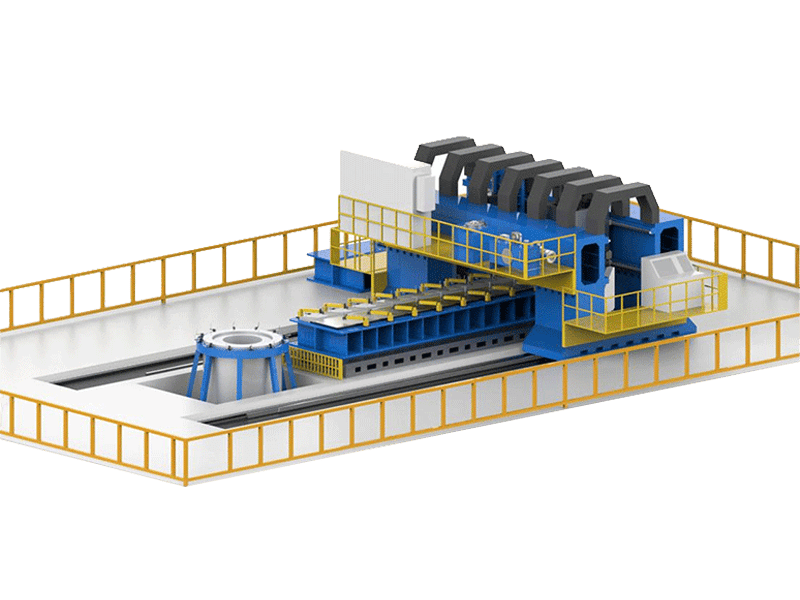
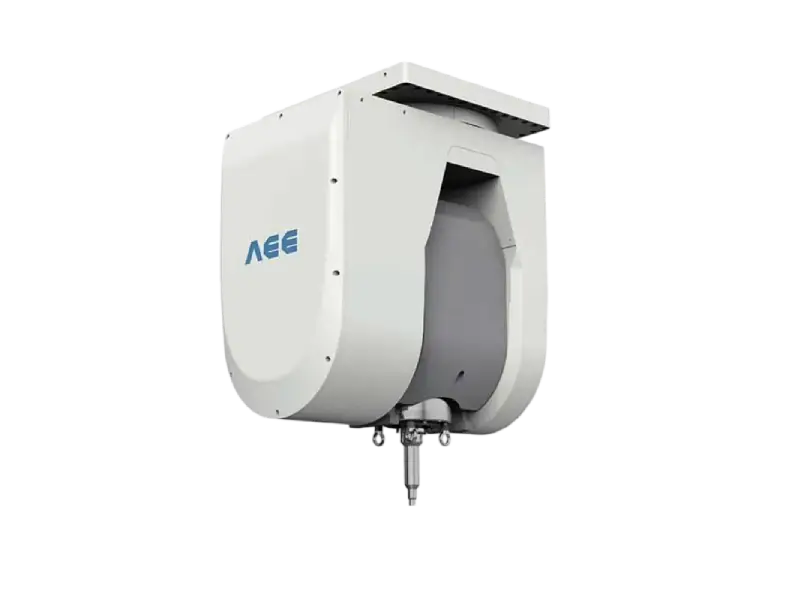
Force control also protects the tool. A position-only machine can spike load as the shoulder encounters plate thickness variation, and that spike often snaps PCBN. A force-controlled system keeps the plunge load within a set band, so the tool rides through thinning edges or slight flatness errors without breaking.
When we prepare a steel process, we treat the spindle, tool holder, and tool as one rotating assembly. A holder that deflects only a few hundredths of a millimeter at the weld face will shorten tool life as much as the wrong rotation speed.
Steel FSW programs fail when the tool, spindle, and process are sourced separately. If your program involves steel sheet or plate, or if you need to know whether PCBN or W-Re will reach your cost per meter, send the alloy grade, thickness, joint geometry, and monthly volume to [email protected] or call +86 18325808715. We confirm the tool material and spindle torque together before you commit to equipment.
What Questions Do Engineers Ask About FSW Steel?
Is FSW Steel Ready for High-Volume Production?
Not for most high-volume lines yet. Steel FSW is production-capable in low to medium volume and for applications where joint integrity, low distortion, or material preservation outweigh cycle time. The limiting factors are tool life, travel speed, and tool cost per meter. High-volume steel lines still favor fusion welding or hybrid processes unless the part geometry makes weld quality the dominant cost. A feasibility weld on your actual section is the fastest way to know whether steel FSW crosses from interesting to economical.
Can the Same Machine Weld Aluminum and Steel?
It is tempting to think a machine sold for aluminum can double as a steel machine. It cannot, unless the spindle torque, force envelope, and tool holder were specified for steel from the start. An aluminum-focused spindle often lacks the low-speed torque and thermal capacity to hold a steel tool at the required plunge force. Separate process programs and dedicated tooling can share a platform, but the machine envelope must be sized for the harder material first.
Does Steel FSW Need Preheat?
It depends on thickness and alloy. Thin sheet under roughly 2 mm can run without preheat when the shoulder diameter controls heat well. Thicker sections often need controlled preheating to lower initial flow stress and protect the pin tip during plunge. Preheat must be localized and repeatable. Heating a wide zone can change cooling rate and create unintended hardness. We determine preheat after the tool material and target travel speed are fixed, not before.
How Do You Inspect Steel FSW Welds?
In the steel FSW programs we have supported, inspection follows the same logic as a high-integrity aluminum weld: visual first, then volumetric inspection for internal voids or lack of penetration. Steel adds one wrinkle. Tool debris or a fractured pin can embed in the weld if the process window is wrong, so we watch for density indications that do not belong to normal microstructure. Bend testing and macro etch then confirm the flow pattern. If your program needs steel FSW feasibility data, send your section drawing and monthly volume to [email protected], and we can confirm the inspection plan and tooling before you invest.
If you’re interested, check out these related articles:
AEE provides customer with optional features FSW tool
Refill Friction Stir Spot Welding (RFSSW)
Customized Dissimilar Material Welding Manufacturers in China