
FSW Joint Strength vs Base Metal: What Is Realistic?
Table of Contents
- What Controls Strength Inside a Friction Stir Weld?
- How Much Base Metal Strength Can a Good FSW Joint Keep?
- Which Production Conditions Cause FSW Joints to Lose Strength?
- When Heat Input Drifts Too High
- When the Fixture Fails Before the Weld Does
- Why Do Fatigue and Bending Matter More Than Tensile Alone?
- How Do You Lock in FSW Joint Strength for Your Production Line?
- What Else Do Engineers Ask About FSW Joint Strength?
- Is an FSW joint stronger than a MIG or TIG weld in aluminum?
- Can a friction stir weld be stronger than the base metal?
- Why do FSW joints fail in the heat-affected zone instead of the weld?
- What joint efficiency should I specify for 6061-T6 FSW components?
FSW joint strength gets quoted as a percentage of base metal strength, often between 70 and 90 percent. Production reality depends on alloy temper, heat input, and machine stiffness more than on the process itself. I have seen a well-developed 6061-T6 joint test near the top of that range, then watched the same material lose 20 points of joint efficiency on a machine with weak Z-axis force control. This article explains what friction stir weld strength you should actually expect, where strength is lost, and how to verify it on your material before you commit capital.
What Controls Strength Inside a Friction Stir Weld?
Friction stir welding joins metal without melting it. The rotating tool plasticizes the material, and the weld zone that remains contains three linked regions: the stirred nugget, the thermomechanically affected zone, and the heat-affected zone. In most precipitation-hardened aluminum alloys, the stirred nugget has a fine grain structure and can show good local mechanical properties. The challenge sits around it. The heat-affected zone has seen the same thermal cycle as the weld but no mechanical stirring, so its strengthening precipitates have coarsened or dissolved. FSW joint strength is therefore not controlled mainly by the stirred material. It is controlled by what the thermal cycle did to the base metal next to the weld.
How Much Base Metal Strength Can a Good FSW Joint Keep?
The standard measurement is joint efficiency: the welded joint’s ultimate tensile strength divided by the ultimate tensile strength of the unwelded base metal in the matching temper and thickness. A sound friction stir butt weld in many aluminum alloys lands in a broad band. Work-hardened 5xxx and many 6xxx alloys can sit near the top of that band. Heat-treatable 7xxx and 2xxx alloys usually fall lower unless the process window is held tightly. The useful question is not only the percentage. It is where the test piece fails. If fracture starts at a heat-affected zone hardness minimum, the tensile value is really a heat-input measurement.
| Base material condition | Typical FSW joint efficiency | Main limiting location |
|---|---|---|
| 5xxx work-hardened | High, often close to base metal | Transition between HAZ and unaffected plate |
| 6xxx-T6 | Moderate to high | HAZ minimum hardness |
| 7xxx-T6 | Moderate and process sensitive | HAZ near nugget boundary |
| 2xxx-T3/T4 | Moderate with a narrower process window | HAZ and process stability |
| Cast aluminum | Variable, often below wrought values | Base casting defects near the weld |
There is no universal joint efficiency number. A 6061-T6 joint at 4 mm behaves differently from the same alloy at 12 mm, because thicker plate extracts more heat and changes the thermal profile. That is why a buyer should not set a target from a material data sheet alone. The number has to be established on the actual thickness, temper, and joint configuration. I have seen blanket efficiency requirements for 7075-T6 parts add process restrictions without improving the design, because the design allowable was already well below what the weld could reliably deliver.
When more than one base material is involved, strength evaluation becomes a different exercise. <Customized Dissimilar Material Welding Manufacturers in China> covers how mixed-material joints are qualified when there is no single base metal strength value to use as the reference.
If your program involves heat-treatable 6xxx or 7xxx plate and your design allowable sits close to base metal strength, it is worth confirming the realistic joint efficiency on your exact temper and thickness before you write the specification. Send the alloy, thickness, and joint configuration to [email protected] and we will confirm whether the target is practical at production travel speed.
Which Production Conditions Cause FSW Joints to Lose Strength?
A laboratory coupon and a production part can use the same alloy and the same tool profile and still deliver different tensile results. The weld responds to heat input, clamping stiffness, and tool condition. The most common production failure we investigate is not a visible tunnel or void. It is a joint that looks acceptable but tests below expectation because the process drifted into a harder thermal cycle.
When Heat Input Drifts Too High
Rotation speed and travel speed set the peak temperature and the time the material spends near it. If travel speed drops or rotation speed rises, the heat-affected zone widens and its minimum hardness falls. On precipitation-hardened alloys, that can reduce tensile efficiency before external flash becomes obvious. I have traced a repeat tensile failure to a fixture change that slowed the machine by less than 10 percent, but changed the thermal cycle enough to move the fracture from the nugget edge into a softened heat-affected zone. Process data logging matters here because it catches strength loss before it becomes a weld defect.
When the Fixture Fails Before the Weld Does
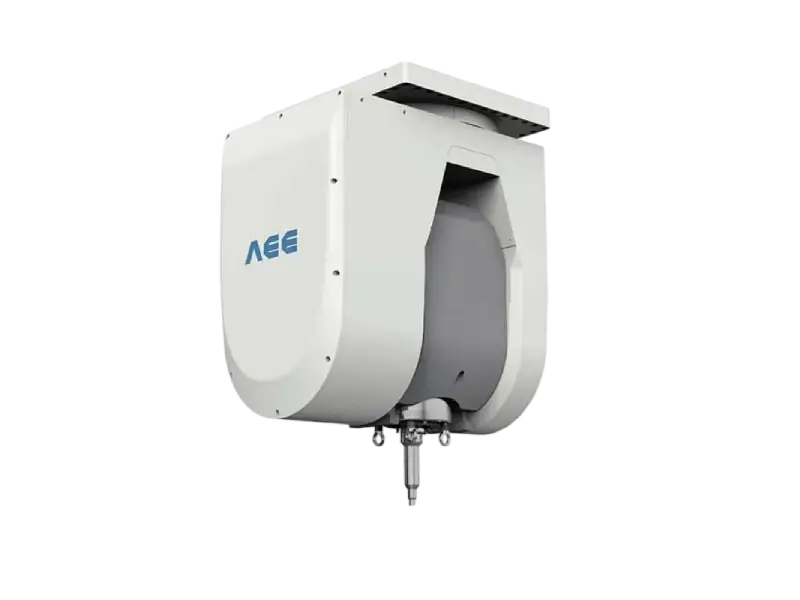
Clamping force, backing plate contact, and gap control decide whether the tool achieves full material consolidation. If the plates lift at the faying surface, the root can develop a shallow lack of penetration even when the surface looks clean. That root flaw cuts fatigue life far more than it cuts static tensile strength. Force capacity follows plate thickness. A light C-type FSW machine with a 30 kN maximum Z-axis force can weld 6 mm aluminum effectively. A 25 mm panel needs a heavy-load machine with 200 kN Z-axis force, not for spindle power but to hold the forging force steady at depth. Buyers should check axial force capacity and table rigidity as closely as spindle torque.
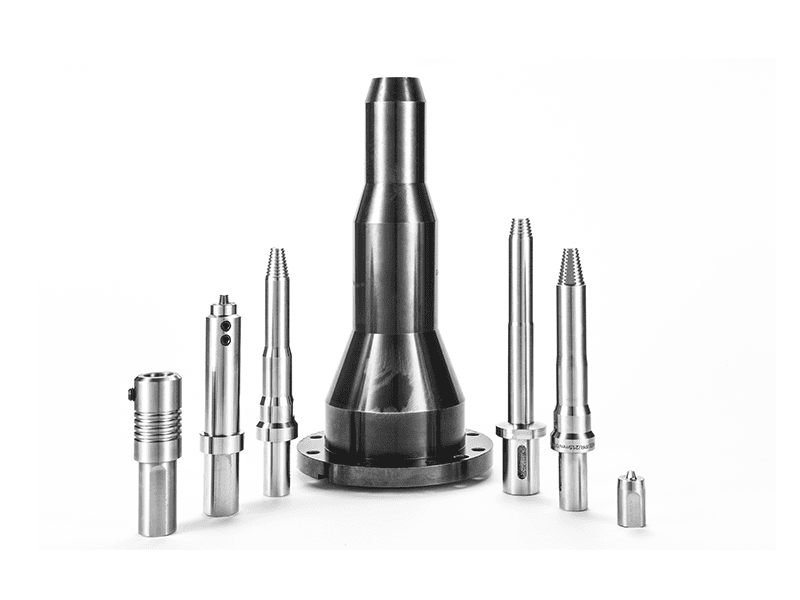
Process stability decides whether a qualification coupon number repeats across a full shift. <AEE provides customer with optional features FSW tool> covers how machine options such as force control and tool temperature monitoring change what a standard tool can reproduce in production.
Why Do Fatigue and Bending Matter More Than Tensile Alone?
Tensile efficiency is easy to communicate, but it can flatter a joint. A friction stir weld that reaches 80 percent of base metal tensile strength can still fail early in fatigue if the root has a hooked lap or a shallow lack of penetration. In many EV battery tray, rail, and pressure vessel applications, the governing requirement is fatigue life or leak tightness, not ultimate load. I have seen procurement teams buy on tensile ratio alone and then discover through a bend test that the root side contained defects the tensile bar never loaded critically.
Fatigue and bend behavior often diverge from static tensile strength. The nugget can be fine grained and strong, but surface-breaking root flaws act as crack initiation sites. A low-heat-input weld with a clean root can outperform a higher-heat weld on fatigue even when both show the same tensile efficiency. That matters during machine and pin tool selection, because tool design and axial force control influence root quality more than they influence simple cross-sectional strength.
How Do You Lock in FSW Joint Strength for Your Production Line?
The final decision should rest on a feasibility weld made from your alloy, your thickness, and your production fixture concept, not on a generic efficiency range. If a 6061-T6 battery tray target sits above the typical heat-affected zone limit, the answer may be a lower heat input tool path, a different shoulder design, or a machine with more responsive force control. That needs to be resolved before capital equipment arrives.
We see too many joint strength specifications written as a single percentage with no failure location attached. That makes the target difficult to interpret and harder to meet. Send your material grade, thickness, joint geometry, and current tensile or fatigue requirement to [email protected] or call +86 18325808715. Our engineers at Aerospace Engineering Equipment will run a feasibility weld and report the measured joint efficiency, the fracture location, and the production parameter window that kept it stable.
What Else Do Engineers Ask About FSW Joint Strength?
Is an FSW joint stronger than a MIG or TIG weld in aluminum?
For most aluminum alloys, an optimized friction stir weld outperforms a comparable MIG or TIG weld in tensile strength, fatigue life, and repeatability, because there is no solidification structure or porosity. The comparison is not automatic; a poorly set FSW tool can make a defective joint. When both processes are run well, FSW usually retains more of the base metal strength, especially in heat-treatable alloys where lower controlled heat input limits the softened zone.
Can a friction stir weld be stronger than the base metal?
It is rare for the entire welded joint to exceed the original tempered base metal strength, because the heat-affected zone softens during welding. The stirred nugget itself can develop fine grains and exceed the local heat-affected zone hardness, and in softer tempers it may approach the as-received base metal. For design, do not assume the weld exceeds the parent material. Use joint efficiency as the design basis and keep any extra margin as a result of physical testing rather than a design input.
Why do FSW joints fail in the heat-affected zone instead of the weld?
The weld nugget is not the weak point in most sound friction stir welds. Fracture usually starts outside it, in the heat-affected zone, because the thermal cycle has coarsened or dissolved the strengthening precipitates that the base metal originally had. That region is softened but not stirred, so it cannot rebuild strength. If the process runs too hot, the softened band widens and tensile efficiency falls. Keeping peak temperature and dwell time down is how you keep the failure away from the heat-affected zone.
What joint efficiency should I specify for 6061-T6 FSW components?
In FSW feasibility work on 6061-T6, we start by testing the actual plate and temper rather than quoting a fixed number. A well-controlled weld can sit in the upper part of the typical 70 to 85 percent range, with root quality and heat input deciding the result. I would not write an accept-or-reject figure into a purchase order without first welding a sample on the proposed machine. If your design has a specific tensile or fatigue target, send the drawing and material certificate to [email protected] and we will confirm the realistic efficiency range for your joint.
If you’re interested, check out these related articles:
AEE provides customer with optional features FSW tool
Customized Dissimilar Material Welding Manufacturers in China