
FSW in HVAC: Welding Aluminum Heat Exchanger Plates Leak-Tight
Table of Contents
- Why Aluminum Heat Exchanger Plates Challenge Conventional Welding
- What FSW Changes for Aluminum Heat Exchanger Plates
- Plate Design and Thickness Considerations in HVAC FSW
- Tooling, Fixturing, and Distortion Control for Leak-Tight Seams
- Qualifying FSW Heat Exchanger Plates for Production
- Choosing an FSW Machine for HVAC Plate Production
- Define an HVAC FSW Feasibility Trial
- FAQ
- Can FSW replace vacuum brazing on aluminum heat exchanger plates?
- What plate thickness can FSW weld in HVAC applications?
- How do you leak-test an FSW heat exchanger plate weld?
- Is FSW cost-effective for small HVAC production runs?
Aluminum heat exchanger plates in HVAC systems fail most often at the joined seam, not in the base plate. Friction stir welding, or FSW, joins aluminum in the solid state by plasticizing the material below its melting point, so the weld avoids solidification porosity, hot cracking, and the large thermal distortion common in fusion welding. For FSW in HVAC plate assemblies, that difference matters most where refrigerant, water, or coolant must remain sealed and where flatness controls stack-up tolerances. This article explains where FSW fits in HVAC plate production, which designs gain the most, and what process checks buyers should require before committing to the method.
Why Aluminum Heat Exchanger Plates Challenge Conventional Welding
Aluminum conducts heat away quickly, so any fusion process must deliver concentrated energy fast enough to form and hold a weld pool. That same conductivity cools the pool rapidly, which can trap gas, shrink the joint unevenly, and crack in sensitive alloys. Thin HVAC plates add another difficulty. A plate that is only 1 mm to 3 mm thick has limited stiffness to resist expansion and contraction, so the finished assembly can bow, twist, or lose the flatness needed for gaskets, fins, fans, and stacked plate alignment.
Brazing avoids melting the base plate, but it depends heavily on capillary flow, joint gap control, and filler coverage. A braze path is only as continuous as the furnace cycle, flux condition, and gap uniformity allow. FSW performs well where these conventional methods leave hidden risk because it forges the joint in the solid state rather than relying on melting or filler distribution.
| Joining method | Typical heat exchanger failure mode | Main production consequence | What FSW changes |
|---|---|---|---|
| Vacuum brazing | Incomplete filler penetration at tight or contaminated gaps | Leak paths found only after the furnace cycle | Forged seam follows the joint line without relying on capillary fill |
| TIG or MIG fusion welding | Porosity and solidification cracking, especially in heat-treatable alloys | Rework, distortion, and variable weld quality | Solid-state joint avoids melt-related porosity and cracking |
| Laser welding | Narrow fusion zone and high cooling rate | Cracking or reduced tolerance in thin plates | Lower peak temperature and wider forged zone reduce hot cracking |
| Mechanical or adhesive assembly | Gasket or bond degradation over time | Maintenance and limited pressure service | Produces a continuous metallic joint for sealed service |
What FSW Changes for Aluminum Heat Exchanger Plates
FSW uses a rotating, non-consumable tool with a shoulder and a pin to soften aluminum through friction and plastic deformation. The softened material flows around the tool, is forged under the shoulder, and remains below the melting temperature. Because the joint forms by hot working instead of solidification, it does not produce the as-cast fusion zone defects that leak testing is intended to find.
For heat exchanger plates, the practical gains are lower distortion, better dimensional consistency, and a fine-grained joint with good leak resistance. The process is especially useful on long straight seams, which match the typical sealing path of rectangular plates, headers, and manifold edges.
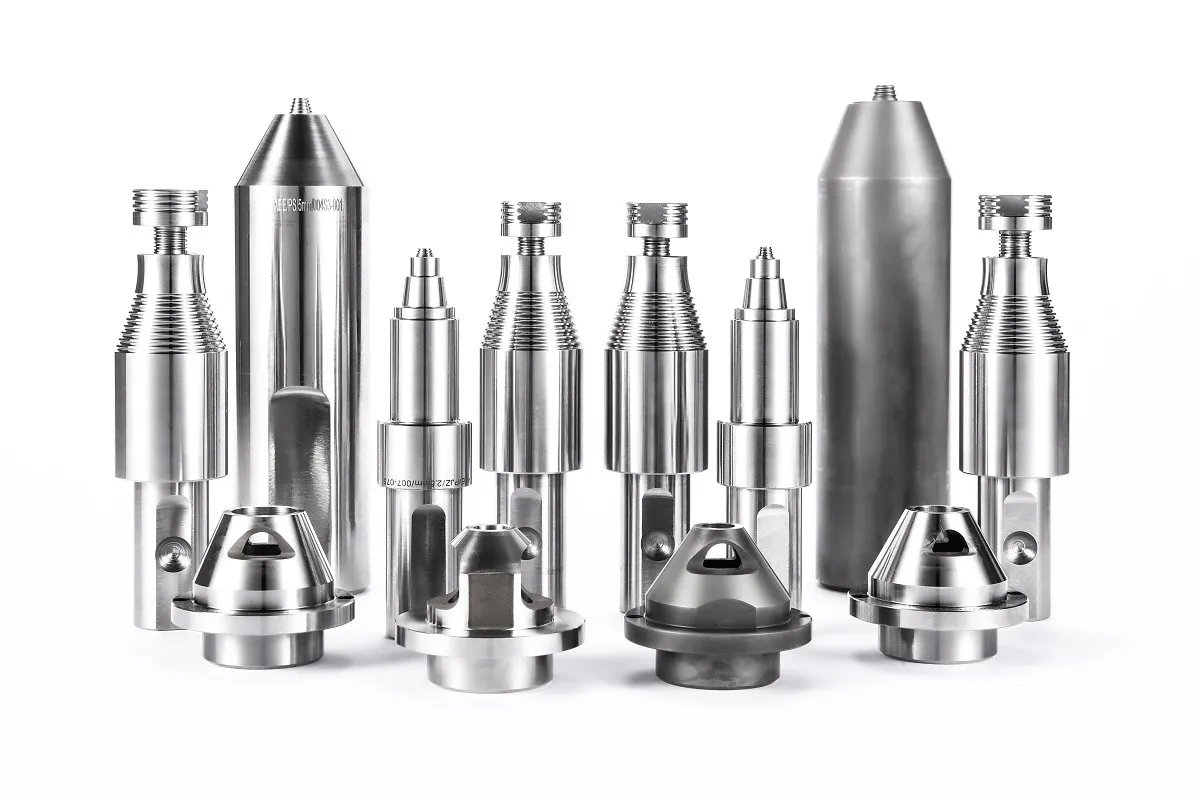
Plate Design and Thickness Considerations in HVAC FSW
FSW can weld the aluminum thickness range commonly used in HVAC plates, but the process risk is different at each end. Thin plate requires low heat input and close shoulder control to avoid displacement, surface tearing, or an open root. Thicker plate requires more axial force, spindle torque, and backing support to keep the tool at full depth without bending the plate.
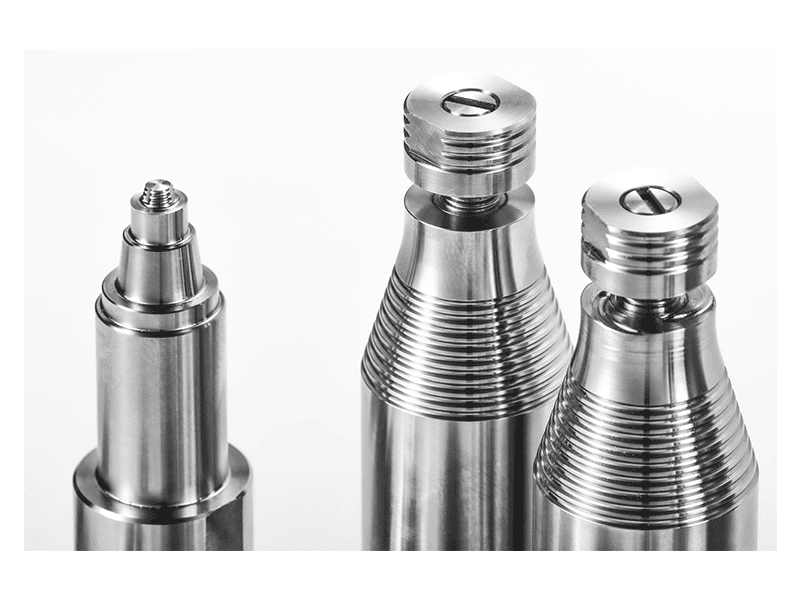
Thickness also drives tool choice. Stationary-shoulder FSW is attractive for thin HVAC plates because the shoulder does not rotate against the workpiece surface, which reduces flash, surface damage, and heat input. Common HVAC grades such as 3003, 5052, and 6061 can be welded, although parameter selection must account for heat-treatable alloy softening and oxide removal.
Tooling, Fixturing, and Distortion Control for Leak-Tight Seams
Leak-tight FSW starts before the tool contacts the plate. The workpieces must be clamped near enough to the weld line to prevent lifting, and the backing surface must support the full plunge force without deflection. For thin heat exchanger plates, that usually means a machined backing bar, support blocks, or vacuum clamping rather than edge clamping alone. If the plate lifts even slightly, shoulder contact changes and the weld can develop a root flaw or surface defect.
Pin length should match the plate thickness with only the necessary plunge allowance into the backing or anvil surface. Too much penetration wears the tool and forces material into the anvil. Too little can leave an incomplete root. Shoulder diameter and profile control the forging pressure that closes the seam, while a stationary shoulder keeps the plate cooler and flatter during welding.
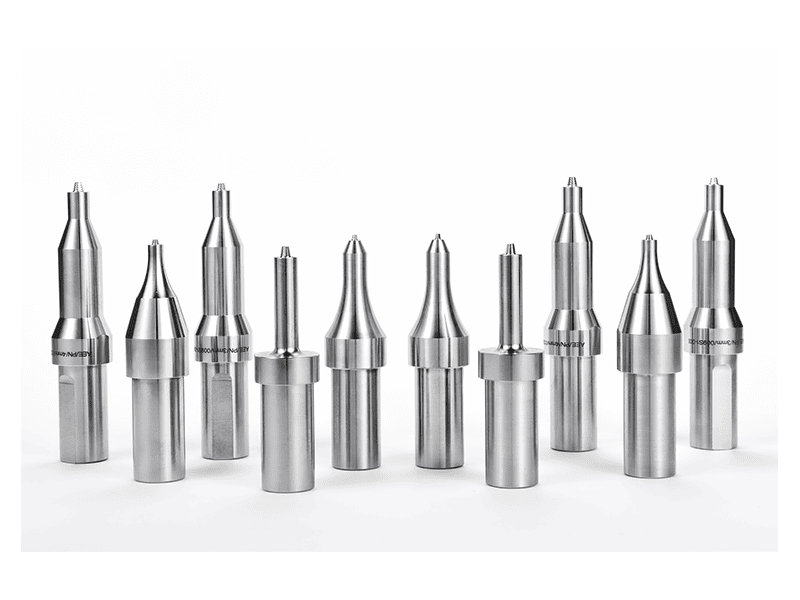
Heat exchanger plate tooling must balance pin depth, shoulder pressure, and thermal input for a repeatable seal path. <AEE provides customer with optional features FSW tool> covers how optional tool features are matched to a specific weld geometry and production requirement.
Qualifying FSW Heat Exchanger Plates for Production
A visually clean FSW seam is not by itself a pass. For HVAC plate service, qualification should combine destructive examination with leak-tightness evidence. Cross-section a sample to confirm full penetration, no root hooking or kissing bond, and no buried void. Tensile testing can show that the joint meets the strength requirement, but strength alone does not prove a seal. Pressure decay, helium leak detection, or vacuum box testing on representative assemblies is required for the sealing function.
For production, freeze the essential parameters: spindle speed, travel speed, tool design, plunge depth, forging force or position, clamping, and backing condition. Then monitor force, torque, and temperature during each weld where the budget allows. A stable signature helps identify tool wear, fixture movement, or plate location drift before it becomes a leaked part.
Choosing an FSW Machine for HVAC Plate Production
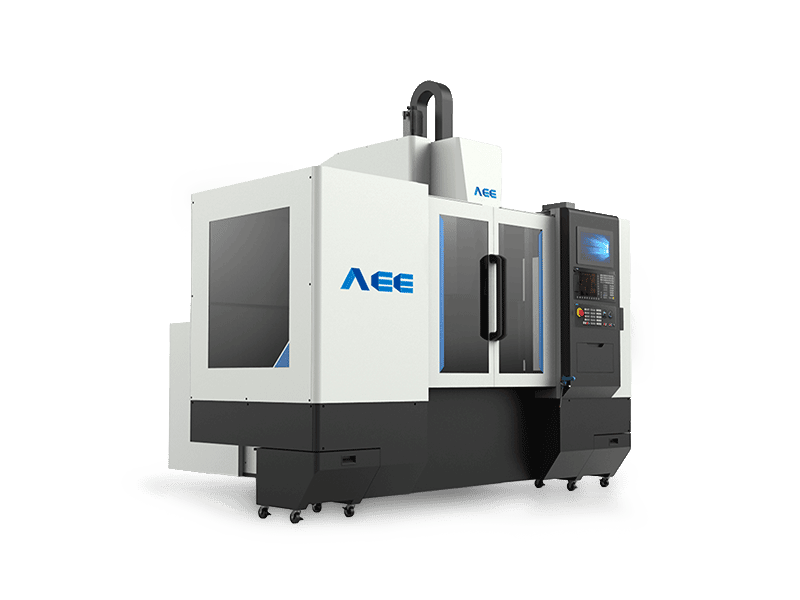
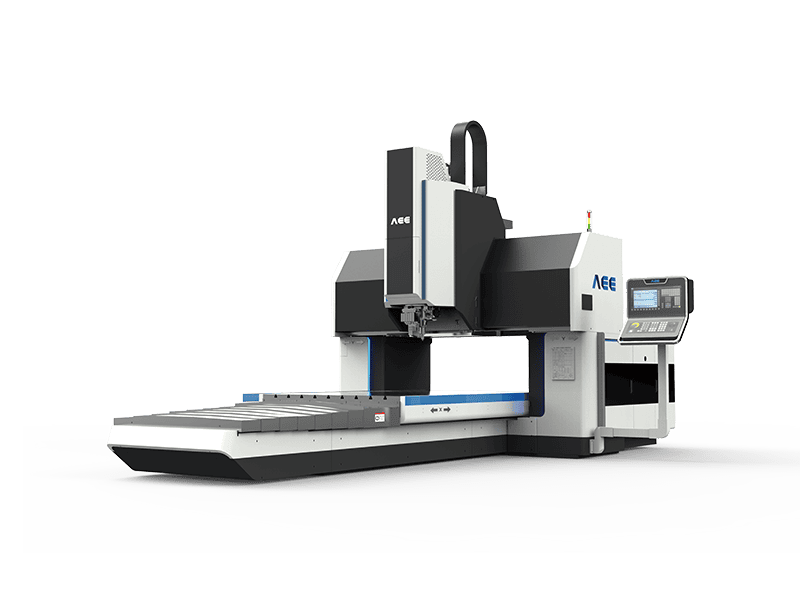
The right machine depends on plate length, width, annual volume, and changeover requirements. A compact C-type machine works well for small water-cooling plates, radiators, and prototype runs. Larger gantry machines suit wide panels or multiple plates fixtured side by side. For medium and high volumes, dual-worktable or automated loading keeps the spindle welding while the operator unloads finished parts.
Aerospace Engineering Equipment supplies C-type machines for plate work areas up to 600 mm by 1200 mm and gantry systems for larger aluminum panels, with force and position control options that help hold consistent penetration on thin heat exchanger plate.
Define an HVAC FSW Feasibility Trial
Start with a short feasibility trial before committing to a full production cell. Send the alloy grade, plate thickness, joint geometry, required pressure or leak rate, annual volume, and the relevant acceptance tests. The engineering team can then recommend a tool, machine configuration, and test plan for your heat exchanger plate. Contact Aerospace Engineering Equipment (Suzhou) Co., Ltd at [email protected] or +86 18325808715.
FAQ
Can FSW replace vacuum brazing on aluminum heat exchanger plates?
Yes, for designs with continuous linear or circumferential seams and adequate back support. FSW is strongest where the joint must be sealed and where brazing has struggled with filler coverage, flux residue, or furnace distortion. It is not a direct drop-in replacement when the design depends on fillets, many small intersections, or complex internal fins that the rotating tool cannot access. Those cases may still require brazing, mechanical fastening, or a redesigned joint.
What plate thickness can FSW weld in HVAC applications?
HVAC plate work commonly falls between about 1 mm and 8 mm, a range that standard FSW tools and machines can handle. Thin plate below 1 mm is possible but requires tight tooling, low heat input, and stable clamping. Thick plate above 8 mm still works with larger machines, but most stamped HVAC plates and cold plates do not require that capacity. The specific thickness should always be confirmed on a weld coupon before production.
How do you leak-test an FSW heat exchanger plate weld?
Depending on the service requirement, use pressure decay testing, helium leak detection, or vacuum box testing. For refrigerant or liquid-cooling service, a pressure decay or helium test at the design test pressure is usually more meaningful than visual inspection alone. Destructive cross-sectioning on setup parts confirms penetration and internal soundness. Production leak testing should be defined by the engineering specification, not by weld appearance.
Is FSW cost-effective for small HVAC production runs?
It depends on the current failure cost. For a small run of simple plates, machine and tooling cost can be higher than brazing or TIG welding until throughput or leak requirements justify it. FSW becomes cost-effective when rework, leak failures, distortion, or manual welding time are significant, or when the customer requires documented and repeatable sealing. A feasibility study on real plate samples is the cheapest way to separate a supported saving from an assumed benefit.
If you’re interested, check out these related articles:
AEE attend 13th International Symposium on FSW in Kyoto, Japan on 21 – 23 May 2024
Refill Friction Stir Spot Welding (RFSSW)
Customized Dissimilar Material Welding Manufacturers in China