FSW for High-Speed Train Aluminum Profiles: Long-Seam Welding Without Distortion
Table of Contents
- Why High-Speed Train Aluminum Profiles Are a Natural Fit for FSW
- The Extra-Length Problem: Distortion, Fit-Up, and Backing
- Machine Architecture for 10 m+ Rail Profiles
- Why Simultaneous Double-Head Welding Matters
- Tool Selection for Long Straight Seams
- Process Control and Weld Quality in Rail Applications
- Qualification and Inspection for Rail-Grade Joints
- Planning an Extra-Length FSW Production Cell
- Get an Extra-Length Rail FSW Proposal
- FAQ
- What FSW machine is used for high-speed train aluminum profiles?
- Can FSW weld hollow aluminum extrusions without a backing bar?
- What aluminum alloys are used in high-speed train FSW profiles?
- How long can an extra-length FSW machine weld?
- What certifications are required for FSW of railway vehicles?
- References
Why High-Speed Train Aluminum Profiles Are a Natural Fit for FSW
High-speed train car bodies are built from long, thin-walled 6xxx-series aluminum extrusions — typically EN AW-6005A, 6060, or 6082 — joined along longitudinal seams. The profiles are often hollow, multi-cavity, and 10 m or more in length. Fusion welding introduces solidification defects and distortion. Friction stir welding (FSW) joins in the solid state below the melting point, reducing porosity and hot cracking while producing repeatable mechanical properties. FSW of aluminum is standardized in the ISO 25239 series [1].
For rail applications, the key issue is not whether FSW can weld the alloy. It is whether the machine, tooling, and process can hold quality over 10 to 18 m of continuous weld without excessive distortion, root defects, or process drift.
The Extra-Length Problem: Distortion, Fit-Up, and Backing
Long aluminum profiles accumulate heat along the weld line. Thermal expansion, clamping force, and longitudinal shrinkage interact. Common failure modes include:
- Wavy edge distortion from uneven heat input along the seam.
- Lack of penetration when backing support or pin depth drifts.
- Root defects in hollow profiles when conventional single-shoulder tooling cannot reach or support the lower side.
- Fit-up variation from extrusion straightness and profile twist.
Rail programs also require certification to EN 15085-2, which sets quality and certification requirements for welding railway vehicles and components [2]. That means weld procedure qualification, traceability, and inspection records are not optional.
Machine Architecture for 10 m+ Rail Profiles
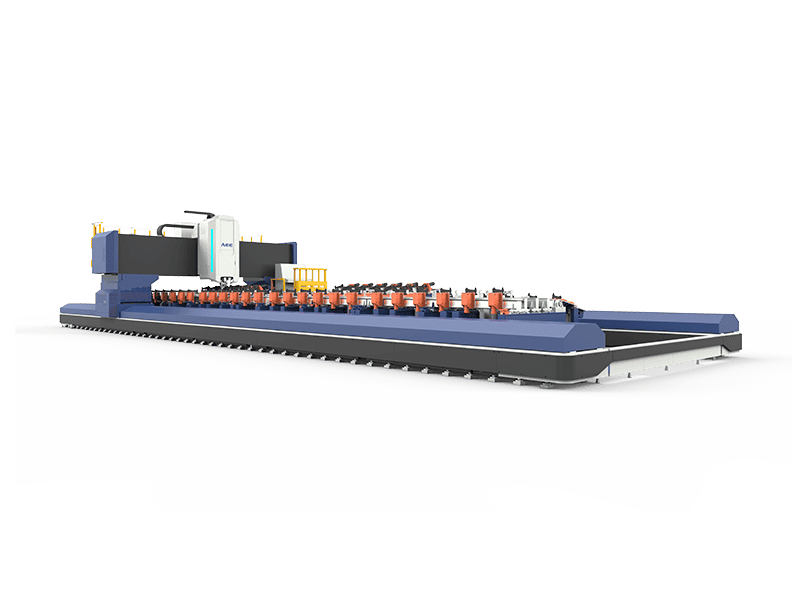
Long seams require a machine that can traverse the full profile length, keep tool force stable, and manage heat removal. A standard C-type or small gantry machine may have the right spindle power but not the X-axis stroke or worktable length. The Extra-length Straight Profile FSW Machine is designed for this envelope. In the AEE FSW 8×160/1 configuration, X-axis travel reaches 16,000 mm with a 6,600 mm × 1,200 mm worktable, allowing full-length rail body structural components to be welded in a single setup.
| Parameter | Extra-length straight profile FSW machine | Fully automatic double-head FSW line |
|---|---|---|
| Model / line type | AEE FSW 8×160/1 | Long-profile double-head production line |
| X-axis travel | 16,000 mm | — |
| Worktable | 6,600 mm × 1,200 mm | — |
| Max weld length | — | 18,500 mm |
| Max profile width | — | 3,500 mm |
| Welding thickness | up to 8 mm | 1.2–16 mm |
| Spindle | 4,000 rpm, 112 Nm, 12 kW | Double-head simultaneous welding |
| Z-axis force | 30 kN | Water-cooled pin tool |
| Positioning accuracy | 0.03 mm | Laser tracking + weld inspection |
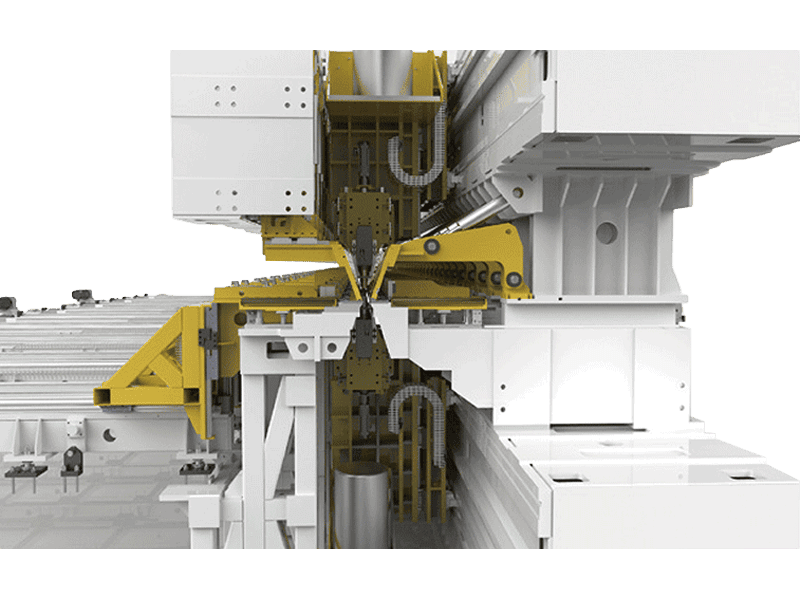
For high-volume rail production, the Fully Automatic double-head FSW Production Line welds both sides of a long aluminum profile simultaneously. It automates laser tracking, feeding, clamping, welding, discharging, and cutting, which reduces handling-induced variation on long parts. The line supports weld lengths up to 18,500 mm and profile widths up to 3,500 mm.
Why Simultaneous Double-Head Welding Matters
Welding both sides at once balances thermal input and reduces asymmetric distortion. It also shortens cycle time because one profile is not flipped or re-fixtured between passes. In long straight rail components, this improves flatness and reduces straightening work after welding.
Tool Selection for Long Straight Seams
Tool selection determines weld quality on hollow rail profiles. Three tool types are particularly relevant:
- Bobbin FSW tools weld from both sides with two shoulders, eliminating the need for rigid backing support. This is useful for hollow extrusions and long straight closed profiles where conventional backing plates cannot access the internal cavity.
- Stationary shoulder FSW tools separate the rotating pin from a non-rotating shoulder. Lower heat input reduces flash and thinning, which matters on thin-wall high-speed train profiles.
- Retractable FSW tools retract the pin at the weld end to close the exit hole, producing a sealed, keyhole-free seam. This is valuable when weld terminations cannot be trimmed or when the seam must be leak-tight.
The Bobbin FSW Tool is available for common 4xxx, 5xxx, and 6xxx alloys at 3.0–20.0 mm thickness, while the Retractable FSW Tool supports closed-loop and high-integrity rail welds where exit-hole elimination is required.
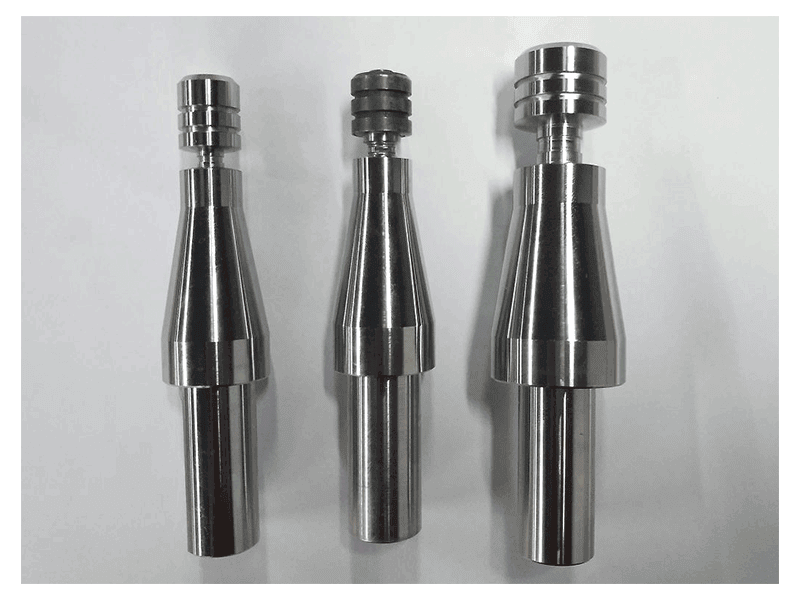
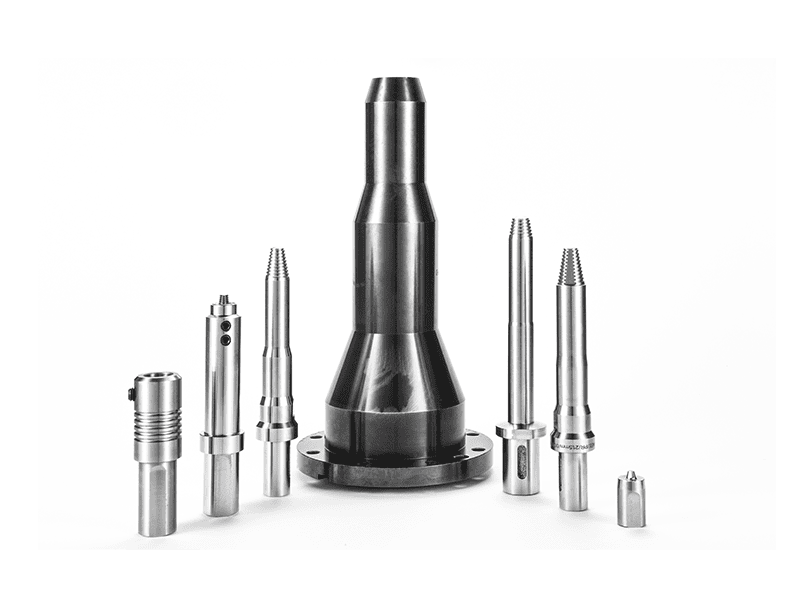
Long closed-loop and high-integrity rail seams often depend on pin-tool features more than machine power alone. <AEE provides customer with optional features FSW tool> covers how retractable-pin, stationary-shoulder, and other optional FSW tool features are matched to rail, aerospace, and new-energy welding requirements.
Process Control and Weld Quality in Rail Applications
On a 10 m+ weld, process stability is more important than peak parameter settings. The machine must hold consistent spindle speed, travel speed, and axial force along the entire seam. Force control, temperature monitoring, and tool-workpiece positioning improve repeatability.
For extra-long rail profiles, process design usually focuses on:
- Constant pressure or force control instead of fixed-position control when extrusion thickness varies.
- Laser weld tracking to keep the pin centered on the seam despite profile straightness variation.
- Parameter data acquisition for traceability and trend analysis.
- Tool temperature management through water-cooled tool holders or spindle interfaces.
The Friction Stir Welding Spindle Series from AEE includes torque ratings from 112 Nm to 874 Nm and supports grease-lubricated spindle options for different profile thicknesses. For most 6xxx rail extrusions up to 8 mm, a 4,000 rpm, 112 Nm, 12 kW spindle is sufficient; thicker or high-strength profiles need more torque.
Qualification and Inspection for Rail-Grade Joints
A rail FSW procedure should be qualified before series production. A practical qualification sequence includes:
- Define the weld joint type, alloy, profile thickness, and required mechanical properties.
- Run phased parameter trials on representative profile samples.
- Perform visual inspection, macro-etch, tensile and bend testing, and non-destructive testing.
- Freeze the qualified parameter window and record it in a welding procedure specification.
- Validate machine repeatability on full-length profiles.
For rail applications, EN 15085-2 requires the welding manufacturer to operate under a certified quality system [2]. ISO 9001:2015 provides the quality management baseline for traceability, nonconformance control, and corrective action [3].
Rail welding qualification moves faster when process directions are validated against international FSW research and field experience. <AEE attend 13th International Symposium on FSW in Kyoto, Japan on 21 – 23 May 2024> covers the technology exchange and process directions discussed at the 2024 international symposium.
Planning an Extra-Length FSW Production Cell
A successful rail FSW cell starts with profile handling. Because profiles are long and flexible, supports, rollers, and clamping must prevent sag and vibration. The machine foundation, power supply, and compressed air system should be sized for continuous production. For an extra-length machine with 16,000 mm X-axis travel, floor space is roughly 20,000 mm × 7,000 mm × 3,100 mm for the machine alone — before loading and unloading zones.
Buyers should also consider:
- Whether the rail profile can be welded with single-side tooling or requires bobbin/double-head welding.
- The production target in meters per shift and how many welding stations are required.
- Whether the cell must integrate automatic loading, cutting, and inspection.
- Availability of spare FSW tools, tool holders, and spindle support.
- Qualification support, including sample welding and process development before investment.
A turnkey approach reduces risk by combining machine, tooling, clamping, process development, and training under one supplier instead of assembling a cell from separate vendors.
Get an Extra-Length Rail FSW Proposal
Aerospace Engineering Equipment (Suzhou) Co., Ltd. provides standard and customized FSW machines, automatic production lines, tooling, and process development for rail transit, new energy, aerospace, and marine applications. For high-speed train aluminum profiles, the scope can include feasibility welding, fixture design, machine specification, installation, and after-sales support.
Contact AEE for a technical assessment:
- Email: [email protected]
- Phone / WhatsApp: +86 18325808715
- Prepare your profile cross-section drawing, alloy grade, maximum weld length, annual volume, and weld quality target.
FAQ
What FSW machine is used for high-speed train aluminum profiles?
Longitudinal seams in train body profiles are usually welded with an extra-length straight profile FSW machine or a fully automatic double-head FSW production line. The machine must have sufficient X-axis travel, stable axial force, and laser weld tracking to hold quality over 10 m or more.
Can FSW weld hollow aluminum extrusions without a backing bar?
Yes. Bobbin FSW tools use two shoulders on opposite sides of the joint, so the lower shoulder supports the weld from the bottom. This eliminates the need for a rigid backing bar inside hollow sections and reduces lack-of-penetration risk.
What aluminum alloys are used in high-speed train FSW profiles?
Most high-speed train body profiles are made from 6xxx-series alloys such as EN AW-6005A, 6060, and 6082. FSW produces good mechanical properties in these alloys without the porosity and hot-cracking risk associated with fusion welding.
How long can an extra-length FSW machine weld?
An extra-length straight profile FSW machine with 16,000 mm X-axis travel can weld long rail body structural parts in one setup. A fully automatic double-head FSW production line can handle weld lengths up to 18,500 mm and profile widths up to 3,500 mm.
What certifications are required for FSW of railway vehicles?
Rail welding manufacturers typically must operate under EN 15085-2 certification, which covers quality requirements and certification for welding railway vehicles and components. ISO 9001:2015 is also commonly used as the quality management baseline.
References
[1] ISO 25239-1:2020, Friction stir welding — Aluminium — Part 1: Vocabulary. International Organization for Standardization.
[2] EN 15085-2:2020, Railway applications — Welding of railway vehicles and components — Part 2: Quality requirements and certification of welding manufacturer. European Committee for Standardization.
[3] ISO 9001:2015, Quality management systems — Requirements. International Organization for Standardization.
If you’re interested, check out these related articles:
Customized Dissimilar Material Welding Manufacturers in China
Refill Friction Stir Spot Welding (RFSSW)
AEE provides customer with optional features FSW tool