
FSW for Aluminum Vessel Superstructures: Corrosion & Strength
Table of Contents
- Why Aluminum Superstructures Are Welding-Critical
- Corrosion Resistance in Marine Service
- Strength and Fatigue: Solid-State Advantages
- Distortion Control in Large Panels
- Production Considerations for Superstructure Fabrication
- Engineering Support for Vessel Superstructure FSW
- FAQ
- Is FSW suitable for both 5xxx and 6xxx marine aluminum alloys?
- Does FSW eliminate corrosion problems on aluminum vessels?
- What plate thicknesses can be friction stir welded for vessel superstructures?
- How do shipyards qualify FSW for marine classification?
- Can bobbin tools weld hollow or blind-side superstructure profiles?
- References
Aluminum superstructures on workboats, ferries, patrol craft, and large yachts must carry deck loads, resist seawater attack, and tolerate repeated hull flexing. Fabricating those structures with fusion welding often leaves porosity, hot cracks, heat-affected-zone softening, and distortion that shipyards must repair. Friction stir welding (FSW), standardized for aluminium in ISO 25239 [1], produces a solid-state joint below the melting point. For aluminum vessel superstructures, this changes the corrosion and strength conversation.
Why Aluminum Superstructures Are Welding-Critical
Superstructures are not simply cover structures; they are load-bearing assemblies of deck plating, side shells, stiffened panels, wheelhouse components, and connection frames. On aluminum vessels, designers typically combine 5xxx work-hardened alloys for corrosion resistance and 6xxx heat-treatable alloys for stiffness or extruded profiles. Marine-grade 5xxx sheet and plate are specified under standards such as ASTM B928 [2]. Many components arrive as thin-wall extrusions or pre-fabricated hollow profiles, so the welding process must preserve profile geometry while producing full-penetration seams.
Conventional MIG and TIG welding of these alloys can create pore clusters, oxide-film defects, and liquation cracks. The arc also introduces broad heat input that softens cold-worked 5xxx material around the weld and can leave residual stress high enough to pull panels out of tolerance. FSW avoids the liquid-to-solid transition entirely. The rotating tool plasticizes material, mixes the interface, and consolidates the joint under axial force, creating a continuous forged microstructure rather than a cast weld metal structure.
Corrosion Resistance in Marine Service
Marine corrosion performance depends on composition, microstructure, and surface condition. Fusion welds can trap porosity and micro-cracks that serve as crevice initiation points. Because FSW does not melt the joint, it eliminates solidification porosity and hot cracking that would otherwise become localized corrosion sites [3]. The refined, recrystallized nugget also presents a more uniform microstructure than the dendritic structure of a fusion weld.
For 5xxx alloys, sensitization and intergranular corrosion are long-term concerns when magnesium-rich phases precipitate at grain boundaries after extended service. FSW’s lower peak temperature and shorter thermal cycle reduce the driving force for coarse boundary precipitation compared with multi-pass arc welding. Material selection still matters: alloys with controlled magnesium content, appropriate tempers, and effective paint or cathodic protection systems remain essential. FSW is not a replacement for marine protection practice, but it removes a major source of weld-root and toe defects that accelerate localized attack.
Strength and Fatigue: Solid-State Advantages
In aluminum superstructures, fatigue often controls design. Cracks tend to start at weld toe geometry, porosity, lack of fusion, or distortion-induced stress concentrations. FSW produces a smooth, low-profile weld surface and full-thickness consolidation, reducing notch severity at the toe. The fine-grained nugget generally retains a high proportion of base-metal tensile strength and can exceed the performance of typical as-welded aluminum fusion joints [3].
The lower heat input also reduces residual stress. Less locked-in stress means less early fatigue damage when the vessel begins working in a seaway. For decks, side shells, and stiffened panels, that translates into fewer distortion corrections, less secondary bending stress, and more predictable service behavior. Because fatigue life in marine structures depends as much on geometry as on material, FSW’s dimensional control is part of its strength story.
Project qualification support. For vessel programs that require weld qualification before production release, the engineering team can support coupon welding, parameter development, corrosion testing, and classification documentation. Contact [email protected] or +86 18325808715.
Distortion Control in Large Panels
Large aluminum decks and side panels move when heated. Fusion welding produces wide heat-affected zones, high peak temperatures, and significant shrinkage along the seam. FSW uses concentrated deformation under a rotating tool with comparatively low heat input, so the contraction zone is narrower. Fixtures and backing bars further control movement during welding.
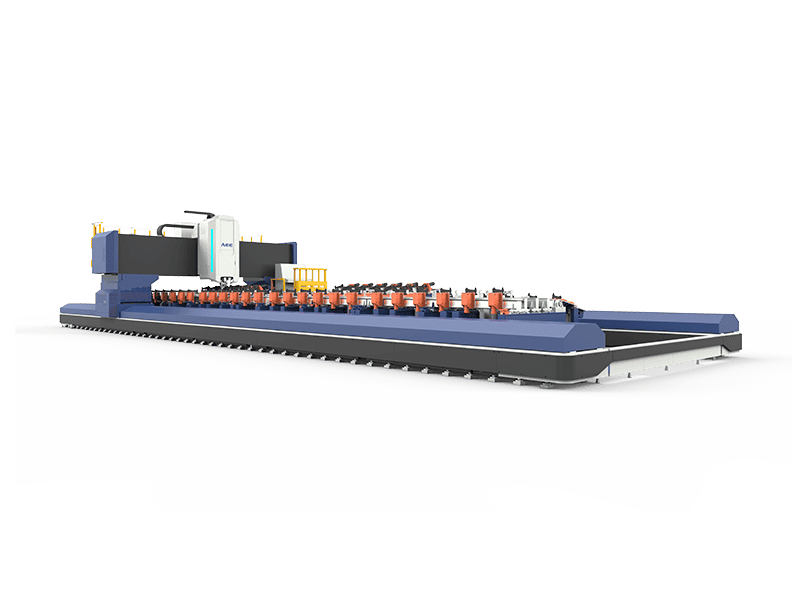
For long deck seams, travel speed is not the only variable. Machine rigidity, spindle force capacity, and clamping strategy determine whether a panel stays flat. An extra-length straight-profile FSW machine with an X-axis stroke of 16,000 mm and traverse capability of 10 m/min allows full-length seams to be welded in one setup. That reduces start-stop craters and alignment shifts compared with welding shorter segments.
Production Considerations for Superstructure Fabrication
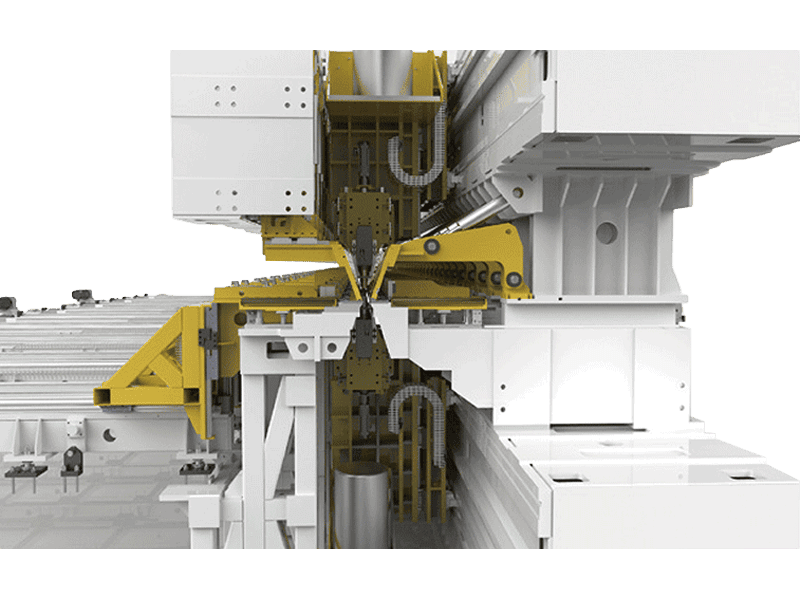
Superstructure work mixes butt welds in plate, fillet-type connections in stiffened panels, and hollow extrusions where only one side is accessible. Two tooling approaches are particularly useful. Bobbin tools weld from both sides of the material in a single pass, removing the need for rigid back support and helping eliminate root defects in closed profiles. For thick deck transitions, heavy-load gantry machines provide the force and stiffness needed to weld high-thickness aluminum plate without plunging through the seam.
High-volume aluminum panel production can move from standalone welding to an automatic double-head production line with laser tracking, integrated clamping, and weld-length capacity up to 18,500 mm. A production-line approach keeps process parameters traceable, which matters when a classification society asks for welding data during inspection.
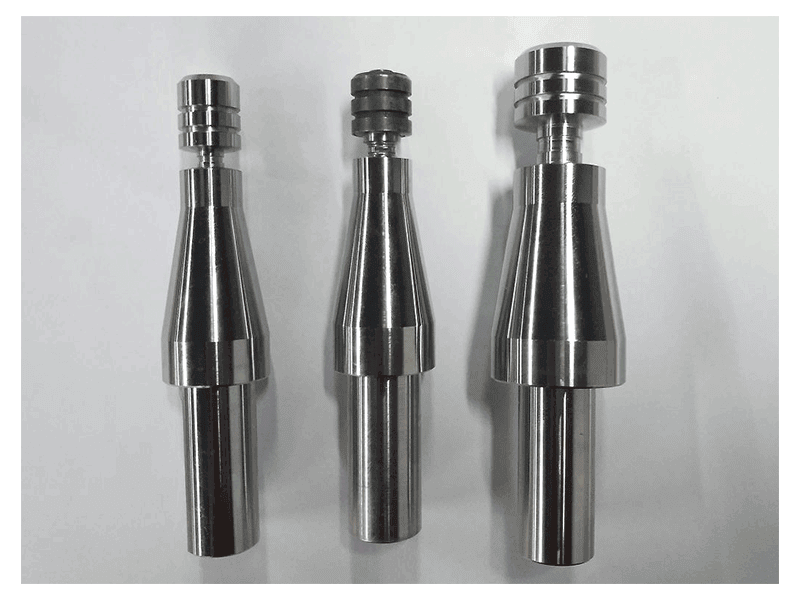
Tool geometry is the next control layer. Shoulder diameter, pin profile, and tool material determine heat generation, material flow, and surface finish. Because superstructure designs combine multiple plate thicknesses and extrusions, pre-production qualification should include tool configuration trials on representative joints.
Tool selection is specified by alloy, plate thickness, and joint access before production welding begins. <AEE provides customer with optional features FSW tool> covers how optional tool features are configured for specific joint geometries and material thicknesses.
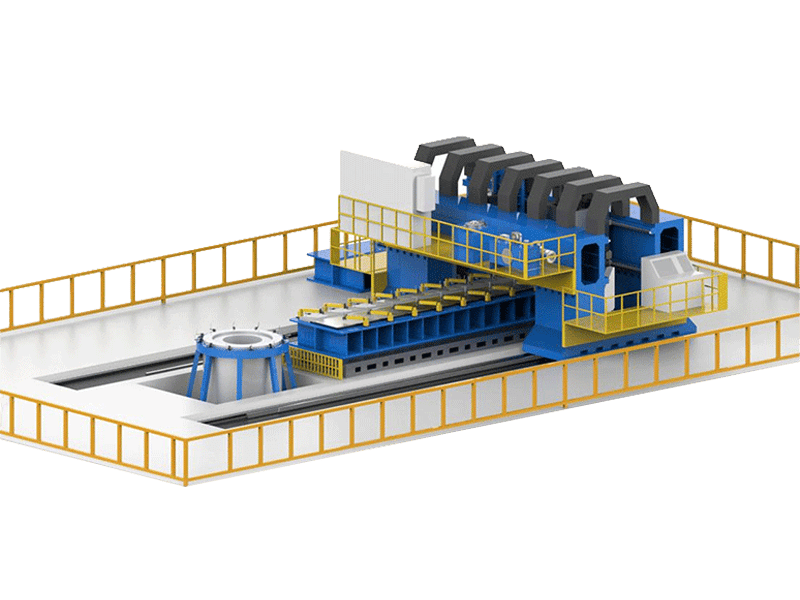
For thicker sections and high-restraint joints, a heavy-load FSW machine can weld aluminum plate up to 100 mm single-side, which extends production options beyond typical deck gauges. Even when a shipyard only welds 4–8 mm aluminum on routine panels, reserve force capacity improves process stability under long-duration welds.
Classification-society documentation for marine fabricators normally requires a qualified welding procedure specification and supporting procedure qualification records covering NDT and mechanical testing [4]. FSW procedures following ISO 25239 provide a recognized framework for qualification, although final acceptance criteria remain project-specific.
Engineering Support for Vessel Superstructure FSW
Whether the program is a prototype deck panel, a batch of aluminum wheelhouse modules, or a full stiffened-panel production line, define these inputs early:
- Alloy grades and tempers
- Plate and extrusion thickness range
- Panel dimensions, stiffener geometry, and weld lengths
- Annual volume or required cycle time
- Classification society, NDT requirements, and acceptance standards
Send project drawings, alloy details, and production targets to [email protected] or +86 18325808715. AEE’s engineering team can then propose the right machine platform, tool configuration, clamping concept, and qualification path.
FAQ
Is FSW suitable for both 5xxx and 6xxx marine aluminum alloys?
Yes. FSW is used for both work-hardened 5xxx alloys and heat-treatable 6xxx alloys. The process does not require filler matching in the same way as arc welding, but tool design, rotation speed, travel speed, and forging force must be developed for each alloy and thickness.
Does FSW eliminate corrosion problems on aluminum vessels?
No welding process eliminates corrosion. FSW removes solidification porosity and hot cracking, and its lower heat input helps preserve corrosion-resistant microstructure, but paint systems, drainage design, insulation isolation, and cathodic protection remain important.
What plate thicknesses can be friction stir welded for vessel superstructures?
Production machines cover a wide range. Compact C-type machines weld thin sheet sections, while gantry and heavy-load machines handle thicker structural plate up to 100 mm aluminum single-side. Most superstructure deck and shell plating can be handled with standard gantry or extra-length equipment.
How do shipyards qualify FSW for marine classification?
The normal route is a qualified WPS and PQR with destructive and non-destructive testing specified by the classification society. ISO 25239 supports procedure qualification for aluminium friction stir welds, while fatigue and corrosion acceptance criteria are defined by the vessel project.
Can bobbin tools weld hollow or blind-side superstructure profiles?
Yes. Bobbin-tool FSW welds both sides of the joint in one pass and does not require back support, making it suitable for hollow extrusions and profiles where the reverse side cannot be accessed.
References
[1] ISO 25239-1:2020, Friction stir welding — Aluminium — Part 1: Vocabulary, International Organization for Standardization, 2020.
[2] ASTM B928/B928M-15, Standard Specification for High Magnesium Aluminum-Alloy Sheet and Plate for Marine Service and Similar Environments, ASTM International, 2015.
[3] TWI Ltd., “Friction Stir Welding of Aluminium Alloys,” TWI Technical Knowledge, https://www.twi-global.com/technical-knowledge/job-knowledge/friction-stir-welding-147/.
[4] DNV GL, Rules for Classification of Ships, Part 2 Materials and Welding, Chapter 4 Fabrication and Testing, DNV GL AS, 2021.
If you’re interested, check out these related articles:
AEE provides customer with optional features FSW tool
AEE attend 13th International Symposium on FSW in Kyoto, Japan on 21 – 23 May 2024