
FSW Equipment Demand 2026: What EV Growth Means for Buyers
Table of Contents
- Why EV Programs Are Changing FSW Equipment Demand
- Battery Tray and Enclosure Work Is Redefining Machine Specifications
- Cycle Time and Automation Decide the Real Equipment Cost
- How to Qualify an FSW Equipment Supplier for EV Production
- FSW Capacity Planning Should Start With the Part Envelope
- Common Questions About FSW Equipment for EV Production
- Which FSW machine type is best for battery tray production?
- Do EV cooling plates require special FSW tooling?
- How much automation do we need for a new EV welding line?
- What should we confirm before importing FSW equipment from overseas?
FSW equipment demand in 2026 is being reshaped less by market forecasts and more by what electric vehicle production lines now require from welding equipment. Battery tray programs push gantry machines toward wider tables, dual-head configurations, and closed-loop process monitoring, while cooling plate and power electronics work keeps pressure on leak-tight weld quality. The buyers who get this right are not the ones chasing aggregate growth numbers. They are the ones qualifying machine force, stroke, and cycle time against a specific part envelope before placing an order.
Why EV Programs Are Changing FSW Equipment Demand
The broad market story matters less than the specification shifts attached to it. A line that welded aluminum extrusions for rail or marine work five years ago could often use a gantry machine with standard force control. An EV battery tray or sealed electronics enclosure usually cannot. These parts combine long weld seams, thinner walls, internal cooling channels, and a leak requirement that leaves little room for root defects. Body panel programs add a different constraint: spot welds must be consistent enough to replace rivets or resistance spots without adding weight or surface rework.
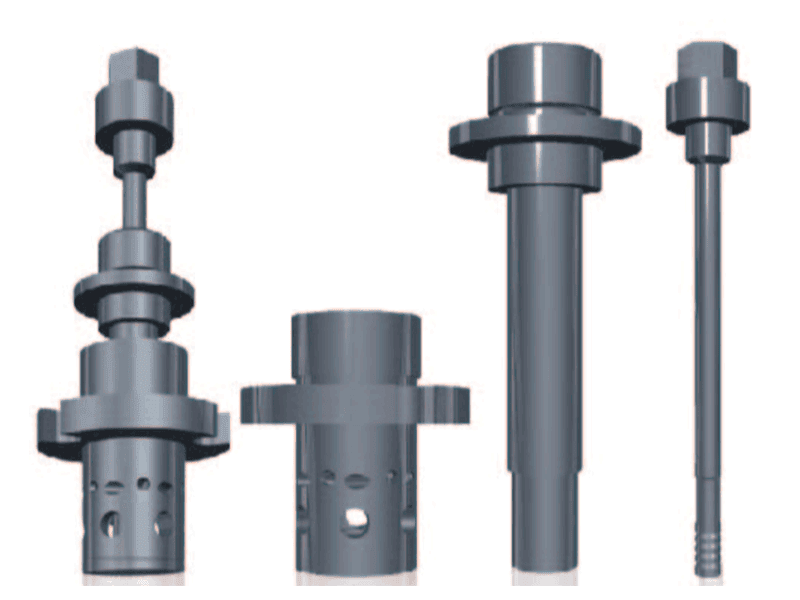
At the same time, process data has become part of the machine specification. Buyers are no longer asking only whether a tool can weld a coupon. They are asking whether the spindle can hold axial force within a defined band across a 2-meter seam and whether that force trace can be exported for audit.
FSW has moved from laboratory qualification into production-line engineering, and the technical discussions at major events reflect that shift. <AEE attend 13th International Symposium on FSW in Kyoto, Japan on 21 – 23 May 2024> covers how machine builders and research groups are now presenting process monitoring, tool life management, and automation data rather than basic weldability studies.
Battery Tray and Enclosure Work Is Redefining Machine Specifications
An EV battery tray is not a single weld problem. It is a combination of long profile seams, cross-member joints, and sealed cooling channels. That combination pushes equipment selection toward gantry and double-head machines because the work envelope and clamping layout determine whether a tray can be welded in one setup.
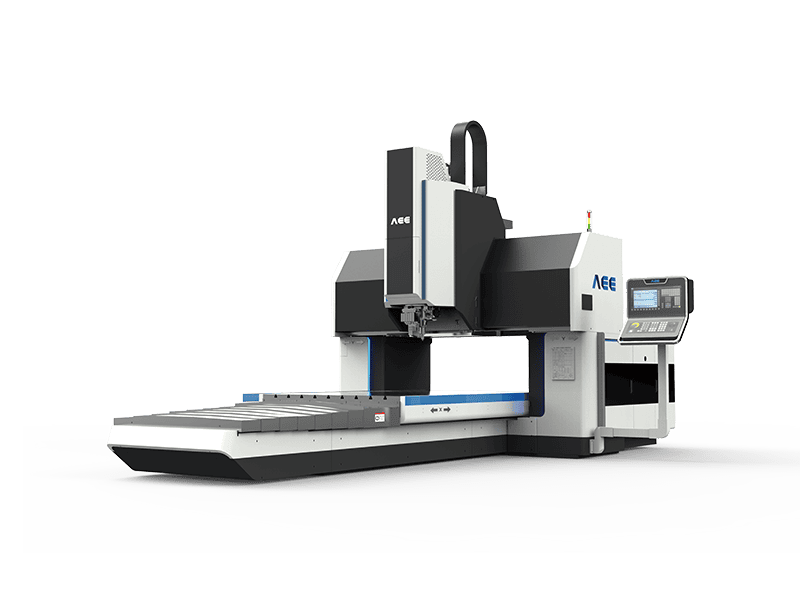
On the AEE FSW 25×40/1 gantry machine, the 2500 mm by 4000 mm table handles full-size tray blanks, with 25 mm maximum weld thickness and 60 kN of Z-axis force. For production speed, the AEE double-head FSW machine welds both faces in a single pass with double-sided thickness up to 8 mm, which removes a major cycle time bottleneck.
| Machine type | Typical EV application | Work envelope | Maximum weld thickness |
|---|---|---|---|
| AEE FSW 8×10/2 C-type | Cooling plates, radiators, power electronics | 600 × 1200 mm table | 8 mm |
| AEE FSW 8×10/2S dual-worktable C-type | High-mix thin-gauge enclosure work | 600 × 1000 mm dual stations | 8 mm |
| AEE FSW 25×40/1 gantry | Large battery tray blanks | 2500 × 4000 mm table | 25 mm |
| AEE double-head FSW machine | Battery tray double-sided seams | Dynamic gantry with dual head | 8 mm double-sided, 100 mm single-sided aluminum |
Tool configuration matters as much as machine stroke for sealed EV components. <AEE provides customer with optional features FSW tool> covers how shoulder and pin options are matched to weld depth and exit-hole requirements, which is where standard catalog tooling often falls short on battery tray programs.
Cycle Time and Automation Decide the Real Equipment Cost
Quoting equipment cost by spindle power alone misses the more serious line cost. A machine that welds a tray in 90 seconds but spends 30 seconds on load and unload consumes one-third of its available cycle time. The dual-worktable C-type FSW machine addresses this by keeping two stations in rotation, so welding continues while the operator resets one side.
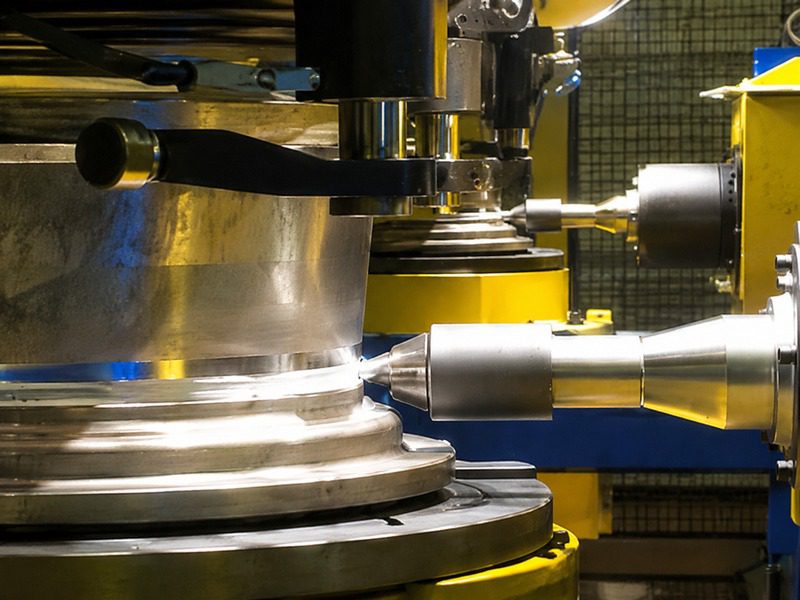
For high-volume aluminum components, automated lines such as our automatic FSW production line for aluminum wheels run at 45 JPH with QR code scanning, robot loading, and tool positioning integrated into the HMI. That kind of integration is a better predictor of unit cost than any advertised traverse speed.
If your program involves a battery tray or cooling plate longer than 2 meters, it is worth confirming the clamping and weld tracking approach before you freeze the BOM. Share your part envelope and target cycle time at [email protected], and we can compare single-head, dual-head, and dual-worktable configurations against your actual takt time.
How to Qualify an FSW Equipment Supplier for EV Production
EV programs carry a different supplier risk profile than general aluminum fabrication. Weld traceability moves from a nice-to-have to a line audit requirement, and closed-loop control has to hold force, position, torque, and temperature within a documented window. When we design a machine for this application, the CNC architecture is part of the process qualification. The dual-worktable C-type machine, for example, uses Siemens SINUMERIK 828D with four-axis linkage across six numerical axes and logs process data for each weld sequence.
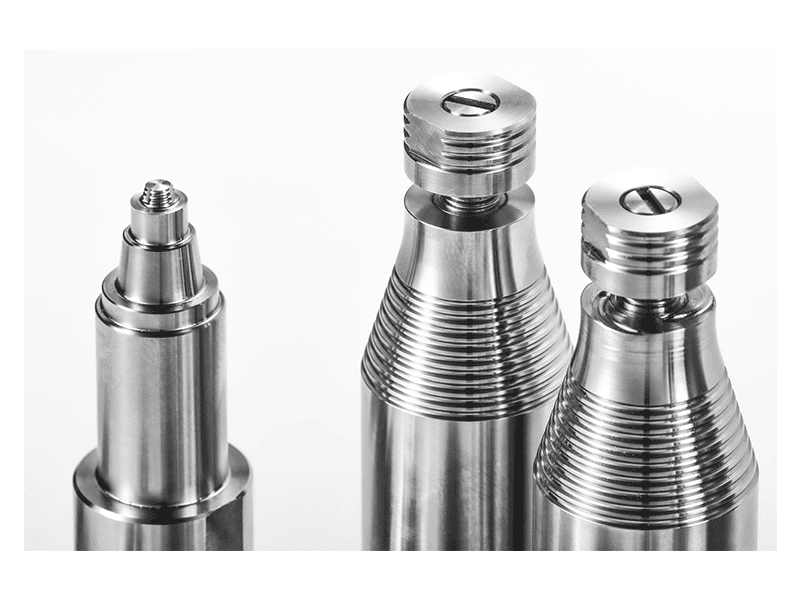
Tool strategy should be qualified at the same time. A supplier that offers the right machine but only a narrow standard tool range will limit the program later.
Supplier qualification for mixed-material components should not stop at the machine frame. <Customized Dissimilar Material Welding Manufacturers in China> covers what to check when a supplier claims aluminum-to-copper or aluminum-to-steel process windows, including how tool material choices change part quality and ownership cost.
FSW Capacity Planning Should Start With the Part Envelope
One mistake we see in EV equipment selection is starting with a machine catalog instead of a part drawing. That approach produces a machine that can weld, but not one that meets the line rhythm, leak specification, and changeover pattern the program actually demands. The more useful sequence is to define the weld envelope, clamping surface, cycle time, and data recording requirement first, then match machine configuration to those numbers.
If your 2026 program is moving from prototype to production, send your part drawing and target output to [email protected] or call +86 18325808715. We can confirm which machine, tool, and automation layout fits your specific EV application before you commit to an equipment budget.
Common Questions About FSW Equipment for EV Production
Which FSW machine type is best for battery tray production?
For most battery tray programs, the best starting point is a gantry machine with a table sized to the full blank, because long seam welding and fixture access outweigh spindle speed as the deciding factors. A double-head configuration becomes the better choice when both faces must be welded in one pass to hold cycle time. The exact selection depends on tray length, wall thickness, and whether cooling channels require a leak-tight root. If the tray is modular and produced in shorter segments, a C-type or dual-worktable machine may be enough. Define the largest unwelded blank the line will handle before comparing machine classes.
Do EV cooling plates require special FSW tooling?
A common assumption is that a standard threaded pin will work for every 6xxx aluminum cooling plate. It will not always produce the right root condition. Thin covers, deep channel webs, and high thermal cycling requirements change how the shoulder and pin interact with the material. Stationary shoulder tools can reduce surface flash and thinning on thin-wall parts, while retractable pins eliminate the exit keyhole when a sealed channel must pass leak testing. The tool is not a minor accessory in this application. It should be qualified with the same severity as the machine spindle.
How much automation do we need for a new EV welding line?
It depends on the annual volume and the number of part variants. If production is low mix and high volume, a fully automatic line with robot loading, weld tracking, and process traceability usually pays back through lower labor and rework. If the plant runs multiple tray sizes or frequent changeovers, a dual-worktable machine with manual loading may be more practical because changeover time matters more than maximum throughput. A middle path is to automate only the weld sequence first, then add loading and inspection modules after the line reaches stable production.
What should we confirm before importing FSW equipment from overseas?
In export projects we have delivered, the most common delays come from two areas: tightening site requirements and post-installation process support. Buyers should confirm foundation and power supply limits before the machine ships, and clarify whether the supplier can run sample welds on the actual part before final acceptance. Remote diagnostics and spare parts lead time also affect line uptime. Share your requirements and we will confirm which machine class fits your weld depth and throughput before you finalize the supplier shortlist.
If you’re interested, check out these related articles:
AEE attend 13th International Symposium on FSW in Kyoto, Japan on 21 – 23 May 2024
Refill Friction Stir Spot Welding (RFSSW)
AEE provides customer with optional features FSW tool