
FSW Cold Plates for Data Center Liquid Cooling at Scale
Table of Contents
- Why Cold Plate Leak Tightness Determines Data Center Uptime
- How FSW Builds a Cold Plate Without Brazing Filler
- Scaling Cold Plate Welding from Prototype to Production
- Machine Selection for High-Volume Cold Plate Lines
- Process Control and Quality Verification for Sealed Channels
- Avoiding the Costly Defects in Water-Cooled Enclosures
- Planning a Cold Plate FSW Line
- FAQ
- Does FSW work for thin cold plate covers?
- What leak test should a production cold plate line include?
- Is FSW faster than brazing for high-volume cold plates?
- Which FSW machine configuration suits a medium-volume cold plate line?
FSW cold plates for data center liquid cooling solve the central manufacturing challenge of a sealed aluminum enclosure. The internal channels must remain leak-free for years while the plate stays flat enough for consistent thermal contact. Instead of furnace brazing with filler and flux, friction stir welding uses a rotating tool to plasticize metal below its melting point and forge a solid-state seam. That difference changes the production conversation. This article walks through the sealing requirements, the process mechanism, the machine and tooling choices, and the quality checks that determine whether a cold plate design can be manufactured at scale.
Why Cold Plate Leak Tightness Determines Data Center Uptime
A cold plate is not a simple weldment. It combines a machined or stamped base, internal coolant channels, and a cover that must seal every flow path without contaminating the coolant. In data center service, a leak bypasses the cooling path and can damage adjacent electronics. The production problem therefore includes not only weld strength but channel cleanliness, avoiding trapped braze flux, internal burrs, and distortion. A plate that is flat after machining can bow enough after brazing to create poor thermal interface contact.
FSW is attractive because it is a solid-state process. It introduces no filler metal and no flux, so the coolant path remains cleaner. Heat is local to the tool contact zone, which helps hold flatness when the fixture and weld sequence are correct. However, a sealed FSW cold plate is only as reliable as the weld path design, machine rigidity, tool condition, and inspection plan. The process is not inherently leak-free.
| Cold plate requirement | Production risk with brazing or adhesive bonding | FSW characteristic to verify |
|---|---|---|
| Leak-tight channels | Flux residue, incomplete fillet, micro porosity at interfaces | Pressure or helium leak test after welding and sectioning |
| Low distortion | Furnace cycles or local heat can move thin covers | Clamping and validated weld sequence |
| Repeatable thermal interface | Bond line thickness variation | Consistent plunge, tool condition and axial force |
| Clean coolant path | Flux or braze alloy contamination | No filler or flux, with channel cleanliness inspection |
| Acceptable surface flatness | Heat induced bow | Post-weld machining or straightening allowance |
How FSW Builds a Cold Plate Without Brazing Filler
The rotating pin enters the seam between the cover and the base, generates frictional heat, and plasticizes the surrounding aluminum. The tool shoulder then forges the softened material downward while the pin drives material through the thickness. Because the metal stays below its melting point, the solidified weld has no fusion solidification structure and no filler dilution. For a cold plate, this supports continuous joints along the perimeter or around channel sections that must be isolated from each other. Tool access and clamping access define which internal features can be welded. Deep, narrow channels may require an open cover or a larger shoulder.
Compared with brazing, the main trade-off is that FSW requires a stiff machine, a robust fixture, and a direct tool path. It is not a batch furnace process. The benefit appears during validation and series production because the weld is repeatable and the process data can be logged for each seam. When a cooling plate combines 5xxx or 6xxx aluminum with a cover that is thick enough for tool plunge, FSW can replace braze joints with a single-step mechanical bond.
Scaling Cold Plate Welding from Prototype to Production
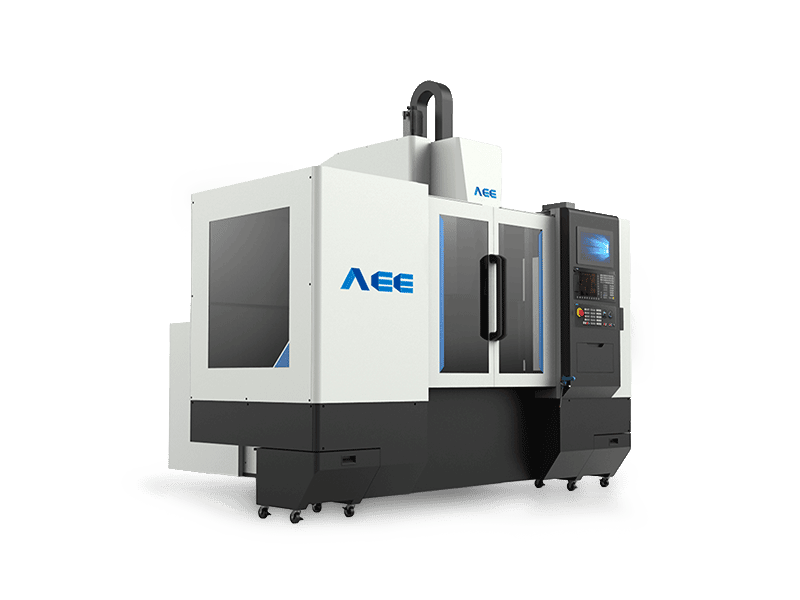
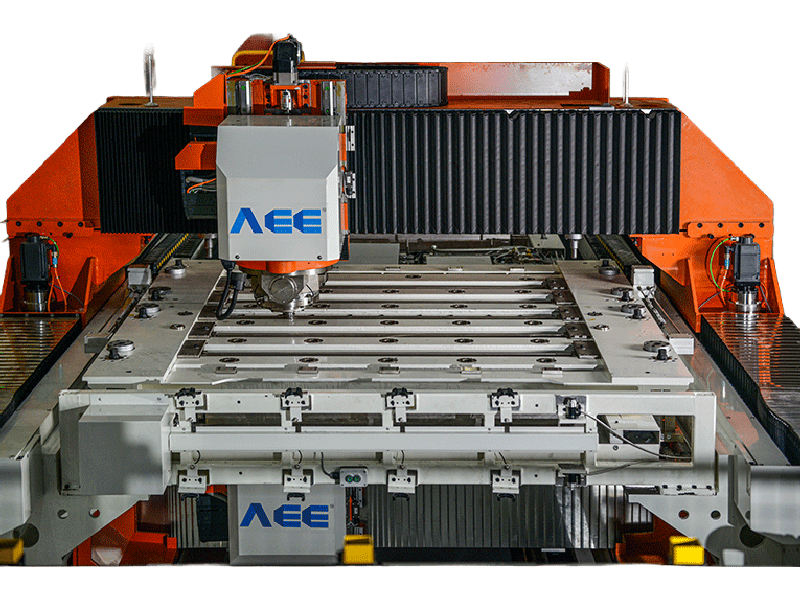
Prototype cold plates usually begin on a C-type FSW machine. A compact C-type platform such as the AEE FSW 8×10/2 provides a 600 mm by 1200 mm working table, 30 kN maximum Z-axis force, 112 Nm spindle torque, and a welding speed up to 3,500 mm/min for development and low-volume production. That combination is sufficient for many sealed cold plate layouts in electronics and water cooling plate applications. The next constraint is not always welding speed. Loading, clamping, inspection and tool changes can consume more cycle time than the weld.
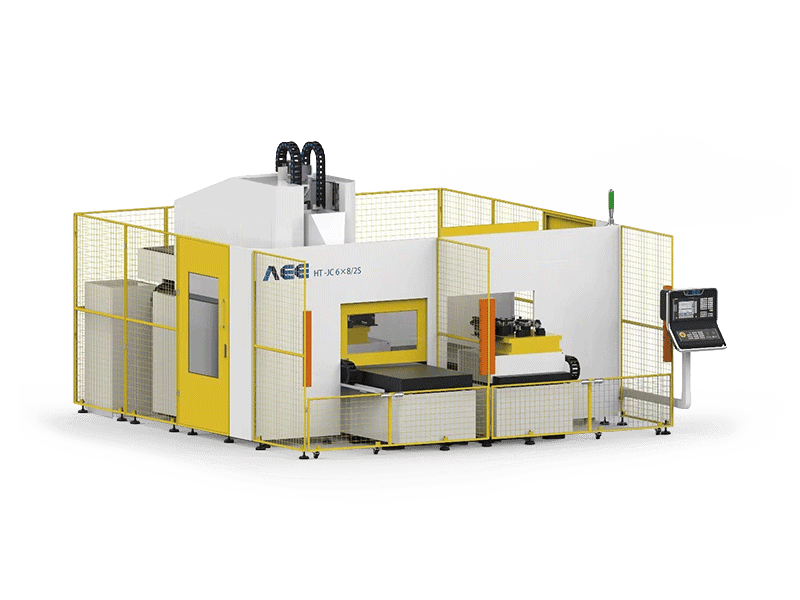
Once the process window is stable, a dual-worktable C-type machine lets an operator load one fixture while the spindle welds the other. The dual-worktable version adds dual workstations, a Siemens SINUMERIK 828D control with four-axis linkage, automatic tool changing, force, position, torque and temperature control, visual recognition and laser tracking. For medium-volume cold plate lines, this configuration reduces idle time more practically than buying a larger single-worktable machine.
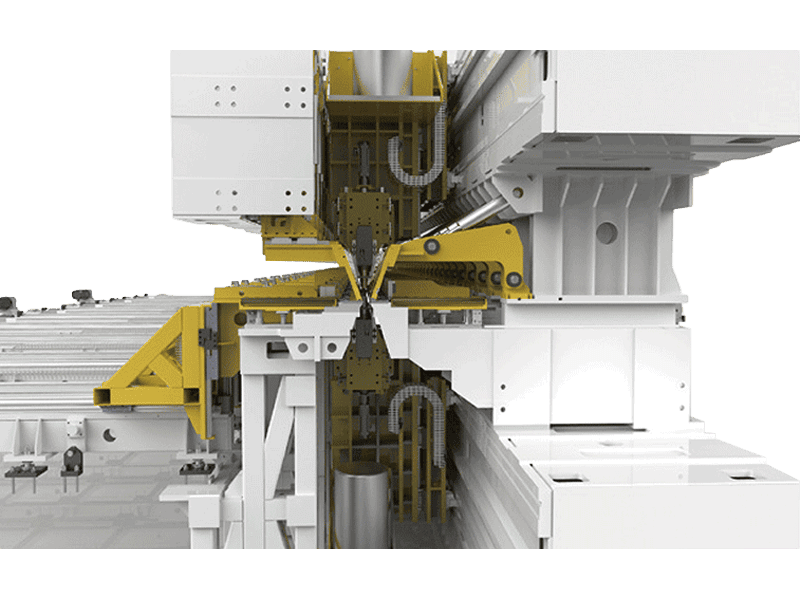
For high-volume production, the automation question should be answered after the weld path and cycle time are measured, not before. A fully automatic double-head FSW production line becomes useful when many long welds or panel-style assemblies share the same fixture logic. It can handle 1.2 mm to 16 mm weld thickness and lengths up to 18,500 mm with double-sided welding, laser tracking and data-logged parameters. That scale is often more automation than a typical cold plate line needs, but it matters when cold plates are integrated into long battery or cooling panel families.
Machine Selection for High-Volume Cold Plate Lines
The right machine depends on part dimensions, weld path, thickness, annual volume, and whether the line must change over frequently. The table below compares machine options using data from the available FSW machine range. The important decision is not to buy the largest machine available. It is to match table size, Z-axis force, spindle power and fixture changeover capacity to the cold plate family.
| Machine type | Best fit for cold plate manufacturing | Key production feature | What it does not solve |
|---|---|---|---|
| C-type FSW machine | Prototype and low to medium volume sealed plates | 600 mm by 1200 mm table, 30 kN Z force, 12 kW spindle | Large panel formats beyond table stroke |
| Dual-worktable C-type | Medium-volume production with continuous loading | Dual workstations, automatic tool change, laser tracking | Very long seams beyond the table stroke |
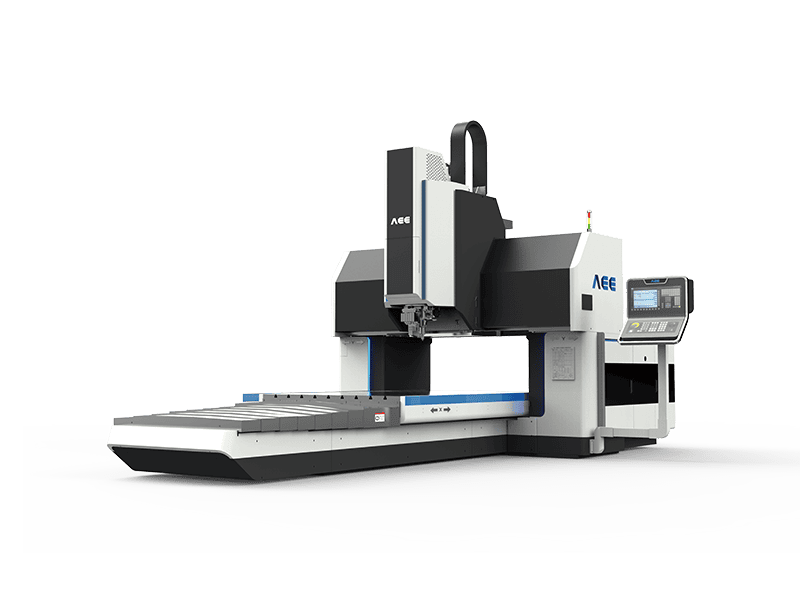
| Gantry FSW machine | Large or multi-part cold plate fixtures | Up to 8 mm 6XXX welding and 5,000 mm/min travel | Loading time when handling is the bottleneck |
| Double-head FSW machine | Double-sided welding and thicker enclosures | Integrated dual heads with process control | Small, rapid-change mixed batches |
| Fully automatic double-head line | Long panel and profile production at high volume | 18,500 mm length, 3,500 mm width, automated feed and cut | Complex small cold plates with frequent changeover |
Process Control and Quality Verification for Sealed Channels
A production cold plate line must record more than the weld recipe. The machine should monitor spindle speed, travel speed, Z-axis force or position, and tool temperature for each seam. Force control helps hold plunge depth and forge pressure. Position control helps hold path accuracy. For leak-critical parts, laser tracking keeps the tool on the channel seam when a row of small plates is located on a common fixture. Visual recognition can verify part presence and clamp state. Data logging should associate each serial number with the measured weld record.
Quality verification starts before pilot welding. A useful cold plate RFQ should define the following fields so the supplier can propose the right machine, tooling and fixture concept.
| RFQ field | What to specify | Why it matters |
|---|---|---|
| Alloy and temper | 6061/6063 or equivalent plus cover and base thickness | Sets tool material, rotation and travel speed |
| Weld path | Channel perimeter, radii, seam length and access limits | Determines machine axes and tool shoulder clearance |
| Leak requirement | Test method, pressure or vacuum level, allowable decay | Defines first-article pass criteria and fixture sealing |
| Flatness | Post-weld surface profile and machining allowance | Determines clamping, weld sequence and final finishing |
| Volume and cycle time | Annual quantity, changeover frequency, target seam time | Chooses single, dual-worktable or automated line |
After welding, a sealed cold plate usually moves through pressure decay or helium leak testing, followed by dimensional inspection on the seal face. A first-article part should be sectioned to confirm channel geometry, root condition and absence of void-like defects. For production, periodic destructive cross-section and leak tests catch tool wear before it creates a leak path.
Avoiding the Costly Defects in Water-Cooled Enclosures
The most dangerous FSW defects for a cold plate are not always visible on the surface. A tunnel or wormhole defect can run along the weld interior and provide a leak path while the outside appears acceptable. Root flaws, lack of fill, and excessive flash can also reduce sealing surface quality. These defects are usually linked to incorrect heat input, insufficient forge force, too high a travel speed, poor tool condition, or a fixture that allows the cover to lift during welding.
Prevention should be built into the process window. Use pilot welds with sectioning to identify the parameter range that produces a fully filled joint. Record tool condition and welding distance between tool checks. For closed perimeter welds, plan the exit path before welding. The end point can be pushed to a run-off tab, overlapped with a withdrawal ramp, or made keyhole-free with a retractable pin tool when the joint value justifies the more complex tool. Flashing, lack of fill and root defects should be rejected before leak testing, not discovered after the line has produced a full batch.
When a cold plate must attach copper tubing or a copper interface plate, the process boundary shifts again and should be qualified separately. Some sealed assemblies combine aluminum cold plates with copper or dissimilar interfaces, which changes the tool and process boundary again. > Customized cold plate work often starts as a standard aluminum enclosure, but thermal interfaces can introduce a second material. <Customized Dissimilar Material Welding Manufacturers in China> covers supplier capabilities for mixed-material joints that must keep thermal or electrical interfaces stable.
Planning a Cold Plate FSW Line
For a manufacturer evaluating FSW cold plates, the next step is to define the part family and the leak-test requirement in enough detail for a machine supplier to propose a concrete line. Send the alloy and temper, cover and base thickness, channel layout, seam length, required leak rate and test method, flatness tolerance, and annual volume. With those inputs, an FSW equipment supplier can recommend the right machine platform, fixture concept, tool strategy and automation level. Aerospace Engineering Equipment (Suzhou) Co., Ltd. can review your cold plate drawing and propose a production approach at [email protected] or +86 18325808715.
FAQ
Does FSW work for thin cold plate covers?
It can, when the cover has enough thickness for pin plunge and the fixture prevents edge lifting. Thin covers usually require firm backing support and close control of axial force. The machine and tool must be selected for the actual material thickness, and the first weld must be sectioned to confirm the root condition.
What leak test should a production cold plate line include?
The first requirement is to use the end user’s specification, usually pressure decay or helium leak testing with an agreed allowable decay. First-article parts should also be sectioned to inspect the weld root and channels. In production, in-process parameter logging plus periodic destructive or leak-test samples provide traceability. The pass criteria should come from the application, not from a generic manufacturing claim.
Is FSW faster than brazing for high-volume cold plates?
It depends on the part. FSW removes furnace brazing and flux cleaning from the route, and it provides a local solid-state weld. However, brazing can process many parts in one furnace cycle while FSW welds one seam path at a time. FSW usually wins on cleanliness, repeatability and sealed channel quality. Brazing may win on batch throughput for some simple flat assemblies. A production time study with the actual weld length and handling time is the correct comparison.
Which FSW machine configuration suits a medium-volume cold plate line?
A dual-worktable C-type machine is often the practical starting point. It allows loading during welding and offers process monitoring and automatic tool changing. A smaller C-type machine supports R&D and low-volume work. A gantry machine or automated line is justified when part sizes, seam lengths, or volumes grow beyond the C-type envelope.
If you’re interested, check out these related articles:
Refill Friction Stir Spot Welding (RFSSW)
AEE attend 13th International Symposium on FSW in Kyoto, Japan on 21 – 23 May 2024