
FSSW for Automotive Body Panels vs Rivets and Spot Welds
Table of Contents
- Why Are Body Panel Programs Moving Away from Rivets and RSW?
- How Does FSSW for Automotive Body Panels Compare with Rivets and RSW?
- What Tooling and Machine Requirements Does FSSW for Body Panels Bring?
- When Should a Program Stay with Rivets or Spot Welds?
- How Should an Automotive Supplier Size an FSSW Body Panel Program?
- What Questions Do Buyers Ask Before Approving FSSW for Body Panels?
- Does FSSW leave an exit hole?
- What aluminum thickness can FSSW handle in body panels?
- Is FSSW too slow for high-volume automotive body shops?
- Can FSSW join aluminum to steel body panels?
Aluminum-intensive body panel programs keep colliding with the limits of self-piercing rivets and resistance spot welding. Rivets add cost per joint, create through-holes, and challenge fatigue life. Resistance spot welding works but draws high current and loses its advantage on thicker stacks. FSSW for automotive body panels changes that calculation. It is a solid state spot joining process that combines the process logic of friction stir welding with single point cycle times, producing a fully filled flat spot without filler material. The decision hinges on where FSSW holds up against rivets and spot welding, what tooling and machines it demands, and when the older methods still make more sense.
Why Are Body Panel Programs Moving Away from Rivets and RSW?
Self-piercing rivets are mechanically stable and well established, but they impose a per-point consumable cost and a permanent hole through the upper sheet. On aluminum skins, that hole becomes a notch for fatigue loads and a potential corrosion site in mixed-material stacks. Rivets also add localized mass at every joint. Resistance spot welding avoids consumables but brings a different set of constraints: high current demand, electrode tip wear from aluminum oxide, and limited joint quality once the stack grows beyond roughly 3 mm. For aluminum-intensive closures and structural panels, the technical team usually has to trade cycle time, energy cost, and surface quality. AEE machine data lists shear strength more than 30 percent higher for FSSW than resistance spot welding and energy consumption more than 90 percent lower. That gap is enough to justify a cost model before locking the joining process.
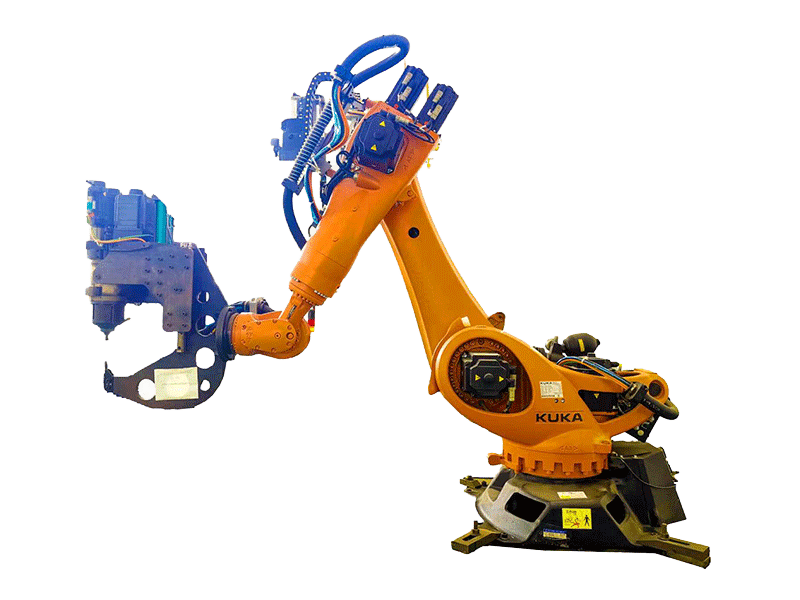
The second reason is process flexibility. FSSW can join dissimilar materials and multilayer foil stacks that resistance spot welding and riveting handle poorly. A door inner panel with a steel striker reinforcement or a hood with an aluminum-to-steel local reinforcement no longer requires a separate fastener family or adhesive-only strategy. This matters in body structures where mixed materials are appearing in lower-volume platforms.
Mixed-body programs usually stop at a stack-up that combines 6xxx aluminum skins with small steel reinforcements. <Customized Dissimilar Material Welding Manufacturers in China> covers how process development for dissimilar joints keeps intermetallic growth under control, a concern that also applies to aluminum-to-steel body panel details.
How Does FSSW for Automotive Body Panels Compare with Rivets and RSW?
FSSW is not a direct copy of friction stir welding run as a spot sequence. The tool uses a rotating pin and a compression sleeve to plasticize the stack under axial force, then either extracts to leave a conventional keyhole or refills the cavity to restore a flat surface. The table below sets out the practical differences that matter to a manufacturing engineer.
| Factor | FSSW | Resistance Spot Welding | Riveting |
|---|---|---|---|
| Joint formation | Solid-state plasticized bond | Fusion nugget in aluminum | Mechanical interlock |
| Consumable per joint | None | Electrode tips degrade | One rivet per joint |
| Added weight | None | None | Rivet mass at every point |
| Surface condition | Flat, fully filled with refill tooling | Electrode indentation | Rivet head or die mark |
| Energy and strength | More than 30% higher shear strength and over 90% lower energy than resistance spot welding | High current, tip dressing | Lower energy but recurring fastener cost |
The strength difference deserves attention. AEE’s FSSW machine data lists shear strength more than 30 percent higher than resistance spot welding. For riveted joints, the FSSW benchmark is fatigue strength rather than just shear, because a fully filled spot has no hole and no shank to loosen under cyclic loading. On exterior panels, the surface condition also matters: a refilled FSSW spot can be painted without a rivet head or an electrode dent. That is the main reason closure outer panels are the first candidates for this process.
The choice between conventional FSSW and refill FSSW is not only about the keyhole. <Refill Friction Stir Spot Welding (RFSSW)> covers how sleeve retraction and pin backfill are sequenced to restore the original sheet surface, which is why exterior body panels usually move to RFSSW while interior reinforcements may stay with lower-cost conventional spot tooling.
One decision point should not wait until tooling release: whether the outer skin requires a flat, paintable spot. If the panel includes a 3 mm or thicker aluminum stack or a steel reinforcement, send the stack-up, spot count, and surface requirement to [email protected]. We will confirm whether conventional or refill FSSW fits before the BOM is fixed.
What Tooling and Machine Requirements Does FSSW for Body Panels Bring?
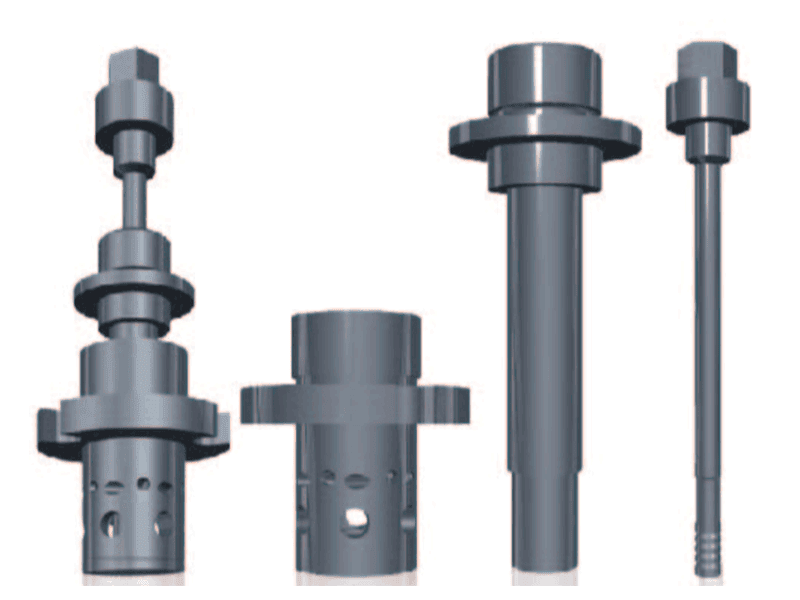
FSSW tooling is not a simple pin. The tool consists of a compression sleeve, a stir sleeve, and a stir pin. For aluminum body panel work, the working thickness range is 1.0 to 6.0 mm, covering most skins, reinforcements, and local stiffener stacks. The three components move relative to each other to plasticize the material, retract, and backfill the spot. That backfill sequence is the reason the final surface is flat rather than carrying a keyhole.
Machine selection depends on the production environment. For laboratory and process development, a desktop FSSW unit is enough. For production workshops, a robot FSSW machine gives six-axis access to curved body panels and can follow the compound surfaces of closures without dedicated hard tooling for every panel shape. The machine integrates spindle speed, plunge depth, dwell time, and sleeve force control. The process window is validated per stack because aluminum alloy, thickness, and surface coating all move the acceptable parameter range.
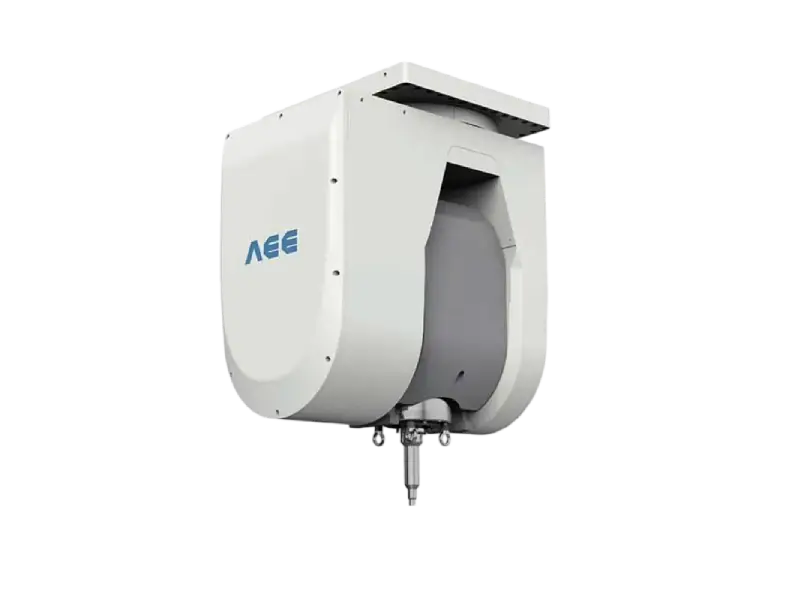
Most FSSW cycle time gains come from matching sleeve travel and pin retraction to the panel stack rather than increasing spindle speed alone. <AEE provides customer with optional features FSW tool> covers how optional tool features are configured for different weld stacks, which matters when a body panel line has to balance robot motion and spot time.
Two process details get underestimated in early studies. The first is clamping. A body panel is never infinitely stiff, and if the sheet can separate during tool retraction, backfill quality drops. The second is material flow control. Aerospace aluminum alloys such as 2xxx and 7xxx series react differently from 6xxx, so an FSSW process developed on 6061 cannot simply be copied to 7075. Both points push the program toward sample welding before machine specification.
When Should a Program Stay with Rivets or Spot Welds?
FSSW is not automatically the right choice. Thin outer skins below roughly 1.0 mm remain difficult because the sleeve and pin need enough section to control flow without excessive thinning. On a 0.8 mm aluminum outer panel, a refill FSSW spot can still be made, but the process window narrows and cycle time may no longer beat a hemming line. If the joining stack is limited to two thin 5xxx sheets and the plant already has a fully depreciated resistance spot welding line, FSSW may not deliver enough incremental benefit to justify changing the line.
A second boundary is access. FSSW needs a backing or clamping surface opposite the tool, just as resistance spot welding needs two-sided electrode access. Deep box sections with narrow openings can make both processes unworkable, and rivets with one-sided tooling may be the only practical choice. A common failure mode during development is dwell time set too short: the pin extracts before the displaced material fills the cavity, leaving a fine void or a collapsed spot. The joint is not open, but it fails in peel much earlier than validation data suggests. That failure is invisible without sectioning or phased array inspection.
How Should an Automotive Supplier Size an FSSW Body Panel Program?
Start with the panel stack, not the machine. List every spot location: upper sheet material and thickness, lower sheet material and thickness, number of layers, joint access, and whether the outside surface is visible. Then classify each spot as structural or non-structural. Structural spots need shear and cross-tension validation. Visible spots need refill FSSW unless the design accepts a small keyhole. From that count, the line builder can estimate robot position time, cycle time per spot, and total throughput.
Then decide whether the spot is conventional or refill. A conventional FSSW tool is simpler and less expensive, but it leaves an exit hole unless a filler patch is allowed. Body panel outer skins almost always require refill FSSW. Interior reinforcements may not. Running both on the same robot cell is possible if the machine and tool management are specified for automatic tool change.
Once the spot list is classified, the equipment decision becomes a specification problem rather than an open technology debate. That is the point where a supplier with both robot FSSW machines and process development capacity can shorten the loop. If your body panel program includes 6xxx aluminum skins, structural inner panels above 3 mm, aluminum-to-steel details, or a visible closure surface, send the panel drawing, spot count, and target cycle time to [email protected]. We will confirm whether conventional or refill FSSW fits and which machine configuration can hold the line rate. For direct technical questions, call +86 18325808715.
What Questions Do Buyers Ask Before Approving FSSW for Body Panels?
Does FSSW leave an exit hole?
Conventional FSSW can leave a keyhole; refill FSSW does not. The refill tool uses a compression sleeve and a retracting stir pin to retain displaced material inside the weld cavity, so the final spot is flat and paint-ready. This matters for hoods, doors, and decklids where a rivet head or exit hole would require secondary finishing. For interior supports, conventional tooling may be acceptable if the hole does not affect fatigue or sealing.
What aluminum thickness can FSSW handle in body panels?
For sheet and profile stacks between 1.0 and 6.0 mm, FSSW is straightforward. Below 1.0 mm the window narrows because the pin and sleeve have less material to control, and the process becomes sensitive to clamping and surface coating. Above 6.0 mm, the joint is better handled by a conventional FSW seam rather than a spot process. The exact limit depends on the upper sheet and the back support, so sample welding is the only reliable way to lock the range.
Is FSSW too slow for high-volume automotive body shops?
There is a common assumption that FSSW is too slow for high-volume body shops. The cycle time issue is not the process itself but the equipment integration. A robot FSSW cell with automatic spot positioning and tool change can run a full spot sequence in a similar envelope to resistance spot welding on aluminum, while eliminating electrode tip dressing time. Where rivets and RSW have years of line optimization behind them, FSSW requires the same work before it can match cadence.
Can FSSW join aluminum to steel body panels?
In our process development work, aluminum-to-steel body panel details succeed only when the stack-up and cycle are defined before tooling is ordered. The steel side needs surface control and the thermal load must be kept low to limit intermetallic growth at the interface. If the joint is placed correctly, the aluminum-to-steel spot can replace a riveted bracket or a welded stud. Share your panel stack-up, spot count, and surface requirement with [email protected], and we will confirm whether refill FSSW can carry the joint without changing the closure design.
If you’re interested, check out these related articles:
Customized Dissimilar Material Welding Manufacturers in China
Refill Friction Stir Spot Welding (RFSSW)
AEE provides customer with optional features FSW tool