
FSSW Defects: Common Causes and Prevention Methods
Table of Contents
- FSSW Defect Formation in the Welding Cycle
- Common FSSW Defects and Their Causes
- Tool Design Choices That Prevent FSSW Defects
- Parameter Settings for Clean Spot Welds
- Inspection Methods for Hidden FSSW Defects
- Common Questions About Preventing FSSW Defects
- What is the first parameter to adjust when a spot weld pulls open?
- Does a refill FSSW tool always eliminate defects?
- How do I know whether a void is acceptable?
- Can the same FSSW machine weld both 1 mm and 6 mm stacks?
FSSW defects are almost always the result of controllable process variables, not material variability. In spot weld development work for aluminum sheet, I have found that the same three conditions drive most rejections: insufficient plunge depth, weak shoulder forging, and poorly timed sleeve or pin movement. A stable friction stir spot weld needs the rotating pin to plasticize the full thickness, the shoulder to contain that plasticized material, and the machine to maintain axial force through the dwell. When one of those conditions drifts, the result is a recognizable defect class. This article covers the defect types we see most often and the tool and parameter corrections that remove them.
FSSW Defect Formation in the Welding Cycle
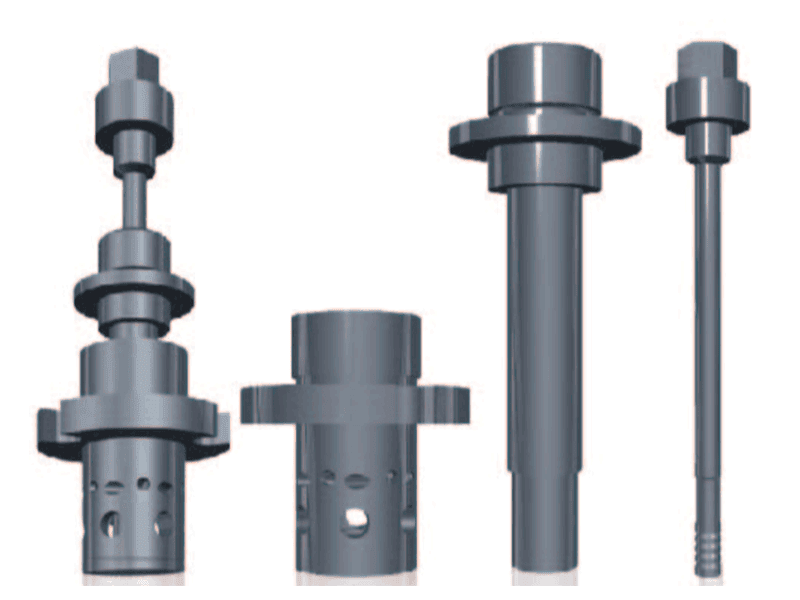
Friction stir spot welding passes through three main phases: plunging, dwell, and retraction. During plunging, the rotating pin enters the sheet stack and generates frictional heat. The shoulder then contacts the top surface and applies forging pressure while the surrounding material remains constrained. In a conventional FSSW tool, the retraction phase leaves an exit keyhole. In a refill design, the compression sleeve and stir sleeve move in a programmed sequence to backfill that hole with plasticized material.
Most defects form in one of these phases. A tunnel or void near the faying surface generally means the pin did not penetrate far enough to disturb the interface oxides. Flash forms when shoulder pressure exceeds what the sheet stack can contain. Excessive thinning occurs when the shoulder plunges too deep into heat-softened material. In each case the observable defect points to a specific phase failure, so the correction is usually a parameter or tool geometry change, not a change in alloy.
Common FSSW Defects and Their Causes
The defects below are the ones we stop first during feasibility trials. They are distinct in appearance, but they share a common origin: the plasticized material either did not mix enough or was not contained under the shoulder.
| Defect | Typical root cause | Main prevention |
|---|---|---|
| Incomplete bonding | Pin depth too low, interface oxides not broken | Increase pin length to 90 to 95 percent of sheet stack thickness |
| Internal void or tunnel | Insufficient heat or stirring near faying surface | Raise rotation speed or dwell time while holding axial force |
| Flash | Shoulder pressure too high or plunge depth excessive | Reduce shoulder plunge, check sheet clamping and tool alignment |
| Excessive thinning | Shoulder buried too deep in top sheet | Limit shoulder penetration and use longer dwell at lower force |
| Hook defect | Material pulled upward from lower sheet | Reduce pin thread aggressiveness and optimize plunge rate |
The exact numbers depend on alloy and stack thickness. For 6061 aluminum in the 1.0 to 6.0 mm range, our FSSW tool covers the same thickness envelope and gives a reliable starting point for pin length and shoulder diameter. Multi-layer foils and aluminum-steel combinations need separate development because the heat balance changes.
Tool Design Choices That Prevent FSSW Defects
The tool is the first line of defense. A conventional FSSW tool uses three components: compression sleeve, stir sleeve, and stir pin. Their relative motion controls how the plasticized material is moved and refilled. If the pin is too short for the stack, no amount of dwell time can create a full bond. If the sleeve bore is too tight or the pin profile too aggressive, the stir zone will overheat or pull too much material upward.
We have found that most defect correction work starts with pin length and shoulder diameter. Pin length should penetrate to around 90 to 95 percent of total sheet thickness without bottoming against the lower sheet. Shoulder diameter must be wide enough to contain the plasticized zone but not so wide that the top sheet thins under the full forging load. For common aluminum alloys in the 1.0 to 6.0 mm range, the FSSW tool geometry covers these proportions.
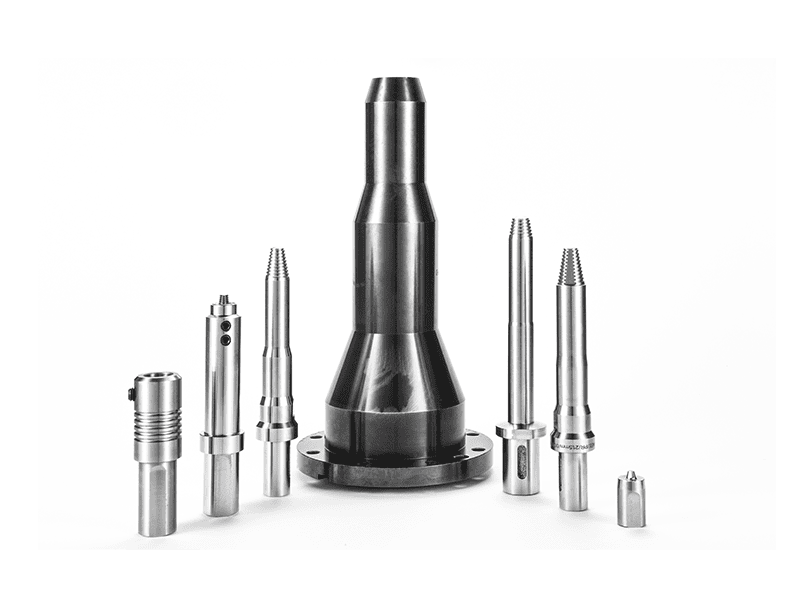
When the spot must be completely flat, tool sequencing becomes as important as geometry. <Refill Friction Stir Spot Welding (RFSSW)> covers how independent sleeve and pin control fills the exit cavity and why that improves both surface quality and fatigue performance on aluminum skin panels.
Parameter Settings for Clean Spot Welds
Spot weld quality depends on matching rotation speed, plunge rate, axial force, and dwell time to the stack thickness. In our FSSW machine testing, we control axial force rather than relying only on position because the same position can produce different forging pressure as the sheet softens. Force control keeps the shoulder in the correct engagement band even when the material becomes plastic.
For 1.0 to 3.0 mm aluminum stacks, we usually start with moderate rotation speeds and longer dwell times. For thicker stacks or multi-layer foils, higher axial force and slower plunge rates are needed to let heat penetrate without tearing the top sheet. If the spot shows flash around the shoulder, the first correction is to reduce plunge depth and confirm clamping. If the spot peels open in a shear test, the first correction is usually more pin engagement or additional dwell.
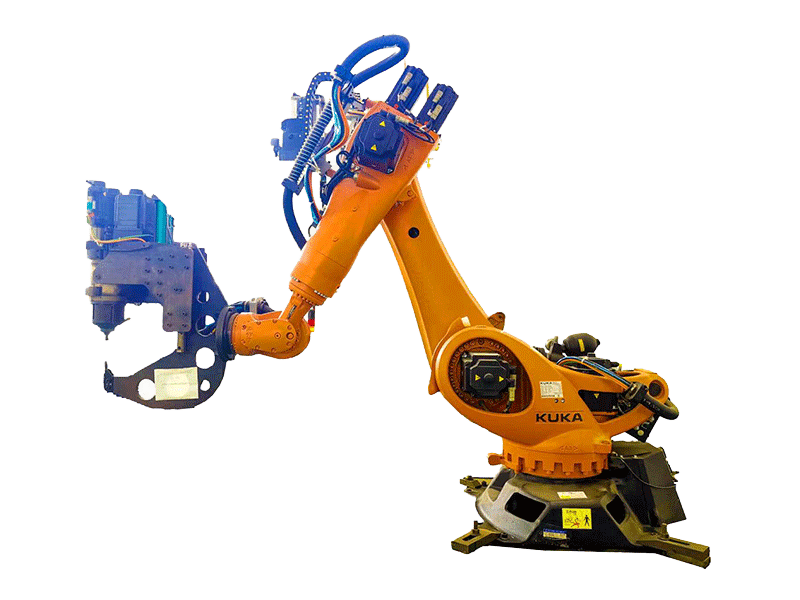
Tool changes are not always needed to fix a process. <AEE provides customer with optional features FSW tool> covers how optional force and temperature control features are applied to standard friction stir welding tools to hold the same defect-free window across different material combinations.
If your program involves multi-layer foils or aluminum-to-steel combinations, force control and sleeve timing are worth confirming before the BOM is finalized. Send your material combination, thickness, and spot pitch to [email protected] and we can check the parameter window against the machine configuration.
Inspection Methods for Hidden FSSW Defects
Visual inspection catches flash and gross keyhole issues, but not internal voids. The fastest destructive method is a sectioned and polished cross section through the spot center, which shows the stir zone, hook geometry, and any residual void. For production, we specify a periodic peel test or shear test because it assigns a pass/fail number to joint strength. Product data for our FSSW equipment shows shear strength increased by more than 30 percent compared with resistance spot welding, with spot quality that is easy to inspect from the surface.
For higher-risk joints, ultrasonic testing or phased array can detect internal voids without cutting the part. The challenge is that small FSSW spots are near the size of the ultrasonic beam, so the operator needs a known-good reference standard to separate real defects from geometric echoes. We include this as part of process qualification rather than regular production inspection.
Defect prevention becomes repeatable only when tool geometry, force control, and inspection limits are documented together. If your FSSW application is currently producing flash, voids, or inconsistent shear values, send your part drawing, material grade, and current cycle time to [email protected] or call +86 18325808715. We can review the tool and parameter window and recommend a limited sample run before you commit to a production line.
Common Questions About Preventing FSSW Defects
What is the first parameter to adjust when a spot weld pulls open?
Increase pin engagement or dwell time before changing rotation speed. Incomplete bonding in FSSW is usually a geometric problem first. If the pin tip stops above the faying surface, the interface oxides never break up and no amount of additional heat will close the gap. On a 1.0 to 3.0 mm stack, we first verify that the pin reaches 90 to 95 percent of total thickness and that the shoulder is making full contact at the end of the plunge. If both are correct, we extend the dwell time in small steps while watching the shear test result.
Does a refill FSSW tool always eliminate defects?
Not automatically. Refill tooling removes the exit keyhole, but it can still produce internal voids if the sleeve and pin timing is wrong. The backfill sequence must move material in the correct order: the pin retracts while the compression sleeve stays seated, then the sleeve retracts and the stir pin returns to fill the cavity. If the sleeve lifts too early, plasticized material escapes and the spot can look flat on the surface while containing a void underneath. The tool geometry is only half of the correction; the machine control and timing are the other half.
How do I know whether a void is acceptable?
It depends on the load path and sealing requirement. If the spot carries peel or tensile load, any planar void near the faying surface is usually a rejection because it becomes the crack initiation point. If the spot is in a low-stress area and the joint is only locating or lightly loaded, a small internal void may pass, but that decision belongs in the process specification, not on the shop floor. For sealed enclosures such as cooling channels or battery trays, we do not accept visible voids in sectioned samples, regardless of size.
Can the same FSSW machine weld both 1 mm and 6 mm stacks?
In our process work, we have run 1 mm and 6 mm stacks on the same machine, but only with the correct tool set and force range. The machine needs enough axial force and control resolution to hold the shoulder engagement consistent through the full plunge. A small stack may need less force but faster response, while a thick stack needs a longer dwell and more force to plasticize the lower sheet. The main requirement is that the machine and tooling cover the worst-case stack rather than the average stack. If you are planning a family of parts with multiple stack thicknesses, send your thickness range and joint requirements to [email protected] and we will confirm the machine and tool combination that fits the worst-case stack.
If you’re interested, check out these related articles:
AEE attend 13th International Symposium on FSW in Kyoto, Japan on 21 – 23 May 2024
Customized Dissimilar Material Welding Manufacturers in China
Refill Friction Stir Spot Welding (RFSSW)