
Friction Stir Welding of Titanium: Tool Wear and Process Control
Table of Contents
- Why Does Titanium FSW Break Standard Aluminum Assumptions?
- Why does titanium need more spindle torque than aluminum?
- How Does Tool Wear Reshape the Process Window?
- What separates diffusion wear from simple abrasion?
- What Does a Stable Process Window Look Like for Titanium?
- What starting envelope do we use for Ti-6Al-4V?
- Which Tool and Machine Specifications Actually Control Titanium Welding?
- Does a stationary shoulder help with titanium?
- How Do You Move From Feasibility Trials to Production Qualification?
- What Should Buyers Ask Before Qualifying Titanium Friction Stir Welding?
- Can all titanium grades be friction stir welded?
- What is the biggest cause of tool failure in titanium FSW?
- Does FSW of titanium require gas shielding?
- How many qualification welds do we need before production?
Friction stir welding of titanium is usually framed as a parameter problem, but the larger control challenge is tool wear. A weld can pass visual inspection for the first meter and then fail at the next because the tool changed shape during the run. We treat tool wear as a process variable rather than a consumable cost to be managed after the fact. This article defines a practical process window for titanium FSW, identifies the wear mechanisms that shrink that window, and specifies the machine and tooling requirements that keep a weld stable across a full production run.
Why Does Titanium FSW Break Standard Aluminum Assumptions?
FSW parameters that work on 6xxx aluminum do not transfer to titanium. Titanium has much lower thermal conductivity, so heat generated at the shoulder stays near the tool instead of spreading through the workpiece. That concentrated heat accelerates tool degradation and raises the plasticization demand at the pin. At the same time, titanium retains high flow stress at elevated temperature, so the machine must push harder and deliver more torque at lower rotation speed. Many aluminum-facing FSW machines have plenty of spindle speed and too little force capacity for this job.
Why does titanium need more spindle torque than aluminum?
Titanium does not soften as quickly with temperature. The torque signal in titanium FSW is a better real-time indicator of plasticization than rotation speed. When torque falls too low, the material near the pin may be overheating locally. When torque spikes, the material is resisting flow and the tool is about to gall or break. We use spindle torque as the primary control reference in titanium trials, not as a monitoring afterthought.
How Does Tool Wear Reshape the Process Window?
Tool wear in titanium FSW is not a slow, uniform removal of material. It usually appears first as adhesion and diffusion. Titanium is reactive at welding temperature, so workpiece material bonds to the tool surface, tears away small tool particles, and gradually changes the effective pin and shoulder geometry. The process window shifts because the geometry that produced an acceptable weld on the first meter no longer exists on the tenth meter.
What separates diffusion wear from simple abrasion?
Diffusion wear is chemical in origin. Titanium atoms migrate into the tool surface and form brittle layers that spall under mechanical load. Abrasion is mechanical removal of tool material by hard particles or rubbing contact. In our titanium work, diffusion wear is the faster killer because it changes tool geometry even when visible wear looks minor. A tool can measure within tolerance on the bench and still produce a different weld than it did an hour earlier.
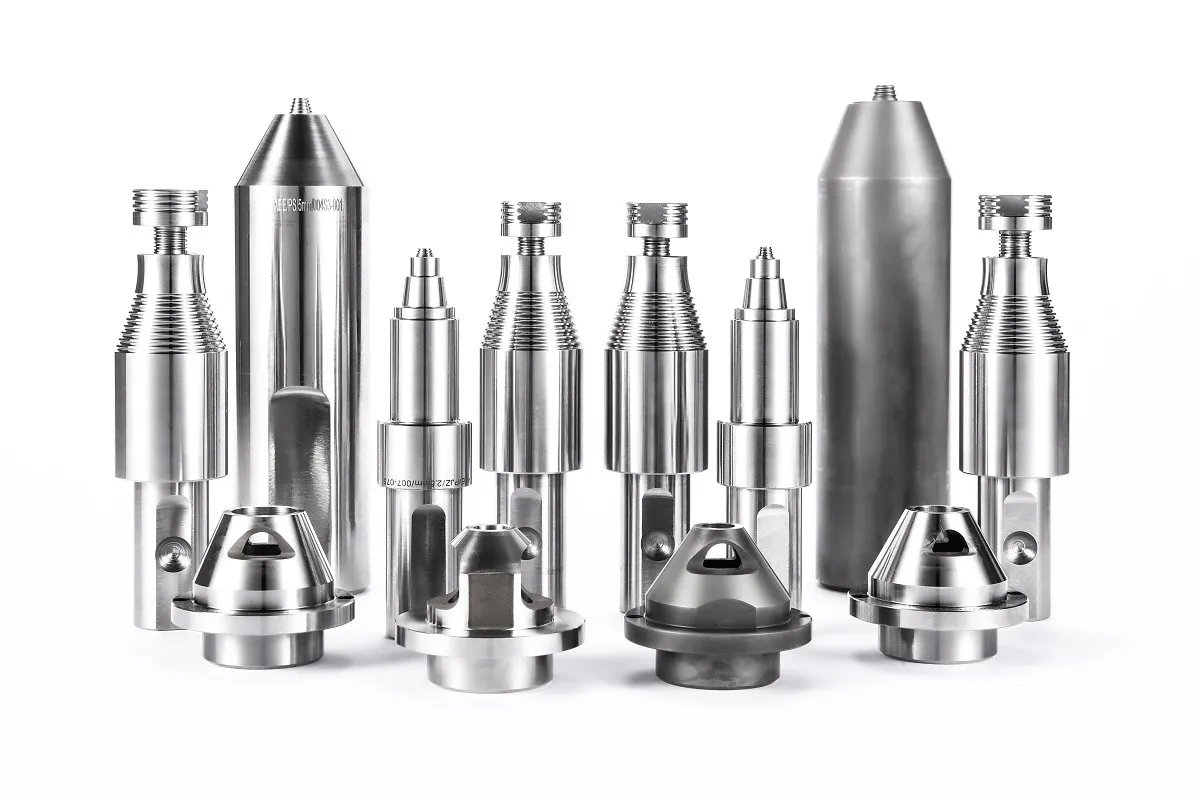
Titanium tooling often needs features not found in a standard catalog. <AEE provides customer with optional features FSW tool> covers how optional tool features are specified and verified, which is where most titanium process windows are either saved or lost.
What Does a Stable Process Window Look Like for Titanium?
A stable process window is not a single rotation and travel speed pair. It is a narrow envelope inside which tool wear stays predictable, torque remains within the spindle’s continuous rating, and the surface does not flash or thin excessively. For titanium, the window is narrow because too little heat input creates a cold lap or lack of fill, while too much heat input destroys the tool before the weld is complete.
What starting envelope do we use for Ti-6Al-4V?
Based on our internal titanium process development work, we use the following screening envelope. These are starting points, not universal settings. Material condition, joint fit-up, and tool geometry move the window in either direction.
| Starting condition | Starting envelope | Main limiting signal |
|---|---|---|
| 1.5 to 3 mm Ti-6Al-4V with stationary shoulder | 250 to 450 rpm, 40 to 90 mm/min, 6 to 12 kN axial force | Shoulder heat and surface flash |
| 3 to 6 mm Ti-6Al-4V with conventional tungsten-rhenium tool | 200 to 350 rpm, 25 to 60 mm/min, 10 to 18 kN axial force | Spindle torque and pin wear |
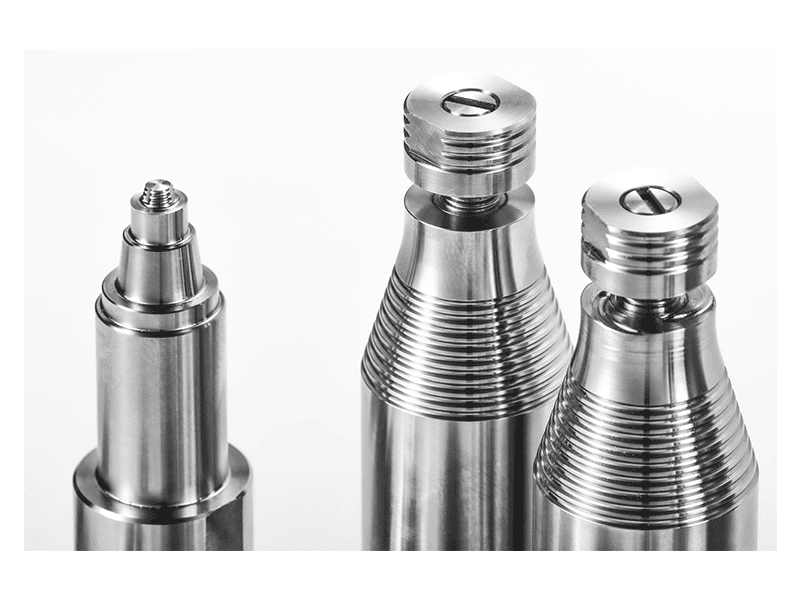
The stationary shoulder envelope is wider because the shoulder does not rotate against the titanium surface. That removes one of the largest heat sources and lets the pin do most of the work. The conventional-tool envelope requires more attention to shoulder contact and spindle torque. Small changes in plunge depth move the heat input quickly.
Which Tool and Machine Specifications Actually Control Titanium Welding?
The machine requirement starts with force and torque, not speed. A titanium-capable spindle must hold axial force without deflection and deliver torque at low rpm. Our spindle series moves from 12 kW and 112 Nm at the light end to 105 kW and 874 Nm at the heavy-load end. For titanium, the relevant choices are usually in the middle and upper torque classes because low-speed, high-torque operation protects the tool. The stationary shoulder FSW tool covers titanium from 1.0 mm to 15.0 mm in our catalog, which spans most sheet and plate applications where FSW is a practical alternative to fusion welding.
Does a stationary shoulder help with titanium?
Yes, primarily by reducing shoulder-generated heat. In a conventional tool, the rotating shoulder is a large heat source that can over-age the surrounding material and accelerate shoulder wear. A stationary shoulder separates the pin’s rotating work from the sliding contact surface. We have used this design to keep titanium weld surfaces flatter and to reduce the heat-affected zone width in thin sections. It is not the right tool for every seam, but when the part can tolerate the fixture and tooling setup, it widens the process window.
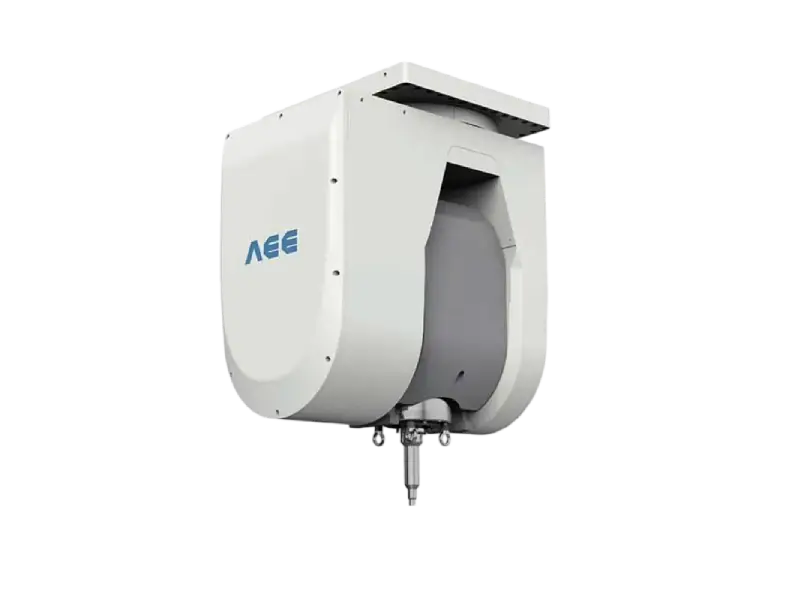
If your program involves titanium above 5 mm or closed-contour welds, it is worth confirming spindle torque and force capacity before finalizing your BOM. Our engineering team can check the required envelope against your joint design. Contact [email protected] with the material grade and weld length.
How Do You Move From Feasibility Trials to Production Qualification?
Production qualification fails when the feasibility sample was welded with a fresh tool and the production run uses a tool that has already shifted geometry. We recommend qualifying the weld type with at least two tool conditions: one fresh and one mid-life. That difference measures how wide the true process window is. If the mid-life tool still produces acceptable mechanical properties and no surface defects, the process has a production margin. If not, the process needs a narrower wear allowance or a different tool design.
Titanium FSW remains an active development area, and useful reference points are not always published in catalog form. <AEE attend 13th International Symposium on FSW in Kyoto, Japan on 21 – 23 May 2024> covers how current titanium and dissimilar welding work is being shared across production teams, and why process control remains the central topic.
Titanium FSW program risk usually appears in the tooling window, not in the machine purchase. We define the process envelope, tooling approach, and qualification plan before production commitments are made. Send your material grade, sheet or plate thickness, joint configuration, and weld length to [email protected], or call +86 18325808715, and we will return a process feasibility assessment with the proper tool and spindle match.
What Should Buyers Ask Before Qualifying Titanium Friction Stir Welding?
Can all titanium grades be friction stir welded?
Not all titanium grades are equal in FSW. Commercially pure titanium and alpha-beta grades such as Ti-6Al-4V are weldable when tooling and heat input are controlled, but the window varies. Alpha alloys tend to be more forgiving than heavily stabilized beta alloys, which can require different tool materials and more careful thermal management. We qualify the grade with a screening coupon before quoting a production process. If your material falls outside the common aerospace and medical grades, that is not automatically a no, but the tooling choice must be tested rather than assumed.
What is the biggest cause of tool failure in titanium FSW?
Many buyers assume the tool breaks because of excessive downforce. In our experience, chemical interaction is usually the faster failure path. Titanium diffuses into the tool surface at welding temperature and forms brittle layers that fail under mechanical load, even when the forces are within the machine rating. That means tool life is governed by heat exposure and material reactivity as much as by applied force. The practical fix is to limit peak temperature, use the correct tool material, and inspect tool geometry after a defined interval rather than only at the end of the run.
Does FSW of titanium require gas shielding?
It depends on the application and the acceptance criteria. For many structural titanium welds, shielding is not always required because FSW is solid-state and the joint is not molten. High-temperature oxidation at the shoulder can still affect weld appearance and, in some cases, near-surface properties. If your part has strict cosmetic or aerospace requirements, an inert gas shield around the tool may be necessary. We apply shielding selectively based on grade, thickness, and specification. It is not a universal prerequisite, but it is also not something to skip without evidence.
How many qualification welds do we need before production?
In titanium qualification programs we have run, the minimum is not ten welds or twenty welds but enough welds to see the tool transition from fresh to mid-life. A qualification that uses only a new tool does not prove the process will survive the first shift. We recommend at least three separate tool conditions when the tool cannot be sectioned, with all mechanical and NDT results tied to the same parameter record. That number changes by joint design, but the principle does not. The process must be qualified under the wear conditions it will actually operate in. If your part has a narrow process window, share the material grade and weld length with [email protected] and we can confirm the right qualification sequence for your acceptance standard.
If you’re interested, check out these related articles:
AEE provides customer with optional features FSW tool
Customized Dissimilar Material Welding Manufacturers in China
AEE attend 13th International Symposium on FSW in Kyoto, Japan on 21 – 23 May 2024