
Friction Stir Welding 5xxx Aluminum for Marine Structures
Table of Contents
- Why 5xxx Aluminum Responds Differently to Friction Stir Welding
- Setting FSW Parameters for 5xxx Series Aluminum
- How 5083-H321 Responds to Low Heat Input Welding
- What Travel Speeds Suit Marine Stiffened Panels
- Preventing Root Flaws and Flash in 5xxx Aluminum FSW
- Corrosion Performance and Temper Loss After 5xxx Aluminum FSW
- Does FSW Sensitize 5xxx Marine Alloys?
- What Strength Level Should Marine Designers Use for FSW Joints
- Equipment and Tooling for 5xxx Marine Fabrication
- Common Questions About 5xxx Series Aluminum FSW
- Can FSW weld 5083-H321 without filler metal?
- How much strength does the weld lose compared with base 5083-H116?
- Does FSW reduce the sensitization risk in 5xxx marine alloys?
- What is a realistic production speed for marine stiffened panels?
Corrosion-resistant 5xxx aluminum plate earns its place in marine structures, but fusion welding can leave porosity, distortion, and a wide heat-affected zone in these strain-hardened alloys. Friction stir welding 5xxx aluminum changes that trade-off because the weld stays solid-state below the melting point, so much of the material’s cold-worked strength survives. Marine fabricators need different parameters, tooling, and qualification steps than they would use for 6xxx extrusions. The recommendations that follow come from process work we run on 5083-H321 and 5083-H116 panels, stiffened deck sections, and long seam welds where flatness and corrosion resistance decide whether the part passes inspection.
Why 5xxx Aluminum Responds Differently to Friction Stir Welding
The 5xxx family covers aluminum-magnesium alloys with magnesium roughly between 2.5 and 5 percent. The marine workhorses are 5083, 5383, 5086, and 5059, usually supplied in H116 or H321 temper. These alloys are not hardenable by solution heat treatment; their strength comes from cold work and the dislocation structure locked into the strain-hardened condition. That fact changes how a welding process should be judged. Fusion welding remelts the joint, can vaporize magnesium at the surface, and leaves a cast weld structure with a wide softened zone where the cold work has been annealed. Friction stir welding keeps peak temperature below the solidus, so the weld nugget is mechanically refined rather than remelted. Some stored cold work is still lost in the HAZ, but the loss is narrower and easier to predict than after MIG or TIG welding. For a hull panel or deck sheet that has to stay flat and pass corrosion testing, that difference matters more than deposition rate.
From a machine perspective, 5xxx aluminum runs softer than 7xxx and usually requires less spindle torque for a given thickness. The alloy flows readily, which makes it forgiving of small parameter drift. The real risk is overheating a strain-hardened temper that cannot be recovered by post-weld heat treatment.
Setting FSW Parameters for 5xxx Series Aluminum
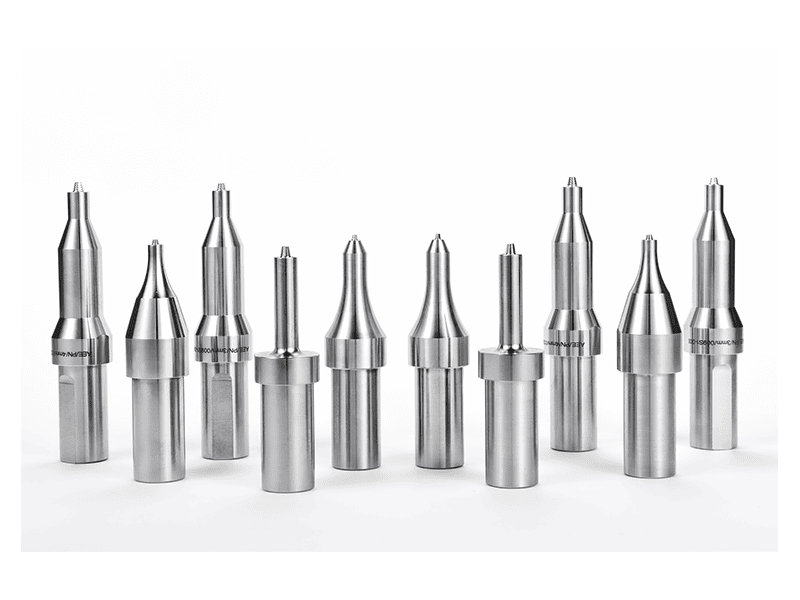
Starting parameters for 5xxx should not be copied from 6xxx programs. Lower tool rotation speed and higher travel speed produce a narrower thermal field, and that matters more for 5083-H321 than for 6061-T6 because the strength budget is tied to cold work. In 4 to 8 mm 5083 plate, we typically start with spindle speed between 800 and 1200 rpm and travel speed from 200 to 600 mm per minute. Axial force is then adjusted until the shoulder contact patch is stable and the weld surface shows fine semicircular arcs without heavy flash. These numbers are a starting window, not a fixed recipe.
Downward force and tool tilt control consolidation. For 5xxx marine plate, tilt between 1 and 2.5 degrees usually works. Less tilt risks wormhole defects, and more tilt can tear the softened material at higher travel speed. We set axial force from spindle torque and surface response instead of holding one kilonewton value across every weld. On gantry machines the force control loop lets us hold constant plunge depth; on heavier plate, position control may be enough if the backing fixture is rigid.
How 5083-H321 Responds to Low Heat Input Welding
5083-H321 accepts low heat input well. The nugget recrystallizes into fine equiaxed grains while the HAZ recovers only part of its stored dislocation structure. If travel speed is too low, the HAZ widens and microhardness drops more than it would on a heat-treatable 6xxx alloy. We watch long deck seams closely because a fabricator who slows travel speed to improve surface finish can widen the thermal field enough to bow the panel.
What Travel Speeds Suit Marine Stiffened Panels
Realistic travel speed depends on thickness and joint configuration. A 3 mm stiffened panel can run at 1000 to 2500 mm per minute on a rigid fixture, while an 8 to 12 mm 5083 deck seam may hold 300 to 800 mm per minute without losing joint strength. In marine work the speed limit is usually clamping and heat extraction, not spindle power.
The parameter windows that kept 5083-H321 flat in our feasibility tests matched the low-heat-input trends discussed at <AEE attend 13th International Symposium on FSW in Kyoto, Japan on 21 – 23 May 2024>, where aluminum alloy thermal response was a central topic.
Preventing Root Flaws and Flash in 5xxx Aluminum FSW
Root flaws and flash are the two defect families we see most often when a program moves from sample coupons to full-size marine panels. Root flaws in butt joints come from insufficient plunge depth, poor pin-to-backing-bar contact, or axial force dropping as the machine crosses a clamp gap. Flash comes from excessive shoulder plunge or a shoulder diameter that is too large for the thickness. Both defects are visible before destructive testing, but only if the operator checks the weld toe and root side at the start of each lot.
| Defect | Typical cause in 5xxx marine panels | Control lever |
|---|---|---|
| Root lack of fill | Pin too short or backing gap | Increase plunge depth or use a bobbin tool for hollow profiles |
| Tunnel or wormhole | Travel speed too high or poor shoulder contact | Raise downforce or reduce travel speed |
| Surface flash | Shoulder plunge too deep | Reduce plunge depth or use a stationary shoulder tool |
| Lap joint hooking | Interface oxide not broken at the root | Adjust pin length and rotation direction, then confirm by macro etch |
For stiffened panel lap welds, the buried sheet interface can survive as a hook that grows along the joint line. We check macro-etched cross sections at the start and end of every qualification run. If the hook remains, the pin may be too short or the travel angle may be pushing root material upward. A bobbin tool removes the backing-side requirement and is the tool we reach for when the reverse side of a long hollow profile cannot be accessed.
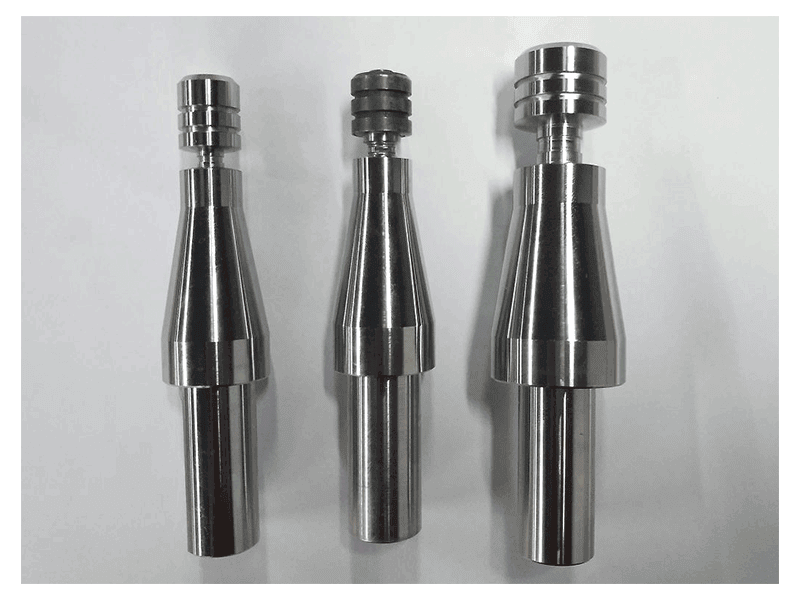
If your program involves butt welds in 4 to 8 mm 5083-H321 stiffened panels, or mixes 5xxx plate with 6xxx extrusions, confirm pin geometry and backing strategy before freezing tooling and fixtures. Send your part cross-section, temper, and weld length to [email protected] and we will run a parameter feasibility check.
Corrosion Performance and Temper Loss After 5xxx Aluminum FSW
5xxx alloys with more than about 3 percent magnesium can develop intergranular corrosion after long exposure in the 50 to 200 degrees Celsius range. That is the sensitization mechanism the H116 temper is designed to limit. Friction stir welding does not remove that metallurgical risk, but it shortens the thermal exposure. The weld thermal cycle is seconds, not the minutes of preheat and post-weld cooling common in fusion welding, so the grain boundary precipitation window stays narrow.
Strength loss after FSW concentrates in the HAZ. In our mechanical testing of 5083-H321 and 5083-H116 joints, tensile strength typically falls between 85 and 95 percent of parent plate, with the lowest values on the retreating side HAZ. That is an expected trade-off for welding a work-hardened alloy, not a process defect. Marine designers should place the neutral axis of loaded stiffened panels away from the weld line where possible, or increase plate thickness at joints when classification rules require full parent-metal strength through the weld zone.
Does FSW Sensitize 5xxx Marine Alloys?
FSW does not typically cause sensitization by itself, but it can leave the HAZ less resistant than fully processed H116 plate. Service temperature and time matter. A seawater-cooled heat exchanger running continuously near 80 degrees Celsius is a more aggressive case than a deck plate at ambient temperature. We ask marine customers about operating temperature and lifecycle corrosion requirements before committing to a high-magnesium 5xxx alloy.
What Strength Level Should Marine Designers Use for FSW Joints
For preliminary design, an 85 to 95 percent joint efficiency is a reasonable basis for 5083-H321 and 5083-H116 FSW welds, provided the right parameter window is used. The figure drops if travel speed is too low or if excessive flash indicates overheating. Qualification coupons should be taken from the same plate lot and welded with the same tool condition as production, because pin wear changes heat input and HAZ width.
Equipment and Tooling for 5xxx Marine Fabrication
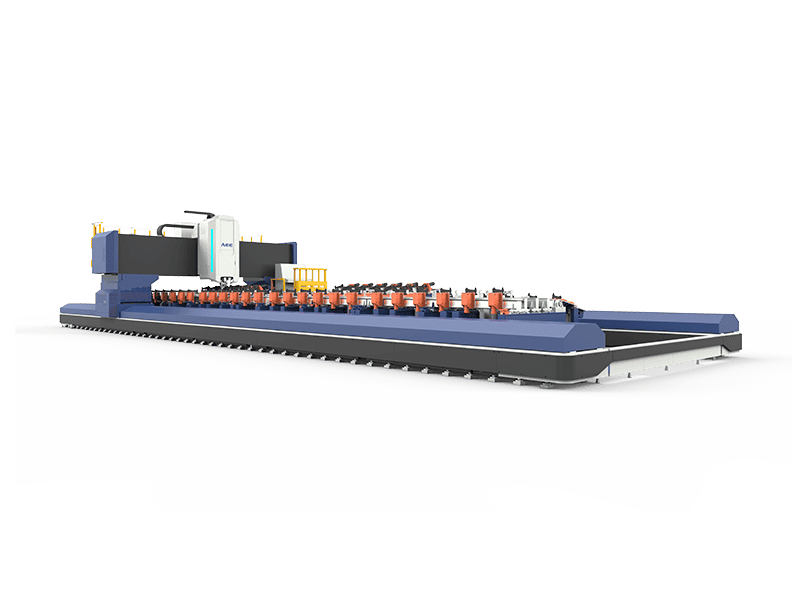
Marine panel production divides into two main machine classes: long linear seams and thick or curved components. Long deck seams and stiffened panels need enough X-axis travel and rigid clamping; thick hull frames need high downforce and torque. In the machine range we build for marine fabricators, the extra-length straight profile FSW machine carries a 16-meter X-axis stroke for flat panels and rail-type profiles, while the heavy-load gantry machine handles single-side aluminum plate up to 100 mm. The selection question is whether the machine can hold the panel flat and maintain constant force across a 10-meter seam.
Tooling selection is where 5xxx marine work becomes less standardized. A conventional threaded pin tool works for most butt and lap welds, but shoulder geometry has to be matched to plate thickness or flash becomes difficult to manage. For hollow profiles and sections where the reverse side cannot be reached, a bobbin tool welds both surfaces at the same time and removes root penetration defects. Our bobbin tool covers 5xxx aluminum from 3 to 20 mm. Where surface finish is critical and post-weld machining must be limited, a stationary shoulder tool keeps heat input low and leaves a near-flat seam.
Tooling for 5xxx marine panels often starts from a standard pin tool and then changes shoulder diameter, pin length, or holder interface. <AEE provides customer with optional features FSW tool covers how those options are evaluated for specific aluminum series and weld depths.
| Machine type | 5xxx marine application | Useful specification |
|---|---|---|
| C-type FSW Machine | Small brackets and water cooling plates | 8 mm weld depth, 12 kW, 30 kN Z-axis force |
| Gantry FSW Machine | Curved deck plates and medium panels | 8 to 25 mm weld depth, up to 31 kW, 60 kN Z-axis force |
| Extra-length Straight Profile FSW Machine | Long longitudinal seams and marine panels | 16 m X-axis stroke, 8 mm weld depth |
| Heavy Load FSW Machine | Thick hull frames and heavy plate | 100 mm single-side aluminum, 105 kW, 200 kN Z-axis force |
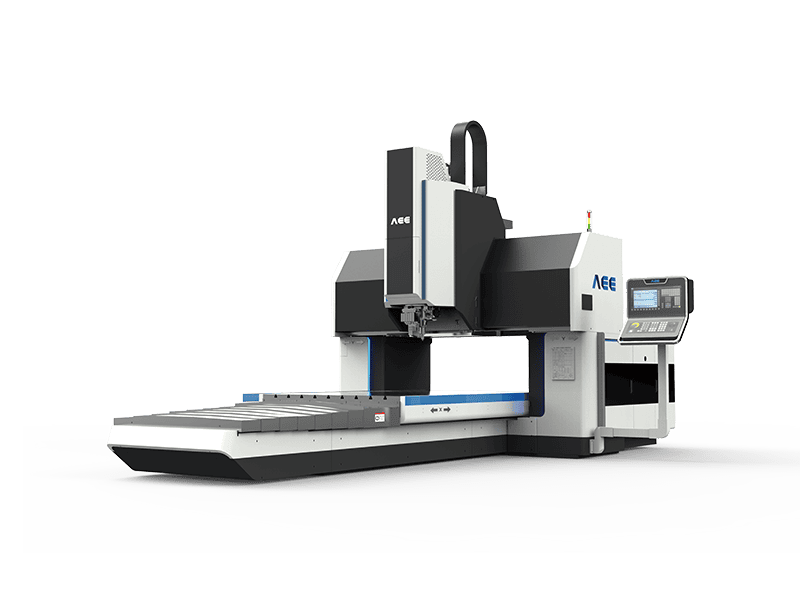
Selecting an FSW cell for 5xxx marine aluminum means committing to a force envelope, fixture strategy, and tooling plan before the first production lot. Most line problems we have corrected came from undersized clamping or a pin geometry borrowed from a different alloy family. Send your maximum plate thickness, panel dimensions, joint type, and annual volume to [email protected] or +86 18325808715, and we will propose a machine, tooling, and fixture package matched to that production envelope.
Common Questions About 5xxx Series Aluminum FSW
Can FSW weld 5083-H321 without filler metal?
Yes. Friction stir welding joins the material without filler rod or wire; the plasticized base material forms the joint. This avoids the filler chemistry mismatch that often limits fusion welds in 5083, and it keeps the weld chemistry identical to the parent plate. The process is less tolerant of poor fit-up than a wire-fed process, so edge preparation and clamping carry more of the quality burden. For marine plate with variable sheared edges, plan for tighter blank tolerances than a fusion-welded design would require.
How much strength does the weld lose compared with base 5083-H116?
A common assumption is that every FSW joint loses roughly half its strength. In practice the loss is localized. Tensile strength in our tested 5083-H116 and 5083-H321 joints usually lands between 85 and 95 percent of parent plate, with failure occurring in the HAZ rather than the nugget. The exact value depends on travel speed, tool condition, and whether the test coupon was taken from a start or exit region. For load-carrying marine structure, qualify the full seam length, not only a stable mid-weld section.
Does FSW reduce the sensitization risk in 5xxx marine alloys?
It depends on magnesium content, service temperature, and time at temperature. FSW shortens the thermal cycle compared with fusion welding, so it limits grain boundary precipitation, but it cannot undo the metallurgical sensitivity of a high-magnesium alloy. If the component runs continuously above about 60 degrees Celsius, specify H116 temper, keep heat input low, and plan ASTM G67 mass loss testing on qualification coupons rather than assuming the weld zone is immune.
What is a realistic production speed for marine stiffened panels?
In long seam lines we have delivered, a 3 to 4 mm stiffened panel can run at 1000 to 2500 mm per minute when the fixture is rigid and edge preparation is consistent. An 8 to 12 mm 5083 deck seam is slower, usually 300 to 800 mm per minute, because heat extraction and clamping force become the limiting factors. Machine maximum travel speed is rarely the bottleneck; panel flatness and process stability set the real cycle time. Share your alloy designation, temper, plate thickness, and post-weld finish requirements and we can confirm the right parameter and tooling envelope.
If you’re interested, check out these related articles:
Refill Friction Stir Spot Welding (RFSSW)
AEE provides customer with optional features FSW tool