
Dual-Rotation & Adjustable FSW Tools: An Engineering Guide
Table of Contents
- What Dual-Rotation FSW Tools Do Differently
- Adjustable FSW Tools: Solving the Keyhole Problem and Complex Geometries
- Where Dual-Rotation and Adjustable Tools Deliver Measurable Payback
- Cost, Complexity, and Tool Life Considerations
- Integration with Modern FSW Machines and Control Systems
- When Advanced FSW Tooling Makes Sense
- Key Questions Before Investing in Advanced FSW Tooling
- What is the main advantage of dual-rotation over standard single-rotation FSW tools?
- Can I retrofit an adjustable pin tool onto an existing FSW machine?
- How much more does a retractable pin tool cost than a fixed pin tool?
- Do dual-rotation tools work with all aluminum alloys?
- What maintenance schedule should I plan for adjustable FSW tools?
Manufacturers adopting friction stir welding for aluminum structures often start with standard single-rotation pin tools. When joint quality requirements rise or production mixes involve varying thicknesses and complex geometries, conventional tools show their limits. Dual-rotation and adjustable FSW tools address these constraints by giving engineers independent control over pin and shoulder speeds or dynamic pin positioning. In my experience evaluating advanced tooling for aerospace and EV battery tray production, the decision to adopt these technologies comes down to whether the reduction in rework, keyhole grinding, and tool-change downtime outweighs the higher upfront cost. This engineering guide explains how both technologies work, where they deliver measurable payback, and what to check before committing to an upgrade.
What Dual-Rotation FSW Tools Do Differently
In standard FSW, the pin and shoulder rotate at the same speed because they form part of a single tool body. Dual-rotation tools separate the pin from the shoulder, allowing each to spin at an independently controlled speed. This changes material flow, heat generation, and the shape of the weld nugget in ways that a single rotational speed cannot match.
At the shoulder, a lower rotation speed reduces surface overheating and flash formation while still generating enough frictional heat to plasticize the top material. A faster pin speed, meanwhile, improves material mixing deeper in the joint, which is especially helpful when welding thicker sections or aluminum alloys with narrow plastic windows like 7xxx series. By adjusting the speed ratio, an engineer can shift the balance between surface quality and root penetration without changing the machine’s travel speed or axial force.
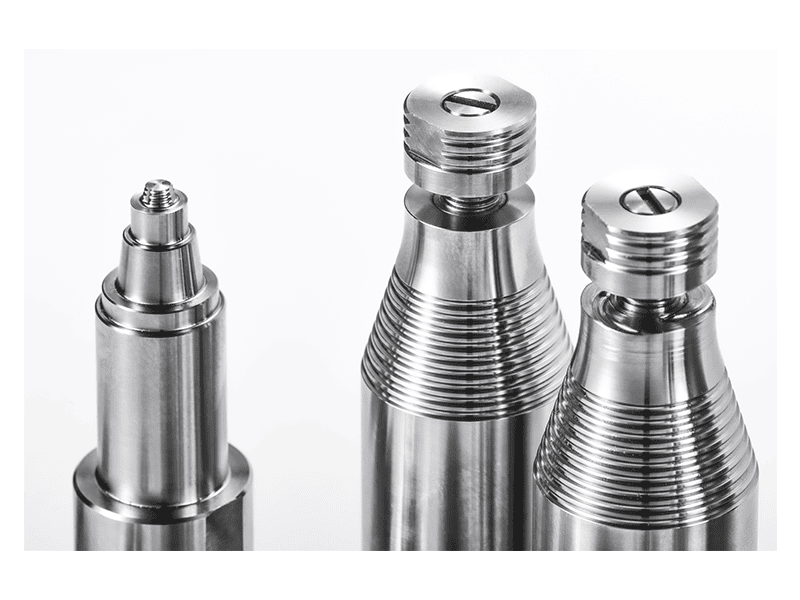
In practice, we have measured a clear reduction in root defects when using dual-rotation on 8–12 mm 7075 aluminum. Running the pin at 800–900 rpm and the shoulder at 500–600 rpm delivered full root bonding that a same-speed tool at 700 rpm could not achieve consistently. The exact ratio depends on alloy and thickness, so upfront process development takes longer than with a standard tool. Where the alternative is scrapping parts that fail X-ray inspection, that extra time is a fair trade.
Adjustable FSW Tools: Solving the Keyhole Problem and Complex Geometries
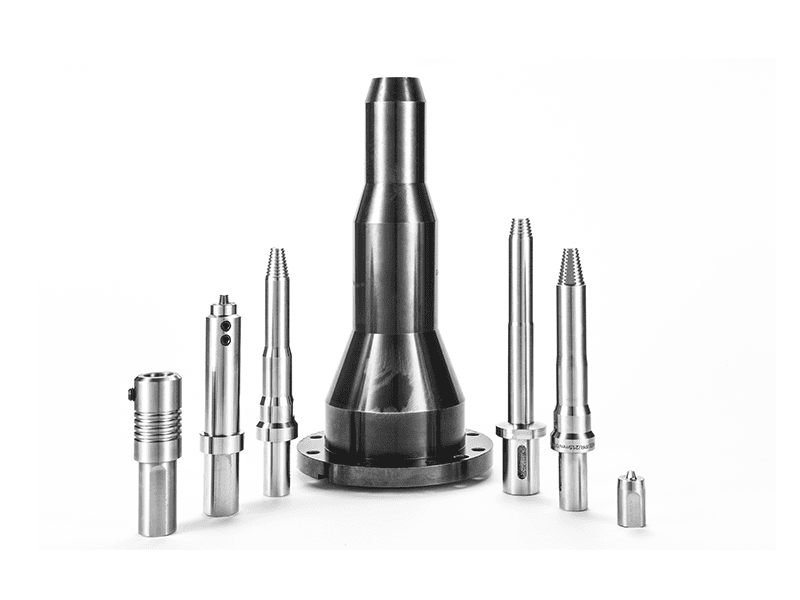
Adjustable FSW tools use a retractable pin mechanism that allows the pin to extend or retract relative to the shoulder during welding. This solves two practical problems: the exit keyhole left by conventional tools on closed-contour welds, and the need to weld parts with varying thickness along the seam.
On a circumferential weld such as an aluminum wheel rim, a standard pin tool leaves a hole where it retracts, which then requires grinding and plugging. With a retractable pin tool, the pin gradually withdraws as the weld closes, forcing the plasticized material to fill the exit point and creating a completely sealed joint without post-processing.
The retractable pin is mechanically more complex, but for high-volume production like battery tray sealed enclosures, the elimination of keyhole rework often justifies the tool cost within the first year. <AEE provides customer with optional features FSW tool> covers how features like force control and retraction depth programming are specified to match production throughput targets.
Adjustable tools also help when part geometry makes constant pin penetration impossible—T-joints with varying leg thicknesses, or lap joints where multiple sheets stack differently along the weld path. By controlling pin extension in real-time, the machine can maintain consistent root penetration without requiring perfectly uniform fixturing. Integration with force and position control on modern FSW machines (such as Siemens 828D-based systems) makes dynamic adjustment reliable. The machine monitors axial force and adjusts pin position to stay within the process window.
If your production involves sealed enclosures or variable-thickness joints, confirming the right retraction stroke and control system compatibility before ordering can save weeks of process debugging. Reach our team at [email protected] or +86 18325808715 with your part geometry and we will help assess the fit.
Where Dual-Rotation and Adjustable Tools Deliver Measurable Payback
These advanced tools are not universal upgrades—they solve specific problems in specific production contexts. From our project experience, the strongest business cases emerge in three areas.
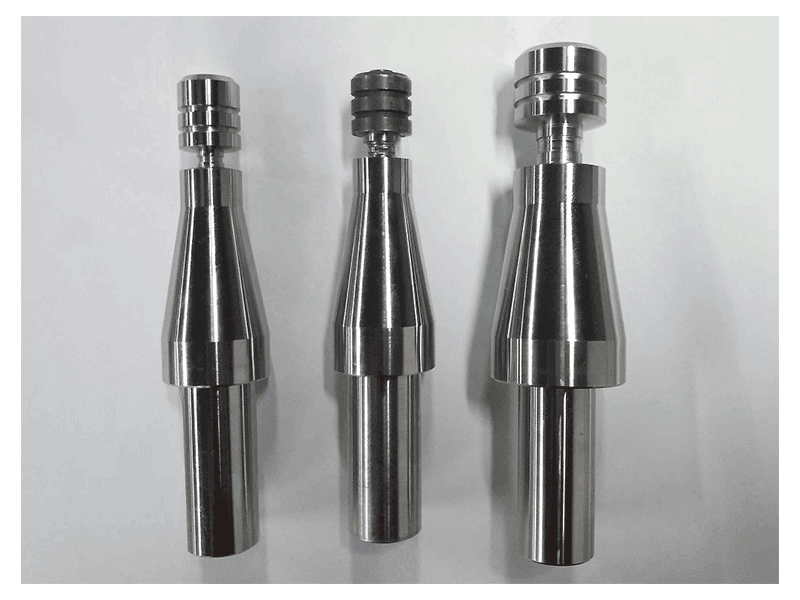
First, high-value aluminum alloy structures that require defect-free welds on the first pass. Aerospace fuel tanks and satellite panels often use 2xxx or 7xxx alloys where porosity or root flaws are unacceptable. Dual-rotation improves root-side bonding and reduces the risk of lack-of-penetration without increasing the heat-affected zone. The higher tool cost is negligible compared to the cost of scrapping a machined forging.
Second, high-mix low-volume production with frequent changeovers. When a job shop welds five different battery tray designs in a week, adjustable shoulders cut setup time because pin extension can be changed via the CNC program instead of swapping tools. One European manufacturer we supported reduced tool-change downtime from roughly 45 minutes to under 10 minutes after switching to adjustable pin tools on a dual-worktable C-type machine.
Third, sealed enclosures where keyhole rework creates a bottleneck. For EV inverter housings or water-cooling plates that undergo helium leak testing, a keyhole plug is a constant risk point. Retractable pin tools eliminate that variable entirely. In high-volume lines producing 200,000 parts a year, the labor savings from removing keyhole grinding often cover the tool investment within six months.
Cost, Complexity, and Tool Life Considerations
Dual-rotation and adjustable tools add cost in three ways: the tool itself is more expensive (often two to three times a standard pin tool), the spindle must support independent motion or an actuation mechanism, and process development time is longer. If your welding is limited to simple butt joints in 6061 aluminum at constant thickness, a standard tool with optimized parameters will deliver the best value.
Tool life also differs from fixed pin tools. The moving parts in an adjustable tool are subject to wear from both the plasticized aluminum and the repeated actuation cycles. We typically see retractable pins reach 60% to 80% of the weld length of a comparable fixed pin before maintenance, depending on alloy abrasiveness. For copper or metal-matrix composites, the difference widens—materials that aggressively wear pin surfaces also accelerate damage to the sliding mechanism. Budgeting for faster tool replacement and stocking on-site spares becomes part of the total cost calculation.
Material selection for tool components is critical once you move beyond aluminum. <Customized Dissimilar Material Welding Manufacturers in China> details how Chinese manufacturers approach tool grades for copper, magnesium, and aluminum-to-steel joints, which directly affects tool life projections.
Maintenance cycles are also more frequent because you cannot simply resharpen a worn pin—you need to check seal integrity and actuation force. A spindle-side monitoring system that logs retraction force over time provides a trend indicator for scheduling preventive maintenance, rather than waiting for a process drift alarm to trigger downtime.
Integration with Modern FSW Machines and Control Systems
Activating dual-rotation or adjustable pin control is not a tool-only decision—it requires a machine with the right spindle and controller architecture. For dual-rotation, the spindle must drive pin and shoulder at independent speeds, which typically means a two-motor concentric shaft design or a machine with synchronized auxiliary axes. Not every machine supports this, even if the CNC control has enough channels.
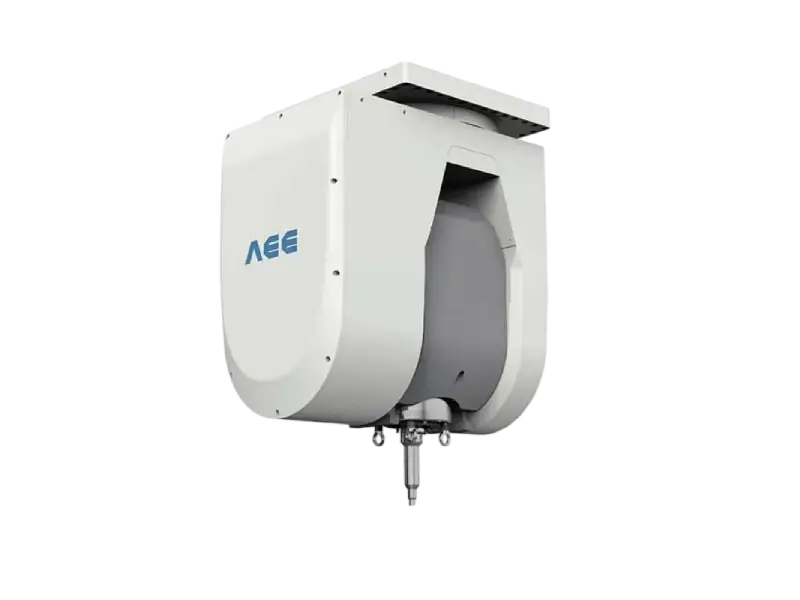
For adjustable tools, the machine’s Z-axis must execute the programmed pin position while the tool is under full axial load. This demands closed-loop force feedback and fast-response servos. Machines using force control with a load cell in the spindle handle this reliably because the system manages pin position as a function of feedback, not just a programmed setpoint. The AEE spindle series, for example, supports force control across models from 12 kW to 105 kW, which covers everything from thin-sheet retraction to heavy-load adjustable tooling for 100 mm aluminum.
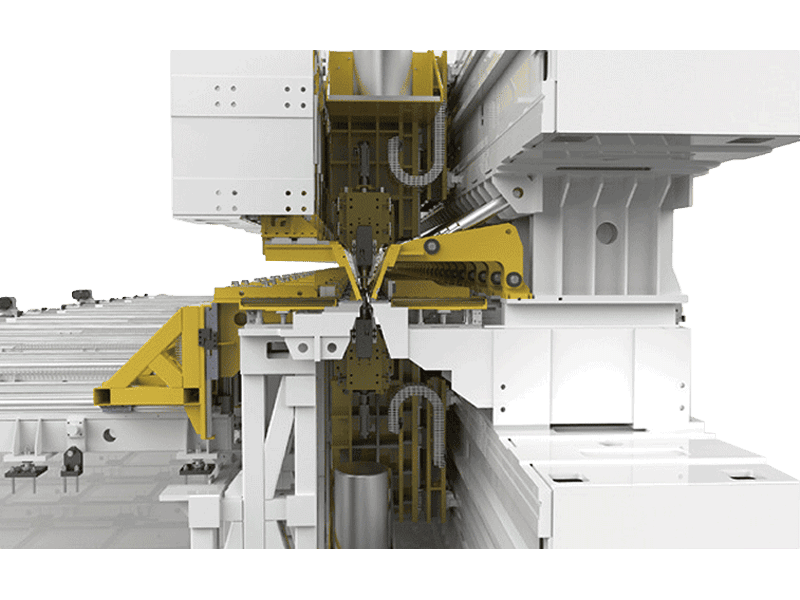
Process development for these tools also benefits from data acquisition systems that log spindle torque, force, and temperature synchronously. Without that traceability, optimizing a speed ratio or retraction profile becomes trial-and-error. In projects where we integrated tool condition monitoring with the machine’s data system, the process qualification time dropped by roughly 30% because we could correlate tool position with weld quality in each test coupon.
When Advanced FSW Tooling Makes Sense
If your current process delivers acceptable quality and throughput with a standard pin tool, a dual-rotation or adjustable tool will not improve your bottom line. But if you are fighting root defects in 7xxx alloy parts, spending hours grinding exit keyholes for sealed enclosures, or losing production time to frequent tool changes between thicknesses, the investment almost always pays back within a year.
At Aerospace Engineering Equipment, we help manufacturers assess whether their existing machine control architecture can support these features and which tool configuration fits their jigging, part geometry, and throughput targets. Send your drawing and current process parameters to [email protected] or call +86 18325808715. You will receive a written assessment of tool compatibility and estimated payback—no obligation, just technical clarity.
Key Questions Before Investing in Advanced FSW Tooling
What is the main advantage of dual-rotation over standard single-rotation FSW tools?
Independent speed control lets you run the shoulder slower for surface quality and the pin faster for root penetration. This breaks the trade-off inherent in single-speed tooling, where increasing speed to improve mixing can generate excessive flash and surface overheating. The benefit is most visible in thicker sections and crack-sensitive alloys where root defects are the primary weld quality issue.
Can I retrofit an adjustable pin tool onto an existing FSW machine?
It depends on the machine’s Z-axis force control capability and spindle interface. The machine must be able to execute dynamic pin position changes under load and hold that position within microns. Machines with analog load cells and lower-bandwidth servos typically cannot support adjustable pin tools reliably. We recommend checking the spindle’s load cell rating and verifying that the CNC can run a closed-loop position-force cascade before ordering.
How much more does a retractable pin tool cost than a fixed pin tool?
Expect a factor of two to three for the tool itself, plus any required modifications to the tool holder and cooling system. For a heavy-load application like 25 mm copper, the multiplier can be higher because the actuation mechanism must withstand higher forces. That said, in production environments where keyhole grinding labor exceeds 15 minutes per part, the annual savings usually cover the tool premium within six to twelve months.
Do dual-rotation tools work with all aluminum alloys?
They work with most aluminum alloys, but the benefit varies. For soft alloys like 5xxx and 6xxx series, the improvement over an optimized standard tool is often marginal because these materials have wide process windows. The strongest case for dual-rotation is with hard alloys (2xxx, 7xxx) and thick sections where the speed ratio can be tuned to avoid overheating the surface while still penetrating to the root.
What maintenance schedule should I plan for adjustable FSW tools?
Plan to inspect the pin actuation mechanism and seal every 10,000 to 15,000 meters of weld length for aluminum alloys. More abrasive alloys reduce that interval. A force monitoring trend line is your best indicator—when the retraction force required to move the pin begins to drift upward by more than 10% from baseline, schedule preventive maintenance. Keep a spare pin and seal kit on hand, especially if you are running a single-shift line with no backup tooling. If your line has a tool changing system, share your cycle count and alloy mix with us at [email protected] and we can recommend a maintenance interval specific to your production.
If you’re interested, check out these related articles:
AEE provides customer with optional features FSW tool
Refill Friction Stir Spot Welding (RFSSW)