
Chinese FSW Manufacturers: Why EV and Aerospace Buyers Choose Them
Table of Contents
- Chinese FSW Manufacturers Now Sell Process Capability, Not Just Hardware
- EV Battery Tray Programs Reward Weld Speed and Leak Tightness
- What a leak tight battery tray weld actually requires
- Aerospace Qualification Hinges on Data, Tooling, and Traceability
- Why closed contour welds separate real process capability from cosmetic claims
- A Shortlist Starts With Weld Data, Not Factory Photos
- Send Your Part Drawings and Volume Targets to a Chinese FSW Supplier
- Global EV and Aerospace Teams Ask These Questions About Chinese FSW Suppliers
- Are Chinese FSW machines proven in high volume EV production?
- Is aerospace work realistic for a Chinese FSW supplier?
- What materials can a Chinese FSW supplier actually weld?
- How do we shortlist a Chinese FSW supplier without traveling first?
Chinese FSW manufacturers have stopped competing on price alone. The strongest suppliers now control the full chain from spindle design and tooling to automated production lines, and that changes how EV battery tray and aerospace programs should evaluate them. I work as a friction stir welding engineer on turnkey projects, and I see the same shift in buyer questions: fewer teams ask whether China can weld, more ask how fast a Chinese supplier can develop, test, and hand over a repeatable process. The answer depends less on geography and more on verified process data.
Chinese FSW Manufacturers Now Sell Process Capability, Not Just Hardware
Fifteen years ago, overseas buyers treated Chinese FSW equipment as a lower cost alternative with open questions on repeatability. That position is no longer accurate. The suppliers that survived moved into full process development, fixture design, spindle manufacturing, and production line integration. In our plant, we design the spindle, build the machine bed, develop the pin tool for the customer’s alloy, and validate the weld before shipment. Buyers benefit because the same team that built the machine also owns the process, which reduces the finger pointing that happens when a machine supplier and a tooling supplier are separate.
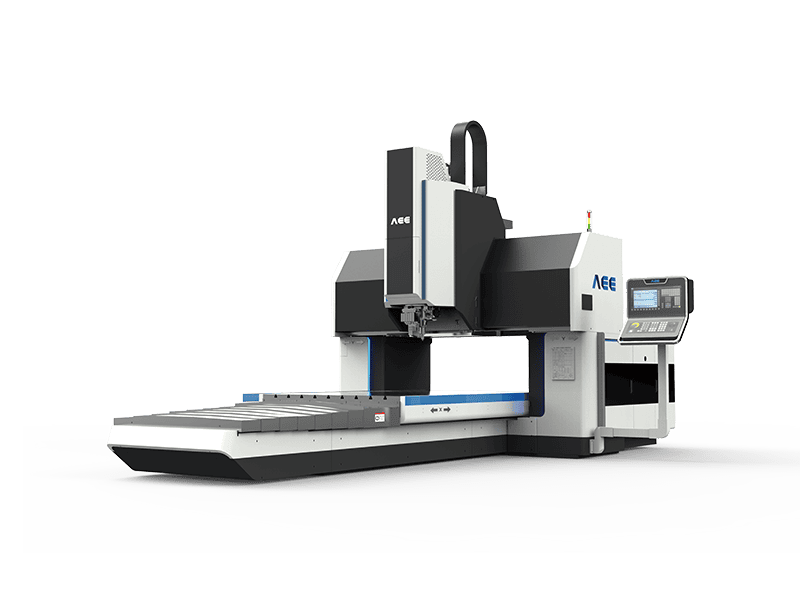
Chinese FSW manufacturers now compete on cycle time and joint quality, not only on price. A gantry system can weld 6XXX series aluminum at up to 5000 mm per minute in controlled conditions. The limiting factor is not the machine; it is the temperature and force control that keeps a high travel speed from turning into a flash defect. That is where supplier experience becomes visible. A machine can be copied. The parameter envelope and the tooling changes needed for a specific alloy cannot be copied from a brochure.
EV Battery Tray Programs Reward Weld Speed and Leak Tightness
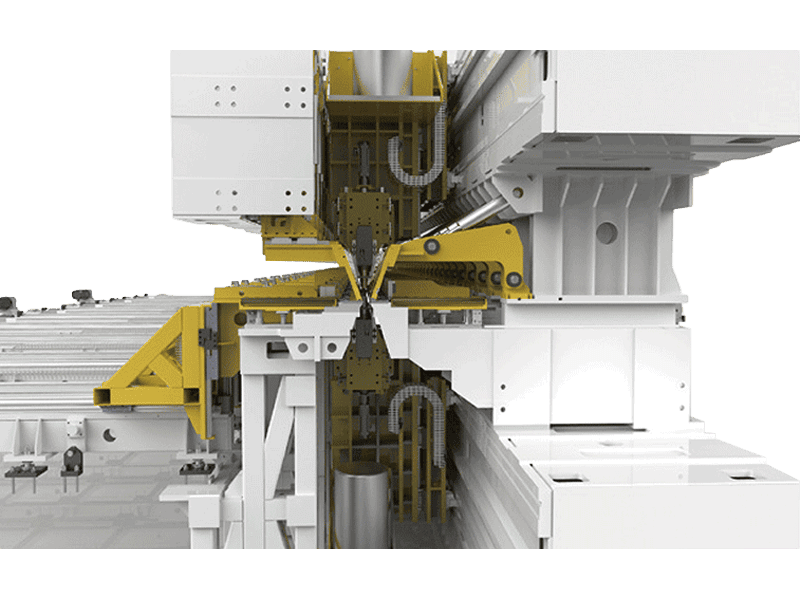
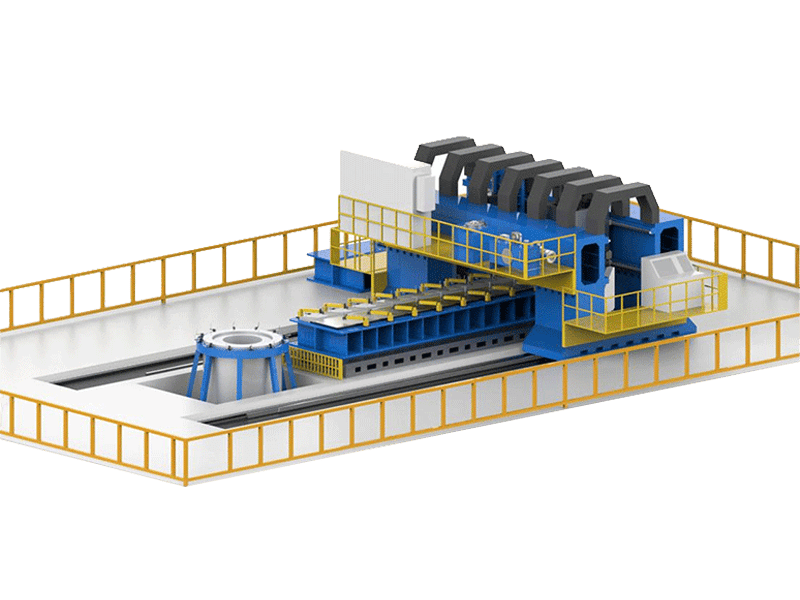
EV battery tray work is the clearest test of a Chinese FSW manufacturer. The part is large, thin walled, and must be leak tight. A battery tray weld combines long straight seams, corner transitions, and sometimes closed contours. That mix forces a supplier to control distortion, clamping, and exact tool depth across a two meter or three meter part. Buyers choose Chinese FSW manufacturers for this work because the supplier base has built specific machine platforms around the application. A double-head line welds both sides of a long profile at the same time, which cuts welding time and balances thermal distortion.
What a leak tight battery tray weld actually requires
Leak tightness is not a single parameter. It is the result of three controls: plunge depth, pin geometry, and backing support. If the backing plate is soft or the clamping permits any small movement, the root side will open at the end of the seam. A proper process qualification includes saw cuts at the start, middle, and end of the weld, followed by dye penetrant or pressure decay testing. Chinese FSW manufacturers with battery tray lines do this as a standard sample report, not as a special request.
Some battery enclosure tabs and covers still need spot joints. <Refill Friction Stir Spot Welding (RFSSW)> covers how the pin withdrawal is controlled to leave a flat, fully filled spot, a practical requirement for surfaces that later receive a seal or an adjacent part.
Aerospace Qualification Hinges on Data, Tooling, and Traceability
Aerospace buyers are not impressed by a large machine floor. They ask for weld logs, tooling wear data, and a procedure that will survive a source inspection. Chinese FSW manufacturers that win aerospace work have learned to respond with the same documentation set as any qualified supplier. For a 70 series aluminum panel or a thick 2XXX plate, the buyer needs to see force, torque, and temperature recorded across the full seam. We make these logs available as part of the feasibility sample. The data answers whether the shoulder stayed engaged, whether the pin temperature was stable, and whether the machine held the commanded force.
For thick aluminum structures, the machine must have enough spindle torque and vertical force to keep the tool buried at the correct depth. Our heavy load platform applies up to 200 kN in the Z axis and welds 100 mm aluminum in a single pass. The point is not the maximum capability; it is the control authority available when welding a 12 mm or 20 mm aerospace plate at production speed.
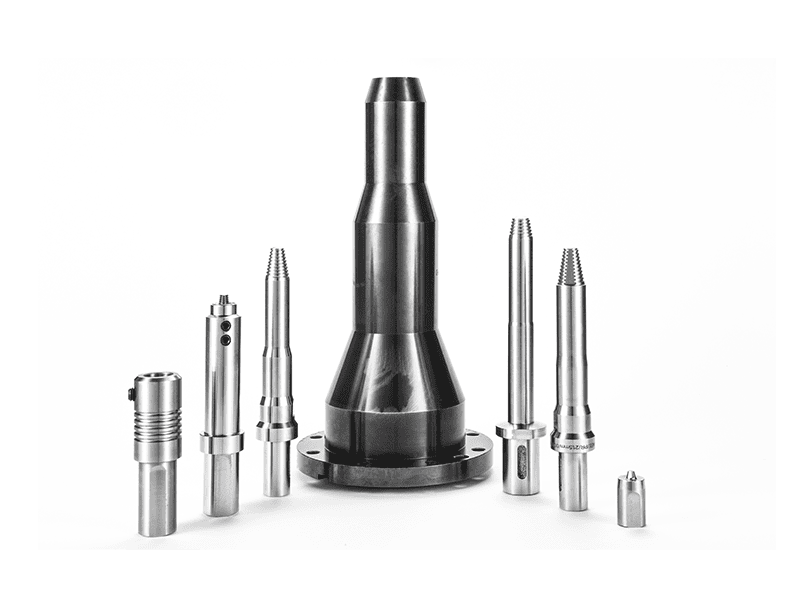
Tooling choice changes weld quality more than machine brand. <AEE provides customer with optional features FSW tool> covers how retractable pin, bobbin, and stationary shoulder options are matched to closed contour and thin wall applications.
Why closed contour welds separate real process capability from cosmetic claims
Circumferential and enclosed welds create an exit problem. A standard fixed pin tool leaves a keyhole at the end of the seam. Aerospace and pressure related parts cannot accept the additional stress riser or the rework. Retractable pin tooling solves this by gradually withdrawing the pin so plasticized material fills the exit. Chinese FSW manufacturers that develop retractable pin control know this because they have had to solve it for fuel tank and battery enclosure programs. The contrast in supplier capability is whether the machine can run a five axis path and retract the pin with synchronised force control, not whether the brochure includes a photo.
If your program involves a closed contour, a thick section, or both, it is worth confirming spindle force and retraction behavior before finalizing your BOM. Reach out at [email protected].
A Shortlist Starts With Weld Data, Not Factory Photos
Buyers can screen a Chinese FSW manufacturer without a factory visit. The most revealing documents are not the equipment list. Ask for a recent weld sample in the same alloy and thickness class, a force and torque trace from that sample, and a cutting report from the start, middle, and end of the seam. A supplier that pushes back on any of these is telling you something useful. The weld sample is the product. The machine is only the means to produce it.
| Check | What to request | What it reveals |
|---|---|---|
| Sample weld | Section cuts at start, middle, end | Uniform tunnel and ligament control |
| Process trace | Force, torque, temperature logs | Stability during the seam |
| Tool life | Pin wear per meter on your alloy | Real operating cost |
| Cycle time | Dry run or simulation for your part | Line throughput risk |
| Service reach | Spare part lead time and remote access | Downtime exposure |
Supplier participation in peer technical forums is another signal. A company that sends engineers to present tool wear or process research is working in the same technical conversation as its buyers. That matters when the part is not a standard plate.
Supplier participation in peer technical forums reveals how a company develops process knowledge rather than just selling boxes. <AEE attend 13th International Symposium on FSW in Kyoto, Japan> covers the tool wear and thin section research discussions that shape supplier process development.
Send Your Part Drawings and Volume Targets to a Chinese FSW Supplier
Printing a machine and installing it is only the first step. The real source of delay is the gap between your part requirements and the welding procedure. We close that gap by running a feasibility sample on the specific alloy and joint configuration, then proposing the machine platform, tooling set, and fixture concept that match your monthly volume. Send your part number, alloy, weld length, and monthly volume to [email protected] or call +86 18325808715. We will confirm which machine platform and tooling set fit the program and return a feasibility plan with a cycle time estimate, tooling recommendation, and qualification path.
Global EV and Aerospace Teams Ask These Questions About Chinese FSW Suppliers
Are Chinese FSW machines proven in high volume EV production?
Only the ones with a production line record, not a machine brochure. High volume means the machine must hold cycle time, repeat tool depth, and survive continuous shifts. In battery tray work, a dual worktable or double head line keeps the spindle welding while the operator loads the next part. Ask for a customer reference with a running EV line and a dry run video that shows the cycle time for your part. A machine that has only produced sample welds is not the same as one that has produced thousands of trays.
Is aerospace work realistic for a Chinese FSW supplier?
The common assumption is that aerospace automatically excludes Chinese suppliers. That assumption confuses geography with process control. Aerospace buyers care about traceable logs, qualified procedures, and stable tooling. A supplier that can record force, torque, and temperature for every seam and hold tool depth within the required tolerance is in the same conversation as any other supplier. The difference is whether the documentation system exists before the audit, not whether the factory is in one country or another.
What materials can a Chinese FSW supplier actually weld?
It depends on the machine and the tooling as much as the material. 5XXX and 6XXX aluminum are the baseline. 7XXX aluminum needs tighter heat control and a pin geometry that reduces crack sensitivity. Copper requires higher spindle torque and stable force, while titanium and steel demand specialized tool materials and slower travel speeds. A credible supplier will state the thickness and speed range for each material and show a sample instead of claiming one machine fits all. Ask for a cut sample of your specific alloy.
How do we shortlist a Chinese FSW supplier without traveling first?
In projects I have run, the fastest filter is a feasibility weld on the buyer’s own material. A supplier that asks for the alloy, thickness, joint type, and monthly volume before quoting is already thinking about the process. Ask for a force and temperature trace, a section cut, and a clear statement of the pin tool life. If those documents arrive with the quotation, the supplier is ready for a serious technical review. Share your requirements at [email protected] and we will confirm whether your part fits an existing machine platform.
If you’re interested, check out these related articles:
Refill Friction Stir Spot Welding (RFSSW)
AEE provides customer with optional features FSW tool