
C-Type FSW Machine Specifications, Applications and Price Range
Table of Contents
- How a C-Type FSW Machine Builds a Solid-State Weld
- Specifications That Matter for a C-Type FSW Machine
- Where C-Type FSW Machines Fit in Production
- Single Worktable versus Dual Worktable C-Type Machines
- Control Tooling and Process Features to Confirm
- What Drives C-Type FSW Machine Price and Lead Time
- How to Specify a C-Type FSW Machine for Quotation
- Confirm Your C-Type FSW Specification
- FAQ
- What is the maximum weld thickness of a C-type FSW machine?
- Can a C-type FSW machine weld aluminum water cooling plates?
- What is the difference between a single and dual worktable C-type machine?
- Are C-type FSW machines suitable for high-volume production?
- Why is there no fixed C-type FSW machine price?
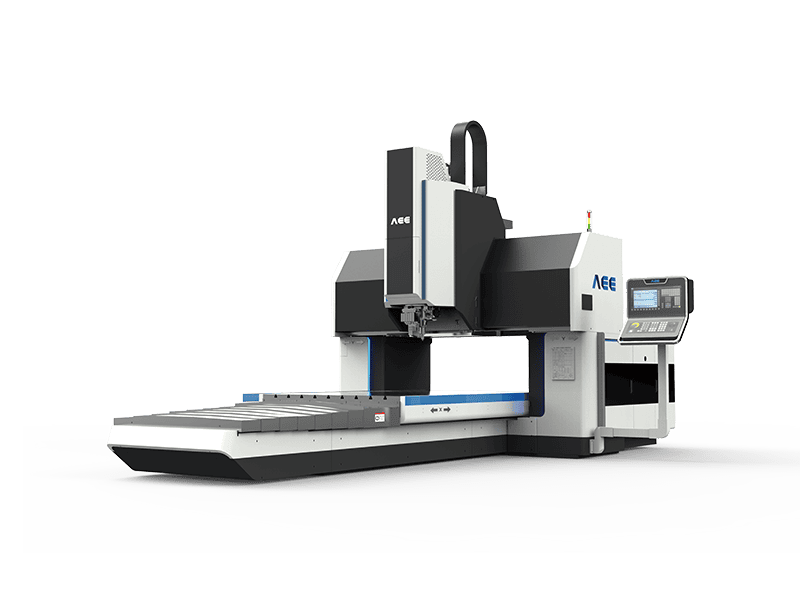
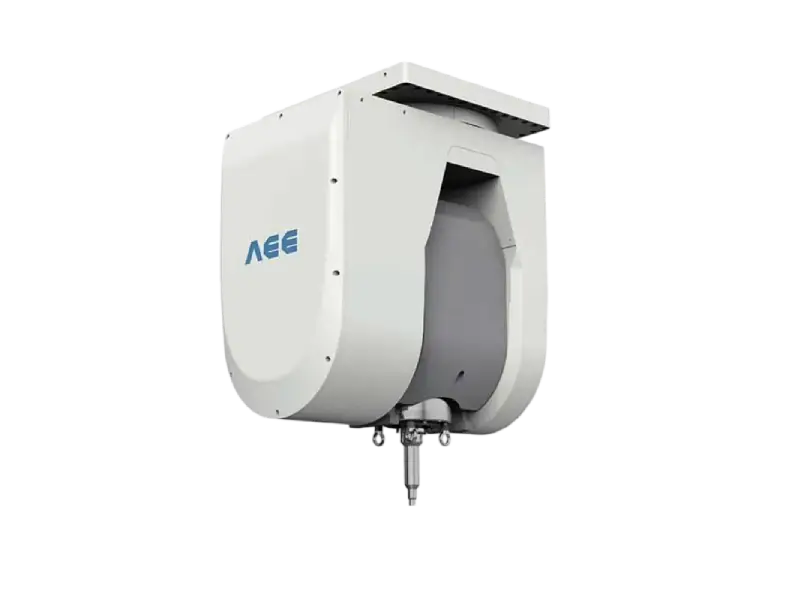
C-type FSW machines keep the spindle, workpiece and backing support within a rigid C-shaped frame. That open throat allows short tool access and straightforward fixturing, making the format a practical choice for two-dimensional aluminum welds in electronics, automotive, communication and research work. The right specification is not just maximum plate thickness. It also depends on table travel, spindle torque and speed, Z-axis force, whether the head can tilt, and how much time the spindle spends cutting instead of waiting at load and unload. These choices explain why there is no single price for a C-type friction stir welding machine. The price is configuration driven and changes with frame size, spindle performance, automation and certification.
How a C-Type FSW Machine Builds a Solid-State Weld
A C-type machine carries the spindle on a moving head above the worktable. The C-frame closes the force loop between the spindle, the tool shoulder and the backing support under the part. During welding, the rotating pin enters the joint, plasticizes material without melting it, and the shoulder forges the softened metal back into the seam. The Z-axis maintains the downforce needed for consolidation, while X and Y axes move the tool along the planned weld path. On standard machines, the C-axis rotates the spindle orientation for curved 2D seams, and a manual B-axis can introduce a small tilt angle.
Because the frame is compact, it has a smaller footprint than a gantry of equivalent travel, but it also limits the part length and width. A gantry design usually takes over when the workpiece grows beyond the C-frame throat or when the required travel becomes very long.
Specifications That Matter for a C-Type FSW Machine
Power and travel figures should be read together. A large table is useful only when the spindle, force capacity and control system can support the weld length and material thickness.
| Parameter | AEE FSW 8×10/2 single worktable | AEE FSW 8×10/2S dual worktable |
|---|---|---|
| Maximum welding thickness | 8 mm, 2D welding | 8 mm, 2D welding |
| Worktable size | 600 mm by 1200 mm | 600 mm by 1000 mm, dual stations |
| Spindle speed, torque, power | 4000 rpm, 112 Nm, 12 kW | 6000 rpm, 65 Nm, 15 kW |
| Maximum Z-axis force | 30 kN | 30 kN |
| X / Y / Z travel | 1000 / 600 / 300 mm | 1000 mm per station / 600 / 300 mm |
| Positioning accuracy / repeatability | 0.03 / 0.03 mm | 0.05 / 0.03 mm |
These figures describe different production tasks. The single-worktable model pairs 112 Nm of torque with a 4000 rpm spindle, which suits thin-section aluminum development and small series. The dual-worktable model uses a faster 6000 rpm spindle with 65 Nm of torque, so it trades some low-speed torque for faster light-gauge welding and shorter idle time between loads. For water cooling plates and radiators, table size and X/Y travel usually define the part envelope. For harder material or deeper joints, Z-axis force and spindle torque matter more.
Published capacity for the standard C-type machine covers welding depth up to 6 mm in process-development applications and welding speed up to 3500 mm per minute for suitable aluminum work. Buyers should still validate any speed claim against their own part geometry, clamping and weld quality requirement.
Where C-Type FSW Machines Fit in Production
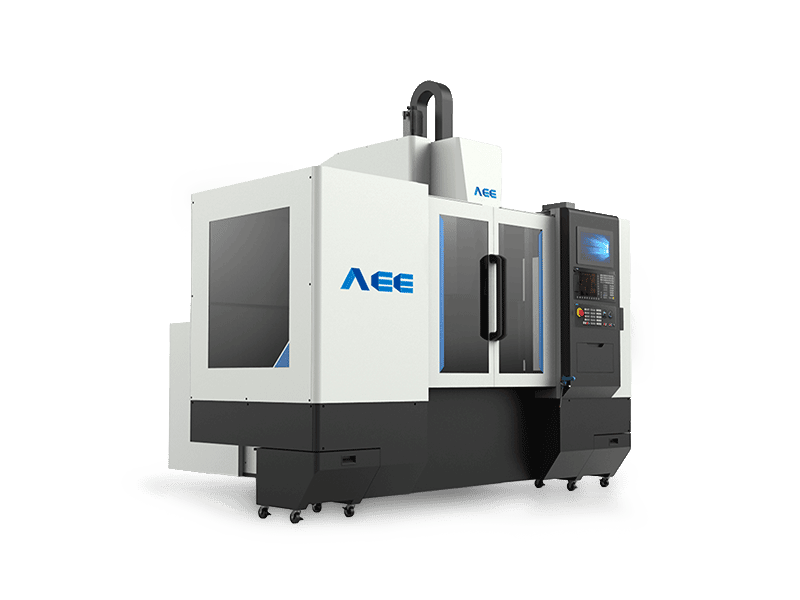
C-type FSW machines are commonly positioned for research, electronics such as radiators and water cooling plates, automotive, communication and 3C industrial parts. These applications share two traits. The joint is usually a two-dimensional line or gentle curve, and the section is thin enough for a compact spindle.
A C-type machine can therefore handle battery cold plate prototypes, heat sink channels, small cover plates and similar aluminum subassemblies where weld consistency and seal quality matter. The C-axis supports circular or other 2D paths, which helps with rounded cooling plate profiles. It is not the first choice for long rail panels, large deck plates or 100 mm single-side aluminum sections. Those jobs need extra-length, gantry or heavy-load machines because the C-frame cannot provide the travel and force capacity economically.
The same rule applies to mixed material work. A C-type machine may be appropriate for small dissimilar joints, but copper, thick aluminum and highly restrained parts usually require a process study before the frame and spindle are selected.
Single Worktable versus Dual Worktable C-Type Machines
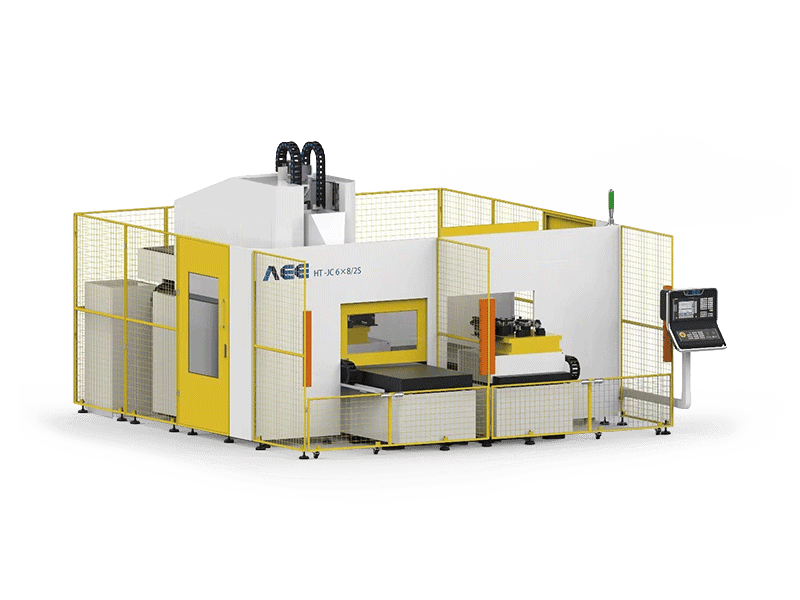
The single-worktable AEE FSW 8×10/2 uses one 600 mm by 1200 mm table. The dual-worktable AEE FSW 8×10/2S has two 600 mm by 1000 mm stations and a much larger 4600 mm by 4200 mm by 2700 mm footprint. Two stations let an operator load one fixture while the spindle welds the other, which raises utilization without increasing welding speed.
The dual-worktable configuration also adds Siemens SINUMERIK 828D control, an automatic tool-changing system, laser tracking, visual recognition and welding monitoring. This moves the machine from a development tool toward a production cell. The penalty is floor space, higher cost and more setup work to keep two fixtures and their clamping strategies repeatable. For low-volume development, a single table is simpler and easier to qualify. For recurring parts, a dual-worktable machine cuts non-welding time and reduces labor cost per weld.
Control Tooling and Process Features to Confirm
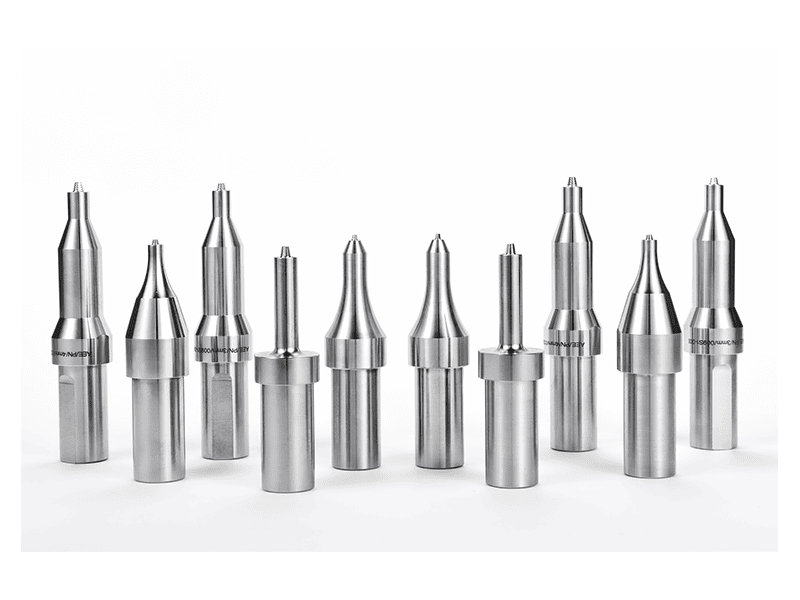
C-type machines differ more in control architecture and tooling package than in visible frame style. Force control and position control determine how the machine responds to changing part thickness and runout. Torque and temperature monitoring supports process traceability. Laser tracking helps keep the tool centered on the seam when production runs are long enough to justify it. A BT40 tool holder matters for spindle compatibility with the FSW tooling package, while retractable-pin tools may be required for closed-loop welds that must eliminate an exit keyhole.
The spindle defines what the machine can weld at production speed. A 12 kW spindle at 112 Nm suits lower-speed, higher-torque work, while a 15 kW spindle at 65 Nm and 6000 rpm is aimed at fast thin-section welding. Buyers should request the tool and spindle as one specification, not as two separate accessories.
A machine is only as stable as the tool package it runs. <AEE provides customer with optional features FSW tool> covers optional FSW tool features that should be reviewed alongside machine control options.
What Drives C-Type FSW Machine Price and Lead Time
Price is not a per-ton cost. A C-type FSW machine quotation is built from the welding envelope, spindle power and torque, force capacity, control system, tool changing, sensing, safety guarding, software options, certification, installation and after-sales support. A laboratory-specification machine can be relatively economical. A dual-worktable production cell with CNC, automatic tool monitoring and laser tracking sits in a higher cost band because those features add hardware, engineering time and commissioning work.
Lead time follows the same path. Standard modules can be delivered faster, while customized fixtures, special clamping strategies and customer-specific automation require design review, build and process validation before shipment. Overseas buyers should include installation, training and local service support in the total budget rather than comparing only machine price.
How to Specify a C-Type FSW Machine for Quotation
A quotation becomes comparable when the part envelope and process requirements are locked first. The most important inputs are material grade and temper, joint type, weld length and curvature, maximum thickness, quality or leak requirement, target cycle time and whether the machine must integrate with a robot or existing line. Compressed air, floor space, power and local certification requirements also belong in the request.
| RFQ field | What to specify | What it prevents |
|---|---|---|
| Material and joint | Alloy group, temper, butt or lap joint | Wrong spindle torque and force selection |
| Part envelope | Length, width, weld path and curve radius | Frame or travel that cannot reach the seam |
| Production target | Maximum thickness, cycle time or annual volume | Under- or over-specified automation |
| Quality evidence | Leak test, tensile, NDT, WPS or PQR needs | Missing inspection and qualification scope |
| Automation and control | Tool changing, force control, laser tracking, data logging | Equipment that cannot hold repeatability |
| Facility and compliance | Floor space, compressed air, CE or ISO 9001 | Site installation and acceptance issues |
Starting with these fields prevents a supplier from quoting several different machine classes for the same part. If the part family includes mixed-material joints or a non-standard clamping arrangement, the work envelope alone may not define the machine.
When a part family mixes materials or needs a non-standard clamping strategy, the machine configuration should follow the joining requirements. <Customized Dissimilar Material Welding Manufacturers in China> covers customized FSW capabilities for dissimilar-material work.
Confirm Your C-Type FSW Specification
Send the material, maximum thickness, weld path, part drawing, target cycle time and required automation features. The AEE team can then compare the single-worktable and dual-worktable C-type platforms, confirm spindle and force requirements, and propose the most economical configuration instead of an over-specified machine. Contact Aerospace Engineering Equipment (Suzhou) Co., Ltd. at [email protected] or +86 18325808715.
FAQ
What is the maximum weld thickness of a C-type FSW machine?
The published C-type models covered here are specified for maximum welding thickness of 8 mm and 2D welding. In production-oriented process work, capacity is commonly treated as up to 6 mm of aluminum depth, with 8 mm as the mechanical limit. Thickness is not the only capacity constraint. Joint length, spindle torque, travel speed and clamping stiffness matter equally. Thicker sections should move to a gantry or heavy-load platform rather than pushing the C-frame beyond its force envelope.
Can a C-type FSW machine weld aluminum water cooling plates?
Yes. The format is commonly used for radiators, water cooling plates and other thin 2D aluminum parts in electronics, automotive and communication. The C-axis supports curved sealing paths. Buyers should still confirm channel width, wall thickness and leak-rate requirement because those affect clamping force and weld quality. Laser tracking or force monitoring becomes more valuable when long sealing paths must be repeated across many parts.
What is the difference between a single and dual worktable C-type machine?
A single worktable welds one fixture at a time, so the spindle waits during loading and unloading. A dual-worktable machine swaps stations so the spindle can weld while the operator loads another fixture. The dual-worktable model described here also adds automatic tool changing, Siemens SINUMERIK 828D control, visual recognition, laser tracking and monitoring. It costs more and uses more floor space, but it raises utilization and lowers labor cost per part for recurring production.
Are C-type FSW machines suitable for high-volume production?
They can handle small and medium series, especially with a dual worktable and automated loading. For high-volume battery trays, wheel lines or long profiles, a dedicated gantry machine, double-head cell or automatic production line usually scales better. The decision depends on annual volume and cycle time, not machine style alone.
Why is there no fixed C-type FSW machine price?
The price depends on spindle power and torque, frame size, axis travel, control system, tool changing, laser tracking, safety, certification, installation and after-sales support. Two C-type machines with the same maximum thickness can therefore carry very different prices. Buyers get the most useful number by sending a part drawing and production targets so the supplier can quote a workable configuration.
If you’re interested, check out these related articles:
AEE attend 13th International Symposium on FSW in Kyoto, Japan on 21 – 23 May 2024
Customized Dissimilar Material Welding Manufacturers in China
AEE provides customer with optional features FSW tool