
2xxx Aluminum FSW: Process Windows for Aerospace Structures
Table of Contents
- 2xxx Aluminum Changes the FSW Process Window
- Tool Geometry Decisions Determine 2xxx Joint Soundness
- Machine Rigidity and Force Control Shape Joint Quality
- Defect Patterns in 2xxx FSW Reveal Process Gaps
- Qualification Separates Reliable 2xxx FSW From Trial Welding
- Sourcing 2xxx FSW Machines and Process Services
- Common Questions About 2xxx Aluminum FSW
- Can 2024-T3 be friction stir welded without cracking?
- Why do 2xxx weld procedures fail when copied from 6xxx aluminum?
- Which 2xxx alloys are best suited to FSW?
- What qualification tests should a 2xxx FSW procedure include?
Friction stir welding of 2xxx series aluminum for aerospace structures is not a simple extension of 6xxx welding. The high copper content that gives 2024, 2219, and 2195 their strength also narrows the process window, increases tool loading, and concentrates thermal damage at the joint edge. A weld procedure that runs on 6061 will not transfer cleanly to 2024-T3 or 2195-T8. Most production failures in this alloy family begin before welding: undersized tool shoulders, light machine frames, and qualification plans that treat 2xxx as ordinary aluminum.
2xxx Aluminum Changes the FSW Process Window
The 2xxx family is aluminum-copper based and precipitation hardened. That is why it delivers strength levels that aerospace designers want, but it also moves the welding problem to heat management. Fusion welding of 2024 or 2195 forms hot cracks in the partially melted zone; friction stir welding stays below the solidus, so solidification cracking is not the controlling failure mode. The control problem becomes thermal exposure at the joint edges, where copper-rich precipitates coarsen and local strength drops.
A useful way to think about the family is by alloy behavior rather than by a single nominal composition.
| Alloy | Typical aerospace use | FSW response |
|---|---|---|
| 2024-T3/T4 | Fuselage skins, wing skins | Narrow heat input window; edge softening must be checked |
| 2219-T87 | Cryogenic tanks, fuel tanks | Good consolidation at lower travel speeds; tool force runs high |
| 2195-T8 | Launch vehicle tank structures | High strength; less tolerant of overheating and poor plunge control |
| 2196/2198-T8 | Fuselage panels, integral structures | Damage tolerant but requires rigid clamping and controlled fit-up |
In trials, a 6 mm 2024-T3 butt joint needs lower travel speed and more shoulder engagement than 6061 of the same section. The pin must do more work in the initial plunge because the material resists deformation until the shoulder heats it. Once the shoulder is fully engaged, heat rises quickly, and the operator has a narrow band between incomplete consolidation and edge softening. That is the process window shift in practice.
Tool Geometry Decisions Determine 2xxx Joint Soundness
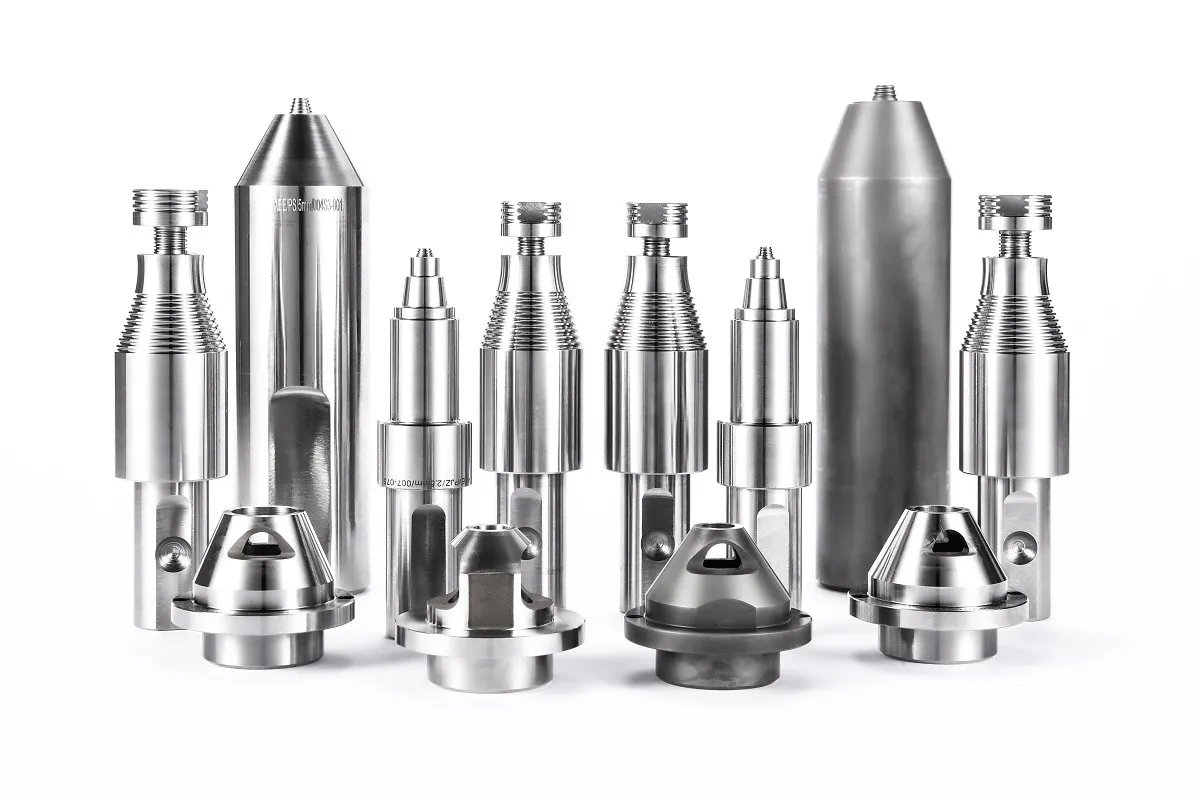
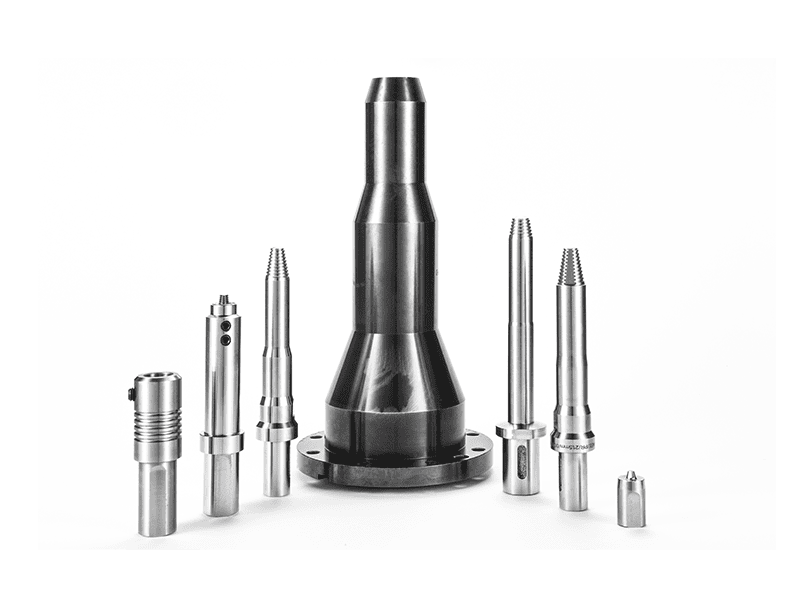
Tool choice for 2xxx aerospace welds starts with shoulder diameter and pin length. We specify shoulder diameters about 2.8 to 3.2 times the sheet thickness for butt joints; smaller shoulders do not generate enough forging pressure at the trailing edge, and larger shoulders overheat the surface and leave a wide softened zone. Threaded and tapered pins work for most 2xxx butt welds because they pull material downward and consolidate the root, but fluted pins become necessary when the cross section exceeds roughly 10 mm and heat must be extracted from the center.
For thin 2024 skins, stationary shoulder tools work better than conventional shoulders. The stationary shoulder design covers aluminum from 1 mm to 110 mm and holds the weld crown flat, which is why we use it for thin 2xxx skins and fillet positions. For closed-curvature parts like tank domes and weep-hole closures, retractable pin tools eliminate the exit hole and avoid a stress concentration.
Machine Rigidity and Force Control Shape Joint Quality
2xxx alloys press back harder than 6xxx at the same thickness. A machine that holds 20 kN of Z force on a 6 mm 6061 weld may need 30 to 40 kN or more on 2024 or 2219 depending on travel speed and shoulder size. The frame must not deflect when that load reverses through the weld path. Light structures produce chatter at the pin and intermittent root penetration.
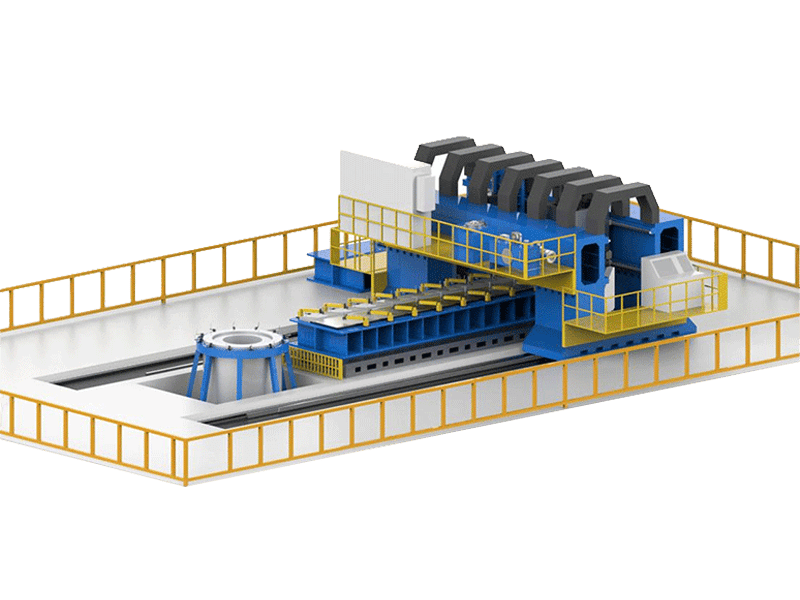
For aerospace panels, gantry machines with high beam stiffness keep the shoulder angle constant across the full weld. For thick 2219 tank sections, a heavy-load machine with force control and position control is the practical route. AEE’s heavy-load FSW machine carries 200 kN of Z-axis capacity and 872 Nm spindle torque, sufficient for single-side aluminum welds to 100 mm. Force control holds the shoulder at a consistent plunge depth when the workpiece thickness varies; position control matters for precise root location on machined fittings.
If your program involves 2195-T8 or 2219-T87 sections above 12 mm, confirm spindle torque and Z-axis headroom with your machine supplier before finalizing the BOM. Send your part geometry and target temper to [email protected], and we will run the force, torque, and fixture calculations against the weld schedule.
Defect Patterns in 2xxx FSW Reveal Process Gaps
Defects in 2xxx welds are usually traceable to three causes: insufficient forging pressure, excessive heat at the shoulder edge, or fixture lift at the exit side. Tunnel defects along the advancing side appear when the pin moves too fast for the material to consolidate behind it. This commonly occurs when a schedule from 6061 is applied without reducing travel speed. Flash on the crown indicates the shoulder is too deep or the tilt angle is too high; the same flash on 2024 can hide edge thinning that fails etch inspection.
Root defects in lap joints are more dangerous than they look. The hooking defect bends the original faying surface upward into the weld zone, and in 2xxx high-strength sheet the crack path can follow the copper-rich boundary. We inspect lap welds with macro sections rather than surface appearance alone. A clean crown does not confirm root consolidation.
Qualification Separates Reliable 2xxx FSW From Trial Welding
A weld procedure qualification record for 2xxx aerospace work needs more than a tensile coupon. We run macro etch, bend, tensile, and fatigue or fracture toughness coupons depending on the component. The reason is that 2xxx strength can mask root defects in a single tensile test. A root discontinuity at 0.3 mm depth can still pass a routine tensile coupon because the load path moves through the thicker crown, but it fails in fatigue or when a fuel tank is pressure cycled.
Phased array ultrasonic testing catches planar defects better than conventional radiography in these alloys, particularly lack of penetration and kissing bonds. For each new temper and section thickness, the phased array gain settings must be established on a calibration block with artificial flaws. That step is not optional.
Multi-material aerospace structures sometimes combine 2xxx skins with dissimilar metal fittings, and the qualification logic changes again. <Customized Dissimilar Material Welding Manufacturers in China> covers how controlled dissimilar material welding keeps intermetallic formation within inspection limits.
Sourcing 2xxx FSW Machines and Process Services
Aerospace teams often discover the real cost of 2xxx FSW late: the machine frame deflects, the tool wears after one development run, and the qualification schedule slips. We supply turnkey FSW machines and process services for 2xxx aerospace work, including tooling, fixture design, and welding procedure development. Send your part number, alloy temper, thickness, and required inspection standard to [email protected] or call +86 18325808715, and we will confirm a machine and tooling configuration against your weld schedule.
Common Questions About 2xxx Aluminum FSW
Can 2024-T3 be friction stir welded without cracking?
Yes. Friction stir welding runs below the melting point, so the solidification cracking that makes 2024 difficult to fusion weld is not the governing risk. The real issue is edge softening from overheating. In a 2024-T3 butt joint, the heat-affected zone can drop well below parent strength if the shoulder dwells too long. Control travel speed and shoulder engagement, then measure hardness across the weld to confirm the reduction remains within the drawing allowance.
Why do 2xxx weld procedures fail when copied from 6xxx aluminum?
The assumption that 2xxx and 6xxx behave alike is the failure. They do not. Copper-bearing 2xxx alloys have higher flow stress and a narrower thermal band between under-consolidation and edge softening. A 6xxx schedule commonly runs too fast or too shallow for 2xxx. The root fails first, but the crown can look acceptable. Redevelop the plunge depth, tilt, and travel speed for the specific alloy temper.
Which 2xxx alloys are best suited to FSW?
It depends on the component. 2219-T87 welds well for fuel and cryogenic tank structures because it consolidates predictably under high force. 2195-T8 suits high-strength tank and fuselage applications but needs tighter thermal control. 2024-T3 is widely used in skins and responds well to stationary shoulder welding. The best choice is therefore tied to the design load, thickness, and inspection standard rather than a single alloy ranking.
What qualification tests should a 2xxx FSW procedure include?
In qualification programs we run, the first set includes macro etch, bend, tensile, and fatigue testing, with phased array ultrasonic inspection for root planar defects. Tensile alone will not catch a shallow kissing bond. For pressure-tight components, add a leak or pressure cycle test. The exact list follows the design standard and service load, but root inspection should be mandatory for any 2xxx aerospace weld. Share your requirement sheet with us and we will confirm the qualification matrix against the relevant aerospace standard.
If you’re interested, check out these related articles:
AEE provides customer with optional features FSW tool
Refill Friction Stir Spot Welding (RFSSW)