
FSW vs TIG Welding: Strength, Distortion and Cost
Table of Contents
- Where FSW and TIG Welding Differ Mechanically
- Strength and Joint Efficiency in Aluminum
- Distortion and Heat Input in Thin and Thick Sections
- Cost Comparison Beyond the Machine Price
- Cycle Time, Thickness, and Fit-Up Limits
- A Practical Selection Check for Your Joint
- What to Send for a FSW Feasibility Review
- FAQ
- Is FSW stronger than TIG welding?
- Does FSW always reduce distortion?
- When is TIG the better choice?
- What thickness can FSW weld?
- Why does FSW tooling cost more than TIG consumables?
- References
FSW vs TIG welding is not a contest with one universal winner. For long, straight aluminum seams in heat-treatable alloys, friction stir welding usually gives the better combination of joint strength and low distortion because it joins the metal in the solid state and avoids the porosity and hot cracking that fusion welding can bring. TIG welding remains the more practical choice for short runs, repair, complex access, and mixed wall thicknesses where a rigid backing and a dedicated fixture would cost more than the weld is worth. The useful comparison is therefore joint-specific: alloy, temper, thickness, volume, fit-up, and the acceptance standard your customer will apply.
Where FSW and TIG Welding Differ Mechanically
TIG welding is an arc fusion process. A tungsten electrode establishes an arc under shielding gas, and a separate filler rod is fed into the molten pool. The weld metal solidifies from the liquid state, so the joint is exposed to porosity, solidification cracking, and a heat-affected zone that can lose strength in heat-treatable aluminum. The process is flexible: it can reach complex joints, bridge small fit-up gaps, and be used for repair.
Friction stir welding is a solid-state process [1]. A non-consumable tool with a shoulder and a pin rotates, plunges into the joint, and traverses while the shoulder contains plasticized material and the pin stirs it through the thickness. The metal does not reach bulk melting. The result is a forged nugget, a thermomechanically affected zone, and a heat-affected zone. The tradeoff is mechanical: the process needs a rigid machine, a backing support, and a fixture that holds the parts flat while the tool applies axial force.
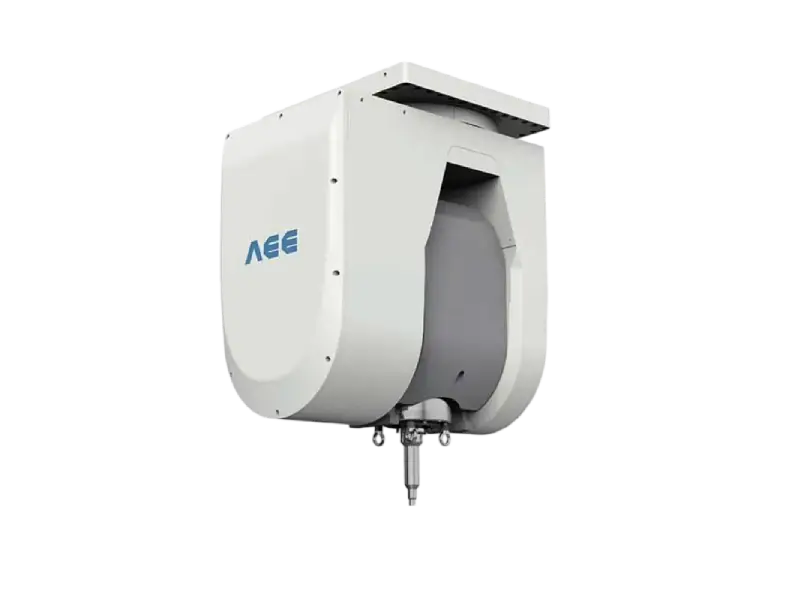
On a compact C-type machine, for example, the AEE FSW 8×10/2 data list an 8 mm maximum welding thickness, a 12 kW spindle, and 30 kN axial force. Those numbers define a class of work, not a universal capability: the same 8 mm aluminum joint may need a different tool and fixture for a different alloy.
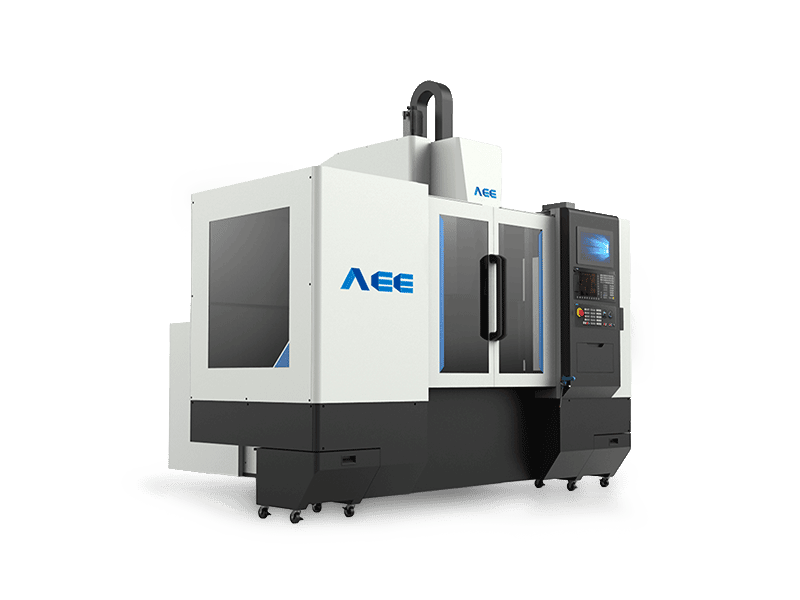
The comparison therefore starts with the joint, not the process name. A process that cannot hold the part flat or reach the seam cannot deliver its theoretical advantage.
Strength and Joint Efficiency in Aluminum
Strength is not a single number. For a welded aluminum joint, the useful value is joint efficiency: the weld tensile strength divided by the base metal tensile strength, with the failure location recorded. A test that reports only weld strength can hide whether failure occurred in the weld, the heat-affected zone, or the base metal.
The table below separates what the process comparison can support from what it cannot.
| Comparison point | What the record supports | Evidence status | What it does not prove | Check before quoting |
|---|---|---|---|---|
| Joint strength | FSW and TIG can both be qualified to a standard, but the tensile result belongs to the exact alloy, temper, thickness, and procedure | Standard-defined; result is procedure-specific | That one process is stronger for every aluminum joint | Tensile test with failure location and joint efficiency |
| Distortion | Lower heat input can reduce angular distortion in long seams | Mechanism-supported; magnitude inferred | Zero distortion or no need for clamps | Flatness measurement after welding in the production fixture |
| Porosity and hot cracking | FSW is not driven by arc-solidification porosity or hot cracking; TIG can produce both if gas, filler, or procedure is wrong | Process mechanism; confirmed by NDT | That FSW is defect-free | NDT per the contract or ISO 25239-5 |
| Travel speed | FSW can complete long straight seams in one pass at high travel speed | Machine-specific; not a universal rate | That FSW always lowers total cycle time | Time the complete load, clamp, weld, unload, and inspect cycle |
| Tooling and consumables | FSW needs a rotating tool and rigid backing; TIG needs filler, gas, and electrode | Cost-structure fact; price is quote-specific | Which process is cheaper per accepted part | Quote tool life, fixture, labor, gas, and rework |
| Thickness and geometry | FSW is used on aluminum from thin sheet to thick plate; TIG is flexible on thin sheet and repair | Configuration-specific; not a universal limit | A single maximum thickness for either process | Confirm backing access, machine force, and WPS |
In heat-treatable 6xxx and 7xxx alloys, FSW usually produces a sound, fine-grained nugget, but the thermal cycle overages the heat-affected zone. The joint may fail in that zone rather than in the nugget. Post-weld heat treatment or a temper-specific procedure can change the result. In 5xxx alloys, the effect is different, and the joint efficiency depends on the amount of cold work and the thermal exposure. The process does not restore base-metal strength by itself.
TIG can produce high-quality aluminum welds when the filler, cleaning, gas coverage, and procedure match the alloy. In heat-treatable alloys, the same heat-affected zone softening occurs, and filler selection affects strength and ductility. Porosity and lack of fusion are additional risks. A TIG procedure that passes visual inspection can still fail a tensile test if the heat-affected zone is not accounted for.
The practical conclusion is narrower than a process slogan. FSW is often the stronger choice for long, straight, full-penetration seams in heat-treatable aluminum, not because the nugget is inherently stronger than every TIG weld, but because the solid-state process avoids filler dilution and fusion defects. TIG can match or exceed FSW on a specific joint when the filler and procedure are optimized, especially for short or repair welds. The defensible comparison is a procedure qualification test on your alloy, thickness, and joint design.
Qualification and inspection for FSW aluminum are covered by ISO 25239-5 [2], and structural aluminum TIG practice is addressed by AWS D1.2 [3]. Aerospace FSW practice is specified in AWS D17.3 [4]. Those documents define the acceptance basis; they do not make one process universally stronger.
Distortion and Heat Input in Thin and Thick Sections
Distortion is a response to heat input, restraint, and shrinkage. TIG concentrates heat at the arc and may require multiple passes on thick sections; each pass adds shrinkage. FSW generates heat by friction and plastic deformation, and the shoulder forges the top surface while the pin stirs through the thickness. The total heat input is usually lower and more localized, but the axial force is much higher. The part is mechanically restrained, not just thermally.
On thin aluminum, FSW can reduce angular distortion because the seam is completed in one pass and the shoulder sizes the weld zone. Thin sheet is less forgiving of fixture error: if the backing is not flat or the clamp loads are uneven, the finished part can still bow. TIG on thin sheet requires low current, precise fit-up, and often a copper backing. It can produce excellent results, but the result depends on welder skill and travel technique.
On thick plate, the FSW advantage grows because a single pass can join sections that TIG would require multiple passes to fill. The machine must supply the axial force and torque. A heavy-load FSW machine can be specified for 100 mm single-side aluminum and 35 mm copper. That is a machine-class statement, not a promise for every alloy. Thick copper or steel changes the tool material and force requirement, and may fall outside the economic window.
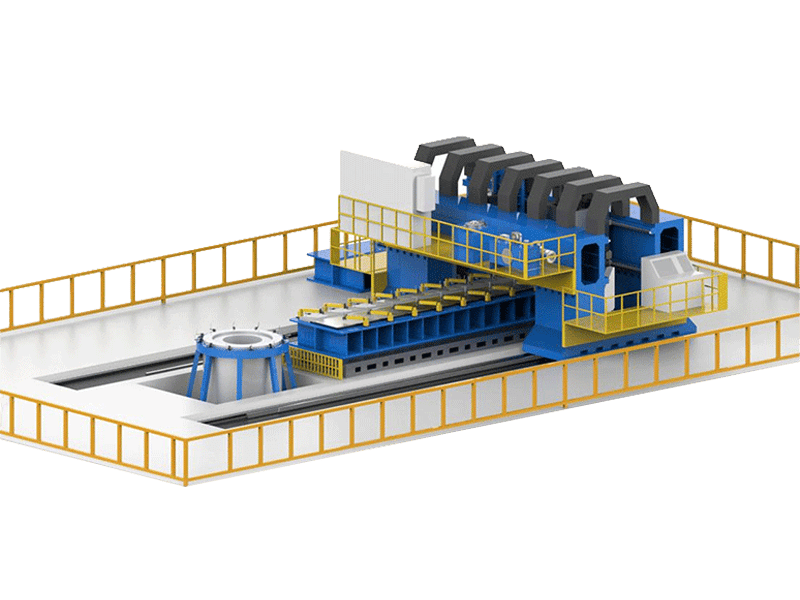
The actionable check is flatness after welding in the production fixture, not the heat input number alone. Measure the part under the same restraint condition used in production. If the fixture is released before measurement, the distortion result will be different.
Cost Comparison Beyond the Machine Price
A cost comparison that stops at the machine quote misleads. FSW and TIG have different cost structures. FSW shifts cost into capital, fixture, tooling, and process engineering. TIG shifts cost into labor, consumables, and inspection or rework. The cheaper process depends on annual volume, seam length, and how much rework the customer will accept.
Compare five cost lines. Capital and installation cover the machine, controller, power, foundation, and safety enclosure. Fixture and backing cover the clamps, support, and run-on and run-off provisions. Tooling and consumables cover the FSW tool or the TIG filler, gas, and electrode. Labor and skills cover the operator and the process engineer. Inspection and rework cover NDT, tensile testing, and repair.
FSW becomes economically attractive when the same joint is repeated at volume and the seam is long enough that one-pass travel and reduced rework pay back the fixture. TIG remains attractive for low volume, variable geometry, repair, and jobs where the fixture would cost more than the saved labor. The break-even point is not a single number. It moves with seam length, annual volume, alloy, tool life, and the cost of a rejected part.
Do not compare a FSW travel speed to a TIG arc time. Compare complete cycle time: load, clean, clamp, weld, unclamp, inspect, and rework. Include tool changes and backing maintenance. A fast weld that creates a slow inspection or a rework loop is not a low-cost weld.
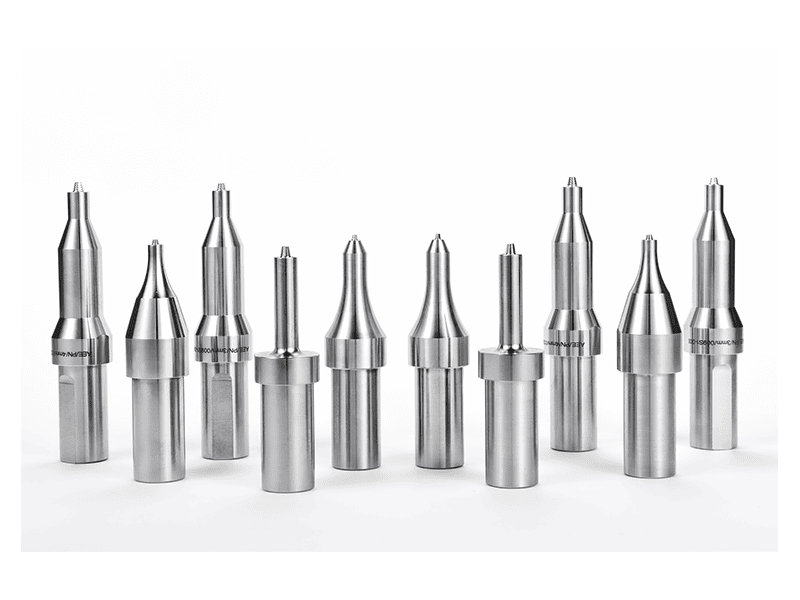
Tool design belongs in the cost model. Pin geometry, shoulder diameter, thread form, and tool material determine heat generation, material flow, and wear. A tool that runs well in 6061 may fail in 7075 or copper. Ask for a tool-life record for the exact alloy and thickness, not a generic claim.
Cycle Time, Thickness, and Fit-Up Limits
Cycle time is not travel speed. A FSW cell may weld a long seam in one pass, but the part must be loaded, clamped, backed, and unloaded. A TIG cell may weld slower but load faster, reach complex geometry, and repair a defect without a new fixture. Compare the complete cycle.
FSW is established for aluminum from thin sheet to thick plate, but the economic window narrows at both ends. Very thin sheet can be difficult because the tool shoulder and backing need precise control. Very thick plate requires high force and robust tooling. TIG covers thin sheet well and can build thickness with multiple passes, but each pass adds heat and inspection.
FSW is less tolerant of gaps and mismatched edges than TIG because the tool needs material to stir and the backing must support the seam. TIG can bridge a small gap with filler. If your parts arrive with variable fit-up, TIG or a hybrid approach may be more robust. If the fit-up is consistent and the seam is long, FSW can be the more repeatable process.
Long straight panels are the natural territory of a gantry FSW machine, where the bridge structure and travel system support the tool across the seam.
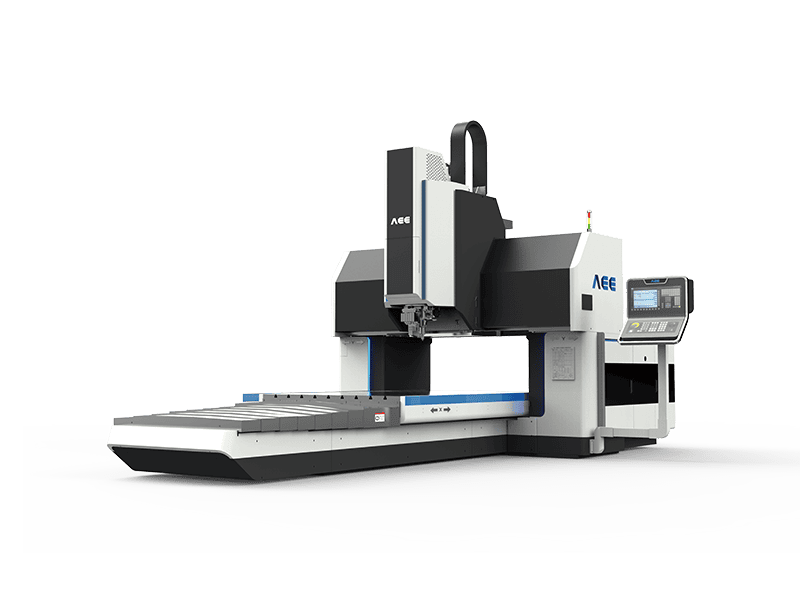
Machine capacity must be read as a system limit. A spindle series may list a maximum force and torque, but the tool, fixture, and controller must also handle the duty cycle.
| Joint condition | FSW fit | TIG fit | Exclusion or check |
|---|---|---|---|
| Long straight seam, consistent fit-up, repeat volume | Strong fit when the fixture and backing are qualified | Possible, but slower and more labor dependent | Check run-on and run-off, backing wear, and flatness after welding |
| Short or varied seams, low volume | Weak fit because fixture cost and changeover dominate | Strong fit because setup is flexible | Check changeover time and operator skill |
| Repair or rework | Poor fit because a repair needs a new procedure and often a new tool path | Strong fit because filler can rebuild a joint | Check whether the repair procedure is qualified |
| Complex 3D access | Limited fit because the tool and backing need clearance | Strong fit because the torch can reach confined joints | Check tool access, backing access, and collision risk |
| Dissimilar aluminum to steel or copper | Possible fit with a qualified procedure and interlayer control | More difficult because intermetallics and dilution must be controlled | Check interface strength, tool wear, and procedure qualification |
| Thick aluminum section | Strong fit when the machine force and torque are sufficient | Possible with multiple passes and more heat input | Check machine capacity, WPS, and side-wall fusion |
Dissimilar joints need their own procedure. Aluminum to steel or copper can be joined by FSW, but intermetallic formation and tool wear change the window. The same rule applies: qualify the exact combination.
Dissimilar joints often fail at the interface rather than in the base metal, so the procedure and interlayer strategy matter as much as the machine. <Customized Dissimilar Material Welding Manufacturers in China> covers customized dissimilar material welding for manufacturers in China.
A Practical Selection Check for Your Joint
Run the comparison as a gate review, not a literature review. The following checks turn the process choice into evidence you can audit.
- Define the joint: alloy and temper, thickness, joint type, seam length, access, and annual volume.
- Define the acceptance basis: applicable standard, WPS qualification, NDT method, tensile test, and flatness limit.
- Check the fixture: backing material, clamp locations, run-on and run-off, and exit-hole strategy.
- Check the machine: axial force, spindle torque, speed, travel, controller, and data logging.
- Weld a representative trial: same alloy, thickness, surface condition, fixture, tool, and parameters.
- Compare complete cost: cycle time, tool life, consumables, inspection, rework, and scrap.
The trial result is limited to the parts, source, and checks covered. A successful 3 mm 6061 trial does not qualify 8 mm 7075 or a different filler. If the alloy, thickness, surface condition, or backing changes, repeat the affected checks. A procedure that works in the lab but not in the production fixture is not a qualified process.
A useful RFQ uses the same fields as the trial: alloy and temper, thickness, joint type, seam length, annual volume, fixture responsibility, tool-life expectation, WPS qualification, inspection standard, and acceptance criteria. That list also exposes a supplier who is only quoting a machine and not a process.
What to Send for a FSW Feasibility Review
Send the alloy and temper, thickness, joint type, seam length, annual volume, fixture responsibility, inspection standard, and target cycle time. The review can confirm whether the joint fits the FSW process window and whether a trial weld is the next step. Email [email protected] or call +86 18325808715. Aerospace Engineering Equipment (Suzhou) Co., Ltd.
FAQ
Is FSW stronger than TIG welding?
Not universally. For long, straight, full-penetration seams in heat-treatable aluminum, FSW often gives higher joint efficiency and fewer fusion defects. TIG can match or exceed it on a specific joint when filler, cleaning, and procedure are optimized. Compare tensile test results with failure location, not process labels.
Does FSW always reduce distortion?
No. FSW usually has lower total heat input and can reduce angular distortion in long seams, but the axial force and fixture determine the final shape. A weak backing or uneven clamping can produce bowing even with a good weld. Measure flatness after welding in the production fixture.
When is TIG the better choice?
TIG is usually better for short or varied seams, repair, complex access, and low-volume work where a rigid FSW fixture would not pay back. It is also more forgiving of small fit-up gaps. The decision changes if the joint is a long, repeatable aluminum seam with a qualified FSW procedure.
What thickness can FSW weld?
FSW is used from thin aluminum sheet to thick plate, but thickness alone does not define feasibility. The machine force, spindle torque, tool design, backing, and alloy set the window. A compact C-type machine may be listed for 8 mm, while a heavy-load machine may be listed for 100 mm. Confirm the exact alloy and joint with a trial weld.
Why does FSW tooling cost more than TIG consumables?
FSW tools are precision parts that must generate heat, stir material, and survive high temperature and abrasion. Their life depends on alloy, thickness, tool material, and parameters. TIG consumables are cheaper per unit, but labor and rework can be higher. Compare cost per accepted weld, not sticker price.
References
[1] ISO 25239-1:2020, “Friction stir welding — Aluminium — Part 1: Vocabulary,” ISO, 2020.
[2] ISO 25239-5:2020, “Friction stir welding — Aluminium — Part 5: Quality and inspection requirements,” ISO, 2020.
[3] AWS D1.2/D1.2M:2014, “Structural Welding Code—Aluminum,” American Welding Society, 2014.
[4] AWS D17.3/D17.3M:2016, “Specification for Friction Stir Welding of Aluminum Alloys for Aerospace Applications,” American Welding Society, 2016.
If you’re interested, check out these related articles:
Customized Dissimilar Material Welding Manufacturers in China
Refill Friction Stir Spot Welding (RFSSW)